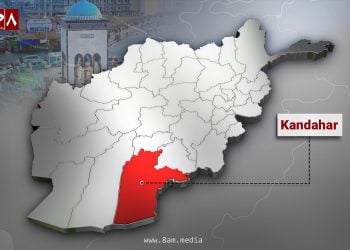
Some residents of Kandahar complain that they turn to Taliban courts to resolve simple, routine cases quickly, but months and even years pass before a final verdict is issued. According to some petitioners, the process of filing a case, holding hearings, summoning the parties, reviewing documents, and issuing a final ruling is delayed to such an extent that people grow weary of pursuing their disputes, and some are forced to abandon their claims altogether. In addition to the prolonged handling of cases, people also raise complaints about how Taliban courts operate, how they treat petitioners, the influence of connections and relationships, and allegations of administrative corruption. Some petitioners claim that in order to speed up their cases, they have been asked through unofficial channels for money or for the use of personal connections. This is even though the salaries and benefits of Taliban judges are based on the same entitlements that judges of the previous government used to receive; yet according to critics, no expertise or transparency is evident in their work.
Fatima, who is now 50 years old, says her case has remained unresolved in a Taliban court for the past three years. She adds that the case, which concerns her sister’s divorce and which arose three years ago between her brothers and several other individuals, has still not been concluded, and no solution has been found for it.
This woman accuses the opposing party in the dispute of having ties to Taliban judges and of having paid them bribes. She says that for this reason, on the one hand, their case is being delayed, and on the other hand, injustice is occurring in the decisions related to the case.
This woman says the problems that have arisen in her sister’s case have driven her to attempt suicide several times. She says: “It is my sister’s divorce case, and it has remained unresolved for three years. The judges keep delaying our case. We have obtained information that the judges in this case have taken bribes and have strongly supported the other side. We have no information about the status of the case, and we face enormous difficulties. My brothers have been imprisoned several times. Their decision is completely far from justice, yet they are forcing us to accept that decision.”
Fatima is not the only one in Kandahar with complaints against the Taliban’s judicial and legal institutions; nearly everyone who has approached these institutions has complaints about their performance.
Habibullah, a young resident of Kandahar, says he has been engaged in a legal dispute with a fellow villager in a Taliban court for nearly two years over a legal matter. He says the Taliban only resolve cases in favor of those who pay them money. He adds that he has also seen judges issue unjust rulings in exchange for receiving perfume, prayer beads and similar gifts.
This Kandahar resident says Taliban judges have designated specific individuals to collect money from people, and these individuals, with the judges’ assistance, receive payment in exchange for rulings on cases. He adds that compared to the period of the republic, corruption in the judicial and legal institutions has increased several times over, and there is no one to whom people can bring their complaints.
He says: “We have a dispute over a piece of village land, and our case has remained unresolved for two and a half years. They just tell us to come this week, then come back next week. We really face a great many difficulties. In the courts, decisions are made such that if someone bribes the judge, the ruling is issued in his favor. Beyond money, if someone gives the judge good perfume or prayer beads, the judge decides in his favor. We don’t know who to share our problems with. The judges take bribes. We demand that the judges stop taking bribes.”
This comes after a man set himself on fire and killed himself in front of the city court of Kandahar last year.
Haji Abdul Bari, who has approached the Taliban’s city court in Kandahar to resolve his case, says a case related to a physical altercation has remained unresolved in the group’s court for 10 months. He adds that he has grown extremely tired of trying to resolve this case and has tried several times to simply abandon the case that was opened for him. He says that over the past 10 months, the judges have only told him: “Come today, go and come back tomorrow.” This man calls on the Taliban not to delay people’s cases and to handle petitioners’ matters promptly.
Mr. Bari says: “We ask the judges to make these decisions as soon as possible. They send us away today and tell us again to come back tomorrow. They do not make decisions quickly, and resolving cases takes years. The difference between the judicial and legal institutions during the republic era and the current situation is like the difference between earth and sky, because during the republic there was a law in place, but now nothing exists, and cases are delayed by the judges.”
Several legal experts also criticize the Taliban’s judicial and legal system and say the Taliban should use the laws drafted in the past in the judicial and legal sector.
A legal affairs expert in Kandahar, whose name has not been mentioned in this report due to security concerns, says one of the fundamental problems in the judicial and legal institutions is the absence of a clear law, which has caused delays in handling cases and increased people’s difficulties. He says the Taliban should establish an institution within their administration so that people can bring any case or complaint related to corruption to that institution.
He says people now do not know whom to turn to or through what channel to resolve their problems.
This expert adds: “The fundamental cause of delay in people’s cases is the legal vacuum. When there is no law, this fundamental problem arises; then cases are delayed, injustice is created, the ground is prepared for bribery and corruption, rights do not reach their rightful owners, and people’s voices go unheard. The Taliban currently have no specific institution where someone who has a complaint against judges can file that complaint. Injustice is now extremely widespread, and corruption and bribery have also increased sharply, with no one to prevent it. The Taliban government must establish a specific institution for this purpose.”
Human rights organizations in Afghanistan say that in the Taliban’s judicial and legal system, standards of fair trial are widely violated, and that women and religious minorities in particular face serious challenges and difficulties in accessing justice. According to these organizations, Taliban judges and courts use traditional methods and varying approaches in handling criminal and civil cases, such that the process of handling a specific criminal or civil case differs entirely from one court to another and from one province to another.
The problems and complaints people have with the judicial and legal institutions are not limited to Kandahar alone; complaints about the state of these institutions are increasing day by day in most parts of Afghanistan.
You can read the Persian version of this report here:
زیر چتر هبتالله؛ پروندههای قضایی سالها در محاکم طالبان بلاتکلیف میمانند