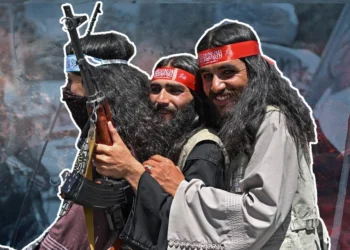
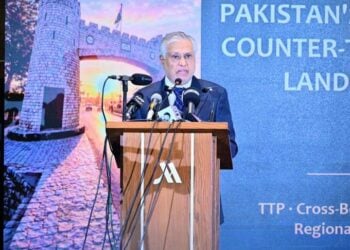
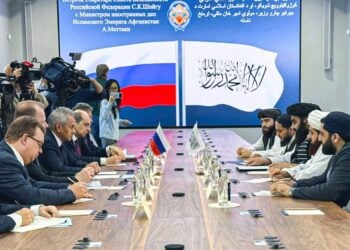
Following a consultative meeting between the Taliban and Central Asian countries in Kabul, and remarks by Amir Khan Muttaqi, the Taliban’s foreign minister, who described the Islamic State group as a “shared threat,” the fundamental question arises once again: how do the Taliban use the “ISIS threat” as a tool to redefine their political and security standing at the regional level. At first glance, such positions may appear to reflect genuine concern about the spread of insecurity in Afghanistan and the region. However, at a deeper level, this narrative seems to be less a reflection of an objective reality and more a part of a calculated strategy for Taliban survival and legitimacy-building. There is no doubt that ISIS-Khorasan poses a serious threat. Through deadly attacks, this group has demonstrated its capacity to destabilize and instill fear. Yet, at the same time, this threat is neither significant enough to fully challenge the power structure in Afghanistan, nor so negligible that it can be ignored.
The problem begins when the Taliban highlight this threat in a way that suggests all security equations in Afghanistan, and even the broader region, hinge upon it. This exaggeration is not a random choice; rather, it is part of a precise strategy to redefine the Taliban’s position within the regional order. Since returning to power, the Taliban have faced a crisis of internal legitimacy and international isolation. Under such circumstances, they need to transform themselves from a problem-causing group into an indispensable actor. The ISIS threat is precisely the opportunity the Taliban need for this repositioning. By amplifying the ISIS danger, the Taliban attempt to convey the impression that their absence would mean the unchecked spread of terrorism across the region. This narrative has proven particularly appealing to Central Asian countries, which harbor serious security concerns. That is why we are witnessing increased political and security engagement between the Taliban and certain regional states. In other words, the Taliban have skillfully managed to transform themselves from “part of the problem” into “part of the solution,” at least in the eyes of some regional actors.
Ideological Similarities and Blurred Boundaries
One important point that receives little attention is the ideological similarities between the Taliban and ISIS. Contrary to the official narrative, the intellectual distance between the two groups is not particularly deep. Both draw inspiration from rigid and fundamentalist interpretations of religion, and both seek to impose a political order based on their own particular interpretation. These commonalities highlight a troubling reality: the Taliban are not simply opposed to ISIS; in some respects, they operate within a shared intellectual spectrum. This is precisely what gives the Taliban the potential to gravitate toward behavioral patterns similar to those of ISIS. Consequently, the ISIS threat to the Taliban is not purely an external one; it also reflects an internal crisis. The Taliban have repeatedly claimed to have taken action against ISIS. However, these actions have largely been episodic, limited, and lacking in strategic depth. This situation can be analyzed from two angles: first, the absence of genuine will to eliminate ISIS, since the complete destruction of that group would remove one of the Taliban’s most important tools for legitimacy-building. Second, structural incapacity: despite controlling Afghanistan’s territory, the Taliban lack the modern intelligence, security, and ideological tools needed to fundamentally counter ISIS. Combating such a group is not limited to military operations alone; it requires extensive programs in education, culture, and the economy, areas in which the Taliban are not only weak, but in some cases actively contribute to deepening the crisis.
One of the Taliban’s most significant contradictions lies precisely here: they claim to be fighting ISIS while their own policies and approaches, directly and indirectly, contribute to the growth of extremism. The promotion of rigid madrassa-based thinking, the restriction of social freedoms, the elimination of the modern education system, and the exclusion of women from public life are all factors that push society toward radicalization. Under such conditions, ISIS can easily exploit this environment to recruit members and expand its influence. In this way, the Taliban are not only incapable of drying up the roots of ISIS; in practice, they are helping to reproduce the very conditions from which ISIS feeds.
ISIS as a Survival Tool
Within this framework, it can be argued that ISIS has become part of the Taliban’s survival strategy. This group helps the Taliban to:
- Present themselves as an indispensable force for regional security
- Attract political and economic support from regional countries
- Reduce international pressure
- And reinforce their internal legitimacy
If ISIS were to be completely eliminated, the Taliban would face a serious vacuum: the absence of a “common enemy” capable of justifying their survival. In that case, attention would shift toward the Taliban’s own performance, a performance that faces serious challenges in the areas of human rights, the economy, and governance.
Ultimately, the reality must be acknowledged that the Taliban themselves are part of Afghanistan’s crisis, and in some respects are even more dangerous than ISIS. The key difference is that ISIS is an insurgent group, whereas the Taliban hold complete control over an entire country. This position enables the Taliban to implement policies that have profound and long-term effects on Afghanistan’s society. While ISIS operates through scattered attacks, the Taliban are shaping the future course of a nation through structural decisions.
In sum, the ISIS threat in Afghanistan is a complex, multi-layered reality. It is neither large enough to command all attention, nor small enough to be ignored. Yet what has turned this threat into a defining factor is the manner in which the Taliban exploit it. By exaggerating the ISIS danger, the Taliban have managed to present themselves as an indispensable actor in the region’s security calculations. At the same time, they lack both the will and the capacity to eliminate this threat. Under such conditions, ISIS is not merely a threat but a tool, a tool that helps the Taliban guarantee their continued hold on power. This is why it can be said that ISIS has effectively become the “cash cow” of the Taliban’s survival strategy.
You can read the Persian version of this analysis here: