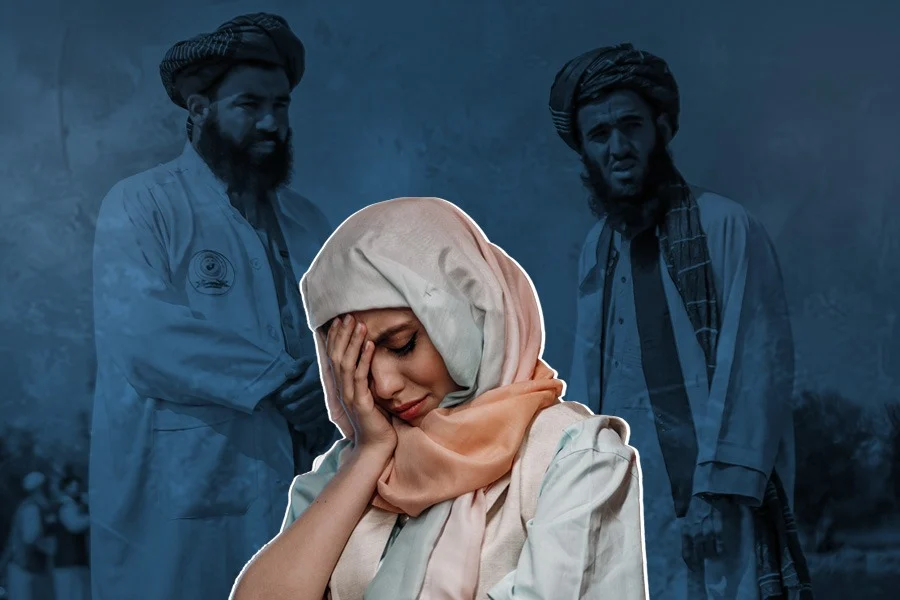
Some working women and female entrepreneurs in Afghanistan say that Taliban restrictions, declining customers, and a stagnant market have severely limited their job opportunities and income. They add that economic pressures, along with restrictions imposed on women’s presence in workplaces and exhibitions, have made it increasingly difficult for them to meet basic living expenses. These women say that the constant shadowing of their shops and work activities by the Taliban Morality Police has caused them to lose customers. According to them, the enforcement of Taliban restrictions has led women to leave home less and less frequently, even for necessities, pushing them further to the margins of society than ever before.
These women say that the enforcement of Taliban restrictions has placed immense, unbounded pressure on women, and many leave home only out of necessity, in search of a means to earn a living. They say that if they were not compelled, they would not be willing, under such circumstances and beneath the shadow of the Taliban’s suffocating prohibitions, to endure the humiliation, insults, and even the risk of arrest and imprisonment.
Zahra (pseudonym), expressing deep concern over the challenges facing women, stresses that working has become extremely difficult for a woman. Despite the restrictions, however, she continues to work to cover her living expenses.
“My husband is ill, and I have five children. I have no choice but to work. But the way the Taliban treat us is deeply distressing. The Taliban Morality Police visit my shop several times a day. From six in the morning until six in the evening, I wear a face veil the entire day,” she says.
Zahra adds: “Most of my customers were women, but their numbers have dwindled day by day because most of them have lost their jobs. If men stop at our shop even for a few minutes to look at goods or to bargain, the Taliban Morality Police arrive immediately and question them. For this reason, most men no longer come to our shop.”
Zainab (pseudonym), a worker at a factory, says her economic situation is poor and that she earns between 150 and 200 Afghanis per day. “I work hard from morning until afternoon and earn 150 or 200 Afghanis. Our economic situation is weak, and we wander around searching for work. One day we find work, the next day we are unemployed. If I work, there is food at home. If I do not work, there is no food even for that day,” she says.
She adds: “The women who work here all have nursing infants. The infants stay home while their mothers come to work.”
Khadija (pseudonym), a female entrepreneur, says that in most exhibitions, women are not permitted to participate and present their products to the public. She notes that the domestic market also lacks significant vitality, and they do not have adequate opportunities to participate in trade exhibitions where merchants are typically present and to introduce their products.
“I produce handicrafts and four women work with me. Although our work requires considerable effort and time, our sales are virtually nonexistent. The women we have employed are the sole breadwinners of their families. Each of them either has children, is a widow, or has a husband who is addicted to drugs or is ill,” she says.
Khadija adds: “In the exhibitions we have participated in so far, the Taliban have repeatedly imposed restrictions on women’s entry. Women have waited for hours and have not been granted permission to enter. Most of the time, even our rent remains unpaid.”
Working women and female entrepreneurs emphasize that the pressures on them are increasing day by day, and if the current situation continues, they will be forced, like many other women, to abandon work entirely. According to them, the Taliban do not care even if their children and family members die of hunger, as Hibatullah Akhundzada, the Taliban Supreme Leader, has stated that poverty comes from God and that no one should complain about it.
Mullah Hassan Akhund, the Taliban’s Prime Minister, has also stated that the Taliban’s regime never promised “sustenance” to the people, and that hunger comes from God, who tests his servants through it.
You can read the Persian version of this report here:
پیدا کردن نان با ترس و تحقیر؛ محتسبان طالبان زنان شاغل را منزویتر میکنند