A number of Kabul residents have expressed concern over the renewed rise in the number of beggars in the city. They say that despite the Taliban’s campaign to round up beggars, many women, children, and men in different parts of Kabul still ask passersby for money and food. According to these residents, women and children make up a significant share of those begging across the city. Kabul residents believe unemployment, economic hardship, and the restrictions imposed on women’s work are among the factors behind the spread of begging in the city. In their view, rounding up beggars from the streets, without addressing their livelihood problems and creating job opportunities, cannot be a lasting solution for reducing begging.
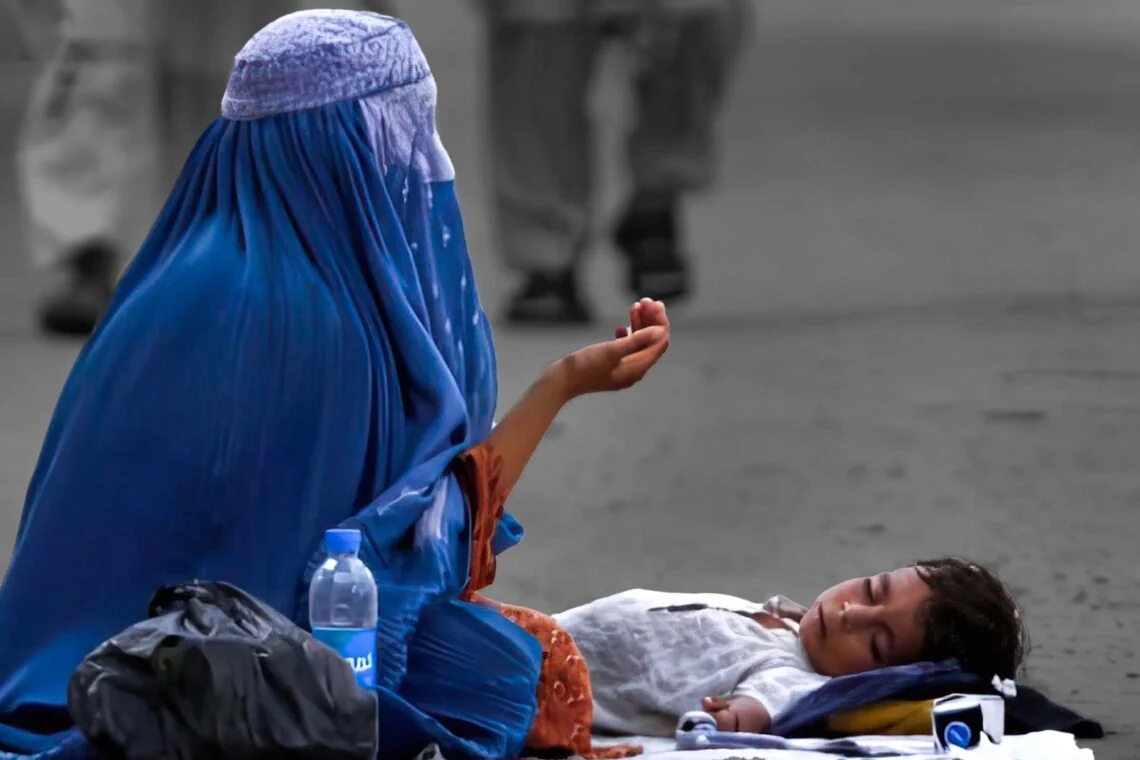
These days, in different parts of Kabul, women can be seen asking passersby for help while describing their family and livelihood problems. Some of them try to attract people’s attention with phrases such as “It is the eve of Friday, my child; my children are orphans, and I have no breadwinner” and “My husband is ill, and my children are hungry at home; buy me a piece of bread.” Some of these women sit by the roadsides with their children and, at times, weeping and pleading, ask passersby for money or food.
Shamsullah, a resident of Kabul, says that despite the Taliban’s campaign to round up beggars, a large number of them are still present on the city’s roads, sidewalks, and intersections. He adds that some of them ask people for help by showing hospital prescriptions or by citing problems such as lost money and having no fare for transport. According to Shamsullah, begging as a profession by some individuals has reduced citizens’ trust in helping those who are truly in need.
Shamsullah says: “Even though several beggars were rounded up from the city earlier, in different parts of Kabul we still see many women and children in stylish clothes asking people for money. Others show a hospital prescription and say they need money to treat a patient. There are even people who ask passersby for help with excuses such as lost money or having no fare for transport. In my opinion, begging has turned into a business for some people. In the past, some of these people were also rounded up, and it was said that despite owning a house, a car, and financial means, they earned income this way. The continuation of this situation has made people doubtful about identifying those who are truly in need, and the trust of some citizens in helping the needy has declined.”
Tamim Alamyar, another Kabul resident, says that the insistence of some beggars, particularly children and teenagers, when asking passersby for money is bothersome for citizens. He adds that some of these people even approach others without permission and insistently demand money. The young man warns that possible exploitation of people’s sympathy could reduce citizens’ trust and limit support for those who are truly in need, including orphans and widows.
Alamyar says: “Among the beggars, we see many children and teenagers who insistently ask people for money, and sometimes they even approach them without permission and touch them. Of course, many families are truly in need, suffer from unemployment, and some of them are orphans and widows. But alongside them, we also see young people who are able to work and yet ask people for money. I believe we should never turn away the hand of someone in need, but the problem is that people’s sympathy and generosity are sometimes exploited.”
Amrullah (pseudonym), another Kabul resident, says: “Some of the families who have returned from Iran are asking people for help to meet their living needs because of unemployment and economic problems. Some members of these families are still in Iran, and those who have returned to Afghanistan are facing livelihood difficulties. Some time ago, the beggar collection commission had rounded up some of these people. But one of them told me that only the names of their family members were registered and they received no assistance. He also said that a family of five received 2,000 Afghanis (AFN) in monthly assistance, but this amount was not enough to meet their living needs, and the family members had turned to begging again.”
Rashed, another Kabul resident, says that a cash assistance of 2,000 AFN is not enough to cover living costs for families with no source of income. He adds that rounding up beggars from the city, without providing opportunities for work and income, cannot prevent them from returning to the streets. According to Rashed, some of the women who beg to meet their families’ needs go back to asking people for help after being rounded up again.
Shafi, another Kabul resident, says: “Problems in Afghanistan have truly increased. People sit in the alleys and markets and beg. This situation stems from desperation and helplessness; people have fallen on hard times, and many families are facing economic difficulties. Some people earn 100 to 250 AFN a day, but they must pay house rent and their other living expenses out of that same money. For this reason, many of them are forced to ask people for help to meet their needs.
Begging in public places in Kabul continues despite the Taliban’s campaign to round up beggars. In recent months, in addition to women who ask people for help at roadsides and intersections with their children, others have also been asking passersby for help by citing economic problems, illness among family members, having no fare for transport, or lost money and belongings.
The Taliban’s beggar collection commission had previously announced that since the start of the roundup process in Kabul, 74,968 people have been collected from the city. According to the commission, after reviewing their cases, 37,947 were found eligible for assistance, and another 37,021 were identified as professional beggars. The commission said that monthly assistance of 2,000 AFN had been set aside for those found eligible.
You can read the Persian version of this report here:
بازگشت گدایان به خیابانهای کابل؛ فقر و بیکاری ترس از چماق طالبان را بیاثر کرده است