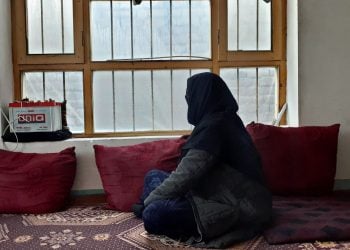

Several female teachers in Jawzjan province say that the Taliban have suspended the work of women teachers while simultaneously appointing individuals close to the group to teaching positions. According to these teachers, this process is not only discriminatory but has also led to targeted dismissals, economic pressure, and forced resignations.
Sources among female teachers in Jawzjan province, particularly teachers at Goharshad Begum High School in the city of Sheberghan, say that, alongside the suspension of several female teachers, individuals affiliated with and close to the Taliban have been appointed in their place. These sources emphasize that the Taliban have transferred female teachers to remote schoolstoo pressure them into resigning. The sources add that in addition to this pressure, the teachers are also facing discriminatory treatment by the group.
A source among female teachers at Goharshad Begum High School says that in a recent move, the Taliban dismissed several teachers at the school, as well as two head teachers, and replaced them with their own affiliates. According to these sources, in one instance, the daughter of one of the officials of the Taliban’s Department of Education in Jawzjan was appointed in place of a female teacher.
One source, who did not want their identity mentioned in the report due to security concerns, said: “In place of one of the teachers, Hamida, the daughter of Saleh Mohammad, the head of human resources at the Taliban’s Department of Education, came and was appointed.”
Additionally, several female teachers at Goharshad Begum High School in Jawzjan, who had been teaching at the school for years, have been dismissed from their teaching positions due to their ethnicity, and because they are Uzbek, women affiliated with the Taliban have been appointed in their place.
Salima (pseudonym), one of the teachers at Goharshad Begum High School who was recently dismissed from her job, says: “From grade one to grade six for girls, two Uzbek head teachers were removed from their positions and two Pashtun teachers were appointed as head teachers in their place. In addition, 32 extra teaching positions were also assigned.”
Teachers also say that to force them to leave their jobs, they are being sent to remote schools, such as in the areas of Kikartak, Salmazan, Jaqsai, and other regions, schools where commuting is costly and difficult. One teacher who was assigned to “extra teaching” by the administration last year said, “Even though my economic situation was not good, I paid 2,000 Afghanis in taxi fare every month to go to one of the most remote schools. It was very difficult to travel back and forth, but I did not want to lose my job.”
Another female teacher who was transferred by the Taliban to a remote area last year says, “The road was very rough. I always took my husband with me as a mahram. Two people were working on one salary.” According to female teachers in Jawzjan, the Taliban transfer them to remote areas so they come under pressure and are forced to resign from their jobs. These teachers emphasize that if they become unemployed, they will face serious economic problems and pressures.
One teacher adds, “To reduce taxi expenses, I commute with shared vehicles. It is very painful that we were assigned to extra teaching, while our schedule was fixed, our students were present, and we were teaching our subjects. But through connections, they brought in other people and gave our subjects to them in rotation.”
Teachers in Jawzjan emphasize that the continuation of this situation has placed the education system in a serious crisis, and that discrimination, economic pressure, and job instability have taken away teachers’ motivation to work. They are calling for the immediate attention of responsible institutions and an end to arbitrary appointments, ethnic discrimination, and organized pressure on female teachers.
This comes as the Taliban, after regaining control of Afghanistan, have barred women from working in most sectors and, even in exceptional sectors such as education and health, have allowed them to work only under severe restrictions and pressures.
You can read the Persian version of this report here:
فشار و تبعیض طالبان در جوزجان؛ آموزگاران زن در معرض برکناری و بیثباتی شغلی