• 8AM.MEDIA
  • ویب‌سایت فارسی
  • پښتو ویب‌پاڼه
  • اۉزبېکچه ویب‌سایت
  • Podcast
Monday, September 28, 2026
Hasht-e Subh
  • Home
  • News
    • Afghanistan News
    • World News
  • Opinion
    • Editorial
    • Analysis
  • Reports
    • Daily Reports
    • Investigative Reports
  • Society
    • The story of people
  • Women’s Word
  • Columns
    • Three Years After Afghanistan’s Fall: The Taliban’s Resurgence
    • Towards Equality
    • The Resurgence of the Taliban: Two Years Since Afghanistan’s Fall
    • Hebatullah Report Special Edition
    • Resistance for Education Special Edition
    • Special Column on Taliban’s Education Curriculum
    • Nawroz
  • Interviews
  • Contact Us
    • About Us
    • 8AM MEDIA Annual Awards
    • Submit an Article to Hasht-e-Subh
  • 8am.mediaBack
Subscribe
No Result
View All Result
  • Home
  • News
    • Afghanistan News
    • World News
  • Opinion
    • Editorial
    • Analysis
  • Reports
    • Daily Reports
    • Investigative Reports
  • Society
    • The story of people
  • Women’s Word
  • Columns
    • Three Years After Afghanistan’s Fall: The Taliban’s Resurgence
    • Towards Equality
    • The Resurgence of the Taliban: Two Years Since Afghanistan’s Fall
    • Hebatullah Report Special Edition
    • Resistance for Education Special Edition
    • Special Column on Taliban’s Education Curriculum
    • Nawroz
  • Interviews
  • Contact Us
    • About Us
    • 8AM MEDIA Annual Awards
    • Submit an Article to Hasht-e-Subh
  • 8am.mediaBack
No Result
View All Result
Hasht-e Subh
No Result
View All Result

The Taliban-Russia Security Pact: Breaking Isolation or Deepening It?

Shujauddin Amini Shujauddin Amini
1 June 2026 - Solar Hijri Date: 1405/03/11 [t_time:1780329375]
Taliban and Russian officials sign a military-security agreement on the sidelines of the International Security Forum in Moscow. (Photo credit: Russian media)

Russian media

Russia rolled out the red carpet for Yaqoob Mujahid, the Taliban’s defense minister. Although he attended the three-day International Security Forum as a guest alongside other participants, senior military and security officials in Moscow held separate meetings with him. More significantly, a military-security agreement was signed between the Taliban and Moscow. Its contents remain largely undisclosed, fueling widespread speculation. Russia’s warm reception of Mullah Yaqoob should hardly come as a surprise. Moscow has officially recognized the Taliban regime and, as a result, is bound to treat its members as representatives of a legitimate government. For their part, the Taliban have openly aligned themselves with Moscow and other American rivals, with little apparent fear of a Western backlash. This alignment, of course, is a direct consequence of the West, and Washington in particular, keeping the group at arm’s length. The Taliban desperately want friendship with the United States, but Washington remains uninterested. The reason is straightforward: the Taliban have refused to make even the slightest concession on democracy and human rights. Unlike the United States, Russia, as a major anti-Western power, went ahead and recognized the Taliban regime. Rumors suggest that the Islamic Republic of Iran may soon follow Moscow’s example. China also maintains warm relations with the Taliban and wants no harm to come to the group, not even from Pakistan, Beijing’s key ally. To that end, China has been mediating between the two sides to prevent conflict, an effort the Taliban regard as significant. The United States, by contrast, stands with Pakistan and, according to Taliban claims, encourages Islamabad to strike Afghanistan.

Beyond the factors outlined above, two specific developments appear to have pushed the Taliban toward closer engagement with Russia and the signing of this agreement:

1) Alexander Bortnikov, the head of Russia’s Federal Security Service (FSB), recently claimed that ISIS-Khorasan (ISIS-K), affiliated jihadist groups, and armed Taliban opponents, specifically the National Resistance Front of Afghanistan (NRF) and the Afghanistan Freedom Front (AFF), are attempting to seize territory in northern Afghanistan from Taliban control. According to Bortnikov, these groups operate with British backing, an unsubstantiated but noteworthy claim. He further suggested that Western powers are using this plan as a pretext to destabilize the existing order in Central Asia. If true, it would be only natural for the Taliban to lean on Russia for support, even at the cost of Western displeasure. Russian intelligence had almost certainly already shared the information behind Bortnikov’s claims with the Taliban and advised them on countermeasures.

More critically, Bortnikov, whether deliberately or not, has lumped the anti-Taliban military fronts together with ISIS and other terrorist organizations, a framing that the Taliban welcome. The Russian official is implicitly suggesting that ISIS and the armed anti-Taliban fronts have joined hands, with the overthrow of the Taliban regime as their “shared objective.” Statements like these signal that the Kremlin has, at least for now, turned the page on supporting Taliban opponents and chosen to back the established regime instead. Bortnikov explicitly underscored the need to strengthen counterterrorism coordination with the Taliban. Interestingly, Ata Mohammad Noor, the former governor of Balkh, echoed a similar theme in his Eid message, claiming there are alarming signs of organized efforts to expand ISIS activities in Afghanistan to ignite a new wave of violence and instability. Whether Noor’s message corroborates the Russian official’s claims or the Taliban’s longstanding assertion that Pakistan supports ISIS-K remains unclear.

The contradiction between Bortnikov’s and Mullah Yaqoob’s claims is also striking. Bortnikov warns of a strong ISIS presence in Afghanistan, while Mullah Yaqoob, speaking at the very same International Security Forum, declared the group completely crushed and destroyed. If ISIS has truly been eliminated, how can it still be powerful enough to threaten Taliban-held territory, as Bortnikov alleges?

2) The ongoing Pakistan-Taliban conflict is also a driving factor. The Taliban have moved well beyond suspicion to a firm conviction that Washington backs Islamabad. Mullah Yaqoob himself has acknowledged this on several occasions, arguing that Pakistan’s strikes on Afghanistan are aimed at destroying military equipment left behind by American forces, an objective he insists would be impossible without a green light from the White House. He also conceded that Pakistan supports Taliban opponents. Given all this, the Taliban’s patience has run out. By siding with Russia, they are seeking to leave a bitter taste in America’s mouth. Of course, the Taliban’s last resort may amount to nothing more than the signing of this security agreement. Judging by the defense minister’s statements, the deal centers on purchasing defensive weaponry from Moscow to counter Pakistani strikes, given that Pakistan currently enjoys American favor. Upon landing at Kabul airport, Mullah Yaqoob declared that Pakistan would henceforth think twice before attacking Afghanistan. He also issued warnings to Pakistan during his Forum speech and bilateral meetings with Russian officials. His remarks suggest he returned from Moscow with substantial gains in hand. The Kremlin, having unilaterally recognized the Taliban regime, appears to feel obligated to meet its needs while simultaneously working to preserve the distance between the regime and the West.

The central question remains: will friendship with Russia bring an end to the Taliban’s isolation? The reality is that the path out of international isolation runs through the West, and the United States in particular, not through Russia. In today’s world, every country that has allied with Moscow has sunk deeper into isolation, struggling to find a way out. By this logic, a security agreement with the Kremlin marks not the end of Taliban isolation but the beginning of a new chapter of it. To put it plainly, whenever Belarus, North Korea, the Islamic Republic of Iran, and others manage to escape international isolation despite their strategic alliances with Russia, only then will the Taliban find their own way out.


You can read the Persian version of this analysis here:

امضای موافقت‌نامه امنیتی با روسیه؛ پایان یا آغاز دور تازه انزوا؟
ShareTweetSendSendShare

Related Posts

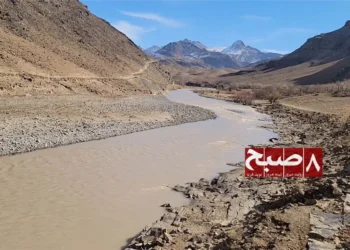
A dry riverbed and low water flow are seen along the Tarinkot River in Uruzgan province, as residents await construction of the Aghajan Dam. (Photo credit: 8am.media)
Daily Reports

Uruzgan Residents: Two Years After Groundbreaking, Aghajan Dam Construction Still Not Started

27 September 2026 [t_time:1790532173]
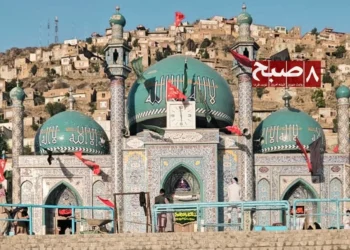
Worshippers gather at the Sakhi Shrine in Kabul, a site visited by Shia and Sunni followers alike, amid ongoing reports of restrictions on religious freedom in Afghanistan. (Photo credit: 8am.media)
Daily Reports

Citizens Say Taliban Have Restricted Religious Freedom

27 September 2026 [t_time:1790531897]
The emblem of the Afghanistan Freedom Front (AFF), a resistance movement that has pledged to cooperate with the UN's newly established independent accountability mechanism to document human rights violations and Taliban crimes in Afghanistan.
Afghanistan News

Freedom Front Claims 37 Taliban Fighters Killed in Nuristan and Kunar

27 September 2026 [t_time:1790530890]

Latest

Loading latest news...

Popular stories

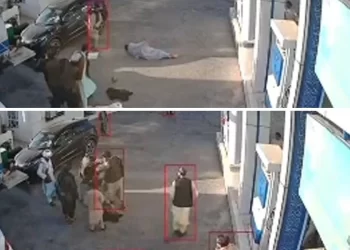
  • Surveillance footage shows Taliban fighters surrounding and shooting a bound man in Herat. (Photo credit: Social Media)

    Taliban Shoot Young Man from Herat After Torturing Him with Hands Tied

    Share
    Share Tweet
  • Al-Qaeda Releases Hamza bin Laden Message on 9/11 Anniversary

    Share
    Share Tweet
  • UN Report Reveals Shifts in Family Attitudes and Rise in Domestic Violence in Afghanistan

    Share
    Share Tweet
  • Pakistani Army Says Five Killed Over Alleged Links to Terrorism

    Share
    Share Tweet
  • Afghanistan: A New Battlefield as Iran and America Redraw the Taliban’s Role in Regional Power

    Share
    Share Tweet

Podcast

Insights
Insights

Join Lynne O’Donnell for 8AM’s podcast series, Insights.
Lynne talks with generals, diplomats, soldiers, journalists, politicians, activists, people who have front row seats for conflicts around the world, and citizens with a story to tell, happy or sad. For this first series, Afghanistan is the focus. Lynne and her guests talk about the collapse of the republic in August, 2021, and the impact since — for the people of Afghanistan, for the security of the region, for the safety of the world. It’s important, interesting and insightful.

Insights/22: Controlling the Narrative with Mina Sharif
byinsights8am

Controlling the Narrative

Lynne O’Donnell talks with Mina Sharif, author, activist, women’s rights campaigner, educator and mentor. They discuss who controls the narrative and who speaks for Afghanistan’s people when the Taliban appear to have seized control not only of the country but of the message, too.

Have a listen

Insights/22: Controlling the Narrative with Mina Sharif
Episode play icon
Insights/22: Controlling the Narrative with Mina Sharif
Episode Description
Episode play icon
Insights/21: Media Meltdown with Zahra Joya
Episode Description
Episode play icon
Insights/20: Terror Inc with Scott Richards
Episode Description
Episode play icon
Insights/19: Busting Stereotypes with Bushra Gohar
Episode Description
Episode play icon
Insights/18: Media Matters with Waliullah Rahmani
Episode Description
Episode play icon
Insights/17: What Goes Around Comes Around with Sima Samar
Episode Description
Search Results placeholder
Hasht-e Subh

8AM Media, also known as Hasht-e-Subh Daily, stands as Afghanistan's premier independent and non-profit newspaper, resonating as a beacon of journalistic integrity since its establishment in June 2007 by esteemed Afghan journalists and human rights advocates. With a steadfast commitment to citizen journalism and civic education, Hasht-e-Subh Daily has earned its place as the most esteemed publication in the nation.

Publisher: Sanjar Sohail
Email: [email protected]
Executive Director: Parwiz Kawa
Email: [email protected]

Read More

Uruzgan Residents: Two Years After Groundbreaking, Aghajan Dam Construction Still Not Started

Citizens Say Taliban Have Restricted Religious Freedom

WHO: No COVID-19 Deaths Recorded in Afghanistan Since January

Freedom Front Claims 37 Taliban Fighters Killed in Nuristan and Kunar

UNAMA: Afghanistan Has Exceptional Tourism and Cultural Potential

Editor’s Choice

Every Saturday morning, 8AM MEDIA English Services Department will guide you through the week’s biggest stories from Afghanistan and the international community.

Subscribe

© 2026 - ©Hasht-e Subh Daily

No Result
View All Result
8am.Media
پښتو ویب‌پاڼه
ویب‌سایت فارسی
اۉزبېکچه ویب‌سایت
  • Home
  • News
    • Afghanistan News
    • World News
  • Opinion
    • Editorial
    • Analysis
  • Reports
    • Daily Reports
    • Investigative Reports
  • Society
    • The story of people
  • Women’s Word
  • Columns
    • Three Years After Afghanistan’s Fall: The Taliban’s Resurgence
    • Towards Equality
    • The Resurgence of the Taliban: Two Years Since Afghanistan’s Fall
    • Hebatullah Report Special Edition
    • Resistance for Education Special Edition
    • Special Column on Taliban’s Education Curriculum
    • Nawroz
  • Interviews
  • Contact Us
    • About Us
    • 8AM MEDIA Annual Awards
    • Submit an Article to Hasht-e-Subh
  • 8am.media

© 2026 - ©Hasht-e Subh Daily