The conclusion of this debate is clear: Afghanistan will have no future under the continued rule of the Taliban Emirate, nor through a return to the same centralized, elitist, and palace-centric republic that ultimately collapsed in its moment of crisis. The people of Afghanistan need neither a reproduction of the Taliban nor the return of leaders who abandoned them in the darkest hour of the country’s contemporary history. Afghanistan’s path forward does not lie in backroom deals, the return of discredited figures, or the legitimation of power through force. It runs through accountability, justice, genuine civic participation, respect for human dignity, and an honest reckoning with the past.
In this context, the United States and the European Union (EU), particularly Brussels and The Hague, must take this warning seriously. Europe’s policy toward the Taliban must not be reduced to a narrow and superficial issue: deportation agreements for migrants. Such an approach is not an Afghanistan policy. It is not a sustainable security policy. It is not a solution to the flow of refugees into these countries, and it is not a defense of European values. It is nothing more than political theater: an attempt to appear active in the face of domestic immigration pressures without addressing the roots of the crisis.
If Europe believes it can manage the Afghanistan crisis and its consequences by negotiating over the deportation of a small number of deported citizens of Afghanistan, it is making a serious miscalculation. Those individuals will quickly be replaced by fresh waves of migration, human trafficking, and flight from repression. As long as the root causes of the crisis remain within Afghanistan, namely unaccountable governance, the repression of women, political elimination and killings, poverty, insecurity, and the absence of any future, migration will continue. The Taliban is neither a reliable partner for Europe nor a responsible institution for managing migration. This group is itself part of the crisis, not its solution.
The greater danger is that the Taliban will exploit migration networks, trafficking routes, human suffering, and Europe’s need to control its borders as instruments of political leverage. If Europe limits its policy solely to returning migrants, it will, in effect,t allow the Taliban to use the suffering of the people of Afghanistan to extract legitimacy and concessions. Such a policy would not constrain the Taliban. It would transform the group into an actor capable of pressuring Europe through migration crises, security threats, and backroom dealings.
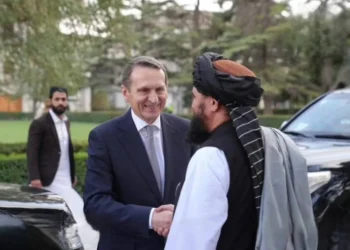
A new and even graver danger is the Taliban’s open drift toward Russia. Unable to draw on domestic popular legitimacy inside Afghanistan, the Taliban is desperately seeking out countries willing to grant it recognition or construct for it some form of political standing. In this context, the Taliban’s growing closeness to Moscow and the signing of a military or military-technical cooperation agreement with Russia is not a routine diplomatic contact. It is a signal that Afghanistan is entering a more dangerous phase of great-power competition. If this relationship leads to arms transfers, training, intelligence cooperation, or the strengthening of the Taliban’s security apparatus, the consequences for the people of Afghanistan and for the broader region will be severe. Taliban ideology, when combined with the tools of modern warfare and the backing of a foreign power, makes repression more organized, more brutal, and more lethal. The question of what Russia hopes to gain from the Taliban in its war in Ukraine, or whether it might one day draw on the networks, supply routes, or affiliated forces of this group, remains unanswered. But such proximity alone is reason enough for the West to sound the alarm.
Russia, too, faces a glaring contradiction in this affair. Moscow has spent years accusing the West of failing to uphold international principles, of using human rights instrumentally, and of placing geopolitical interests above the rights of peoples. Yet Russia itself is now engaging with a regime that was not born of a popular vote, holds no legitimate constitution, does not represent the actual citizens of Afghanistan, and does not observe even the most basic human rights. The Taliban has systematically excluded half of society, women and girls, from education, employment, and public life, while keeping the other half under psychological, economic, and security pressure. Providing political or military support to such a system is not a contribution to stability. It is a contribution to the consolidation of repression. Russia cannot speak of the rights of peoples while backing a group that has stripped the people of Afghanistan of their right to self-determination.
The EU must define the Taliban for what it is: an unelected, repressive, ideological system that violates the fundamental rights of the citizens of Afghanistan. Any engagement with the Taliban must be conditional, verifiable, and limited. Europe must set clear benchmarks: the reopening of girls’ education, an end to systematic discrimination against women, guaranteed rights for ethnic and political groups, permission for civil society and the media to operate, the severing of ties with extremist networks, and acceptance of an inclusive political process. Without such conditions, any engagement with the Taliban amounts to the normalization of repression.
Europe must also come to understand that Afghanistan is no longer simply a humanitarian file. It is now part of a new global power contest. The entry of actors such as Russia, China, Pakistan, Iran, and other regional powers into the Afghan arena has drawn the country into a new geopolitical competition. If Europe lacks a clear and independent policy, Afghanistan will become a sphere of influence for these players, while the people of Afghanistan remain the principal absentees from these arrangements. In such circumstances, Europe would not only lose its leverage but might inadvertently become a tool in the Taliban’s hands: an instrument for legitimation, migration control, and the silencing of democratic alternatives within Afghanistan.
Europe must therefore change course. Rather than focusing on deportation agreements and technical contacts with the Taliban, it must define a policy centered on transformation. That policy must support independent analysts from Afghanistan, civil society actors, women, young people, war survivors, journalists, academics, and political currents that are working to build a legitimate, just, and accountable order. Europe must not marginalize these voices and then deal with the Taliban as the only “existing reality.” The reality of Afghanistan is not only the Taliban. The reality of Afghanistan is millions of citizens living under pressure, discrimination, poverty, and fear, whether inside the country or in exile, who have not yet surrendered their right to self-determination.
At the same time, Europe must conduct a serious review of its humanitarian assistance. Aid to the people of Afghanistan is necessary, but it must not be channeled through networks that are, in practice, aligned with the Taliban, that extract concessions from the Taliban, or that have become an informal instrument for legitimizing the group. Humanitarian support must be transparent, independently monitored, and free from co-optation. Europe must not, in the name of humanitarian aid, strengthen networks that ultimately serve the Taliban and silence the independent voice of civil society in Afghanistan.
The final message must be clear: Afghanistan has no future under the Taliban Emirate, just as a return to the centralized and corrupt republic of the past is no path to salvation. The future of Afghanistan lies in an accountable, inclusive, and just order grounded in the will of its people. If Europe and the United States genuinely believe in stability, human rights, security, and international order, they must step back from short-term deals with the Taliban and, instead of managing the crisis in appearance only, stand alongside the people of Afghanistan and the country’s legitimate political and civil forces. No backroom deals, no return of fugitive leaders, no normalization of the Taliban, and no surrender of Afghanistan to Russia’s game. The road to the future runs only through accountability, justice, and respect for the people of Afghanistan.
You can read the Persian version of this analysis here:
هشدار به غرب: معامله با طالبان سیاست نیست، خطای استراتژیک است