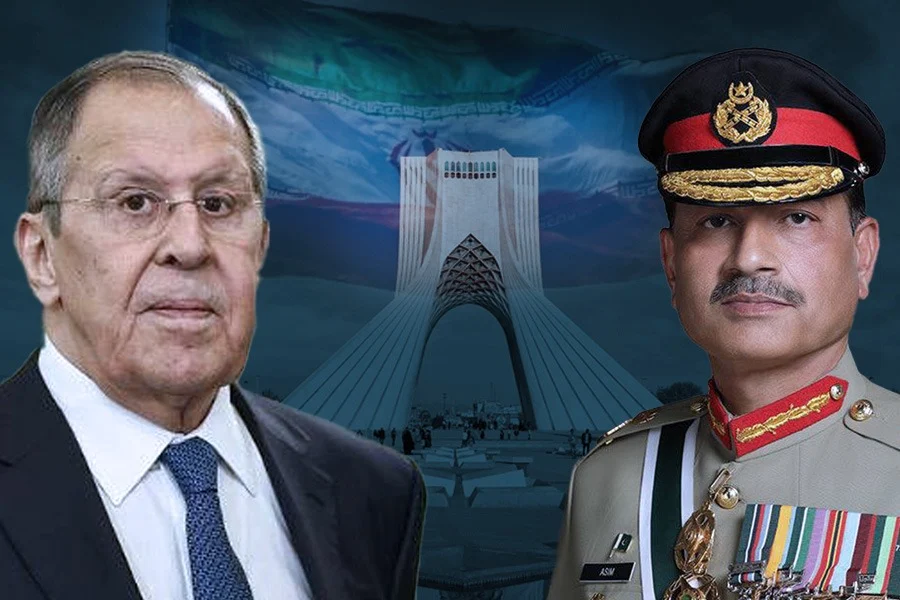
In less than two weeks before the United States midterm elections and only a few days before Israel’s parliamentary elections, Tehran has become the focal point of diplomatic traffic. The visits to Tehran by Sergey Lavrov, Russia’s Foreign Minister, and Asim Munir, Pakistan’s Army Chief, and their meetings with senior Iranian officials are two examples of serious diplomatic activity in recent days. Apparently, the purpose of both visits and meetings was to discuss how to exit the current volatile and precarious situation in the Middle East, a situation for whose creation the United States, Israel, and Iran each bear some degree of blame.
The main question is this: can this heavy diplomatic traffic prevent a new war from starting? To answer it, one must distinguish between the likelihood of continued diplomacy, the likelihood of reaching an agreement, and the likelihood of war breaking out. The activity of behind-the-scenes talks does not necessarily mean an agreement is near, just as a rising risk of war does not mean that an attack is equally likely at every point in time.
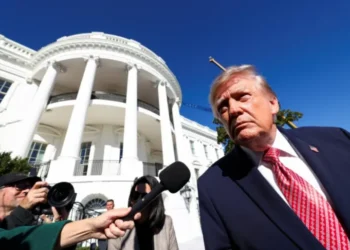
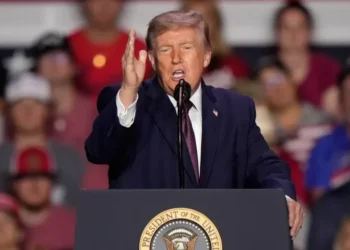
For Donald Trump, resuming the war before the midterm elections could carry a considerable political and economic cost. A wider war, particularly if it leads to further disruption in the global energy market, would weaken the Republicans’ position in the elections. For Trump, only a limited agreement that helps reduce tensions and calm the energy market could count as an achievement, and this does not mean he would necessarily accept just any deal. For Trump, an agreement that, in the eyes of public opinion and his Democratic rivals, grants Iran too many concessions could become a weakness instead of a victory. For this reason, he withdrew from the Islamabad memorandum of understanding.
In Israel, however, the situation is different. For Netanyahu, the issue is not only preventing war or reaching an agreement; how power is displayed, how the outcome of the war is assessed, and the defense of his wartime record also matter. In this framework, an agreement that leads to a halt in the war may be an electoral achievement for Trump, but not for Netanyahu. For this reason, Netanyahu is trying to prevent the formation of an agreement that would keep the military option on hold. If Netanyahu cannot launch an attack before the elections, he may do so after the elections, even if he does not win, given that negotiations within the parliament to form a new government in Israel sometimes take a long time. In the meantime, the sitting government continues its work. Even if Netanyahu is defeated, he can change the circumstances before handing over power.
Tehran, a principal party to the conflict, may also believe that time is working in its favor. If Iranian officials believe that escalating the crisis pushes up energy prices and damages Trump’s electoral standing, they may prefer not to make decisive concessions before the elections. From their perspective, an early agreement could allow Trump to present himself as the victor of the crisis, whereas the continuation of a “neither war nor peace” situation maintains political and economic pressure on Washington.
This calculation is linked to the Islamic Republic’s deeper concern about the durability of an agreement. Tehran may fear that Trump would use an agreement to announce a political victory, but after getting past the elections, turn again to a policy of pressure or even the military option. The experience of previous agreements collapsing and military attacks resuming has fueled this distrust.
In Tehran’s calculations, there may also be a hope for simultaneous change in Washington and Tel Aviv: the weakening of the Republicans in the US midterm elections and Netanyahu’s departure from power in Israel. If such a development occurs, it could create a new political atmosphere, particularly if the Democrats achieve a decisive and commanding majority rather than a fragile one.
On the other hand, relying on the strengthened position of the Houthis in Yemen and against Saudi Arabia, Tehran sees itself in a position to take a harder line against Washington’s demands. From this perspective, Iran sees no reason to settle for limited concessions under American pressure; rather, it is trying to raise the cost of failing to reach an agreement for Washington by maintaining regional pressure. This calculation could also make reaching an understanding before the elections more difficult and prolong the current deadlock until the post-election equations become clear.
Given what has been stated, for now informal and indirect talks through mediators will continue, but they will not lead to an agreement, nor will the rejection of the parties’ demands necessarily result in war. It seems that both sides are, for now, content to maintain this deadlock, a situation that is neither peace nor war, but whose continuation is not guaranteed either. Once the Israeli and American elections have passed, this fragile balance will not be preserved, and the risk of war will become a more serious option than it is today, a war that will also shape the fate of the next agreement.
You can read the Persian version of this analysis article here: