If one day I were to write the book of my life, I do not know what I would call it. But I am sure I would name it either The Chapters No One Saw, After All These Days, or perhaps Just Me. But I am certain that among its pages, there would be things written that would not be easy for everyone to read. That book would speak of laughter, of hopes I once believed in with all my heart, of people who came and went, and of dreams that still breathe somewhere in a corner of my heart. But more than anything, it would be about the pain I carried silently within me for years.
If the book of my life were written, a large part of it would resemble autumn; a long, quiet, and silent autumn. The same season in which trees lose their leaves one by one, without anyone asking whether they are ready or not. Perhaps my life was sometimes like that too. I had leaves I was attached to: people, dreams, beliefs, and days I thought would remain forever. But time came and took them away from me one by one, and I could only stand there and watch.
Autumn does not always begin with a great storm. Sometimes it arrives quietly. With a piece of news, a goodbye, a failure, indifference, a closed door, a long night, or even the silence of someone you expected to stand beside you. Then one day, you open your eyes and realize that something inside you has changed. You are still the same person, with the same face, the same name, the same life, but you are no longer the person you used to be.
The book of my life would speak of nights when sleep had fled from my eyes, and I stared at the ceiling with a thousand thoughts and a world of exhaustion. Nights when no one knew what was happening behind my silence. Perhaps others thought everything was fine because I smiled, talked, and continued with my life. But no one knew that some smiles are not the result of happiness. Sometimes a person smiles because they no longer have the strength to explain their pain.
If the book of my life were to be written, as its author I would have to write about the days when I was forced to be strong, exactly when all I wanted was for someone to sit beside me and say: You do not always have to be strong.
I would have to place among its words the days when I broke a thousand times, yet got back up the next morning. Not because I was without pain, but because life does not wait for me to heal. Things had to be done, responsibilities continued, days came one after another, and I had to keep moving forward with all my exhaustion.
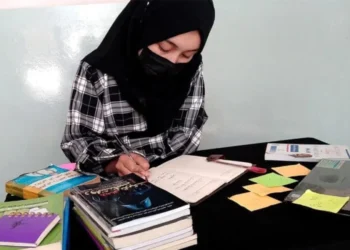
My book might contain chapters written in the ink of tears. Especially the days when I found myself imprisoned and judged in my own home, while I watched girls my age wearing green wedding dresses and white clothes in their husbands’ homes. Days when I followed the news, waiting for the reopening of schools to be announced, just so I could enter a school for one second and lovingly turn the pages of my books.
Days when I was called a burden on society and a disgrace to it, yet became a source of pride for my parents. Days when I did not merely shed tears; I tried to escape from time and circumstances, made a second plan to leave the country, and experienced thousands of blocked paths in trying to leave it. Days when I only waited, but instead of tears of joy, my throat filled with sorrow and my face with happiness.
There would be chapters about people I loved but could not keep. About those for whom I sacrificed parts of myself, and perhaps they never even realized what I had lost for them. About the words I never said, the feelings I hid, and the goodbyes that seemed to have ended but still continue within me.
Some people leave our lives, but not our hearts and memories. It has been five years since my friends and their memories existed only as an old image and a frame of memory, like a photograph that can be touched but never truly felt. This is one of the bitterest parts of growing up: learning that you can love some people while also accepting that they will no longer be part of your life.
If the book of my life were written, it would also speak of loneliness. Not only the loneliness of having no one around, but the kind of loneliness you feel even when you are surrounded by people. When there are a thousand people around you, but no one knows what is happening inside you. When you want to speak, but do not know whom to talk to. When you have kept so many words inside yourself that silence has become part of your personality; you have gathered so much inside that it has turned into a lump in your throat. This lump is not only about education, freedom, and being a girl. It is also about an age that is passing. I am eighteen years old, but I live like a sixty-year-old woman; restricted and confined.
Perhaps the reader of my book would think on some pages: Why has this person been silent for so long? The answer would be simple: because some pains are so deep that words become incapable of expressing them. Some pain cannot be spoken because circumstances do not allow it. You are restricted and forced to keep it inside, to hide your tears, and to comfort yourself. But the book of my life was not only about suffering. If it were only about suffering, perhaps it would never have been worth writing.
Among all those autumns, there were springs too. Perhaps they were short, perhaps faint, but they were real. Moments when I laughed again. Mornings when I woke up with hope. People whose presence felt like light to me. Small achievements that may have meant nothing to others, but for me were the result of fighting through difficult days.
That book would say that I was not always victorious, but I was never always defeated either. This may be the most important sentence in my book. I became tired many times, lost hope many times, and asked myself many times: How long? And perhaps on some nights, I believed I no longer had the strength to continue. But another morning came, and I continued again. Perhaps with a tired heart, perhaps with slow steps, but I continued. Because that is what life is; sometimes you have to keep walking even with a broken heart.
If the book of my life were to be written, it would contain all the suffering that felt like autumn; all the leaves that fell away from me, all the chapters that came to an end, all the dreams that withered before they could be fulfilled, all the people who came and went, all the tears no one saw, all the nights that barely made it to morning, and all the moments when I had to pull myself out of the darkness, while my smallest dream was simply to fly in the sky.
But on the last page, I do not want to write that my life was only an autumn. I want to write: She passed through autumn, but she did not become autumn. Perhaps this is the most beautiful truth about me.
I may still have wounds that have not healed. Some memories still come alive when I hear a song, see a place, or even hear a simple sentence. Sometimes I still miss the past; the person I used to be, the things I had, and the days that will never return: my friends, school, education, going out, walking around, and wandering the streets…
But I have learned that fallen leaves are not always a sign that a tree has come to an end. Sometimes a tree has to lose its leaves so that it can grow new ones again.
So, if one day someone turns the pages of my life and reaches the chapter of autumn, I hope they do not see only sadness. I hope they also see a story of resilience behind every fallen leaf. Behind every tear, I hope they see a heart that still had hope. Behind every silence, I hope they hear a thousand unspoken words, and behind every failure, I hope they see a person who, despite all the hardships, was still standing.
If the book of my life is written, perhaps its pages will not be complete or perfect. Perhaps some pages will be stained, some torn, and some I may not even want to read again myself. But all of them belong to me. I cannot erase the chapters of the past, I cannot return fallen leaves to their branches, and I cannot turn back time.
But I can write the next chapter myself, and perhaps the most beautiful part of the book of my life has not yet been written. Perhaps after this long autumn, there is a spring on its way that will make all the waiting worthwhile. Perhaps one day, when I look back at the past, I will understand that all that pain was not meant to destroy me; it was meant to shape me.
If that day comes, I will write the final sentence of my book like this:
I passed through thousands of autumns; many leaves fell from me, but my roots were still alive. And that was enough for spring to begin from me again, one day.