• 8AM.MEDIA
  • ویب‌سایت فارسی
  • پښتو ویب‌پاڼه
  • اۉزبېکچه ویب‌سایت
  • Podcast
Thursday, October 8, 2026
Hasht-e Subh
  • Home
  • News
    • Afghanistan News
    • World News
  • Opinion
    • Editorial
    • Analysis
  • Reports
    • Daily Reports
    • Investigative Reports
  • Society
    • The story of people
  • Women’s Word
  • Columns
    • Three Years After Afghanistan’s Fall: The Taliban’s Resurgence
    • Towards Equality
    • The Resurgence of the Taliban: Two Years Since Afghanistan’s Fall
    • Hebatullah Report Special Edition
    • Resistance for Education Special Edition
    • Special Column on Taliban’s Education Curriculum
    • Nawroz
  • Interviews
  • Contact Us
    • About Us
    • 8AM MEDIA Annual Awards
    • Submit an Article to Hasht-e-Subh
  • 8am.mediaBack
Subscribe
No Result
View All Result
  • Home
  • News
    • Afghanistan News
    • World News
  • Opinion
    • Editorial
    • Analysis
  • Reports
    • Daily Reports
    • Investigative Reports
  • Society
    • The story of people
  • Women’s Word
  • Columns
    • Three Years After Afghanistan’s Fall: The Taliban’s Resurgence
    • Towards Equality
    • The Resurgence of the Taliban: Two Years Since Afghanistan’s Fall
    • Hebatullah Report Special Edition
    • Resistance for Education Special Edition
    • Special Column on Taliban’s Education Curriculum
    • Nawroz
  • Interviews
  • Contact Us
    • About Us
    • 8AM MEDIA Annual Awards
    • Submit an Article to Hasht-e-Subh
  • 8am.mediaBack
No Result
View All Result
Hasht-e Subh
No Result
View All Result

The Deep Strategic Ties Between the Taliban and TTP: From Wartime Collaboration to Structural Coexistence

Ahangar Ahangar
8 November 2025 - Solar Hijri Date: 1404/08/18 [t_time:1762665020]
Armed fighters from the Taliban and TTP have maintained close operational ties along the Afghanistan-Pakistan border, with the relationship evolving from wartime collaboration into what experts describe as structural coexistence since the Taliban's return to power in 2021. (Photo Credit: Social Media)

Social Media

The relationship between the Afghan Taliban and Tehrik-e-Taliban Pakistan (TTP) stands as one of the most complex and consequential dynamics in South Asia’s security landscape. Rooted in a shared ideology, similar organizational structures, and overlapping strategic interests, this relationship has evolved into a defining force in regional geopolitics. Since the Taliban’s return to power in Afghanistan, these ties have entered a new and perilous phase.

To understand this relationship, one must look to its origins. Since the formation of the TTP in 2007, various factions of the group have drawn ideological and operational inspiration from the Afghan Taliban. Over the past two decades, fighters from both sides have fought side by side against foreign forces and the former Afghan governments. The tribal belt along the Durand Line has long served as a shared sanctuary and logistical corridor for both movements.

During the years of the Republic in Afghanistan, the Afghan Taliban benefited from the support of TTP fighters in the country’s eastern provinces, while in return, the TTP utilized the Taliban’s networks for training, refuge, and logistical assistance. This shared history of warfare forged a structural loyalty that has since evolved into an organic and institutionalized partnership.

With the collapse of the Afghan Republic and the Taliban’s return to power, a new operational space emerged for the TTP inside Afghanistan. According to a United Nations report, the group “has been using Afghan soil to rebuild and reorganize its forces,” establishing new training camps and sanctuaries in eastern provinces such as Nangarhar, Kunar, Khost, and Paktika.

Numerous other reports indicate that TTP members in parts of eastern Afghanistan are working with local Taliban authorities, engaging in tax collection, enforcing religious rulings, and managing local security affairs. This suggests that at the grassroots level, the distinction between the Afghan Taliban and the Pakistani Taliban has effectively disappeared, rendering the two movements inseparable.

On the surface, the Afghan Taliban deny the presence of TTP elements on their territory. In practice, however, they have used the group as a tool of pressure against Pakistan. Taliban support for the TTP extends far beyond offering sanctuary; it represents a strategic alliance from which both sides derive tangible benefits. The Taliban leverage the TTP to maintain a balance of power with Islamabad, while the TTP, in turn, relies on the Taliban’s protection and logistical infrastructure to sustain its insurgency.

Pakistan’s Naive Expectation

Pakistan believes that diplomatic pressure can compel the Taliban to rein in Tehrik-e-Taliban Pakistan (TTP). Yet such an assumption is fundamentally misguided. The Taliban neither possesses the capacity nor the political will to restrain this group. The two movements are so deeply interwoven that any decisive action against the TTP could trigger internal divisions within the Taliban ranks and even destabilize several eastern provinces of Afghanistan.

Moreover, the Taliban view a powerful TTP as an informal defensive shield against Pakistani pressure. Consequently, they have no real incentive to confront it. Even if they were to take limited, symbolic measures against the group under external pressure, the outcome could easily backfire, prompting the TTP to intensify its attacks on Pakistani soil.

Therefore, Islamabad’s expectation that the Taliban will curb or control the TTP is overly simplistic. These two movements can no longer be defined through the lens of host and guest; in practice, they have evolved into strategic partners. While the Taliban once served as Pakistan’s military and intelligence proxy, they have now emerged as an autonomous and multifaceted power in their own right. One of the most notable developments in this new equation is the Taliban’s gradual rapprochement with India, a shift reportedly taken very seriously within the movement’s upper military and intelligence circles, particularly among Mullah Yaqoob’s inner circle.

Some reports even suggest that India, through Mullah Yaqoob, has provided limited technical, intelligence, and military support to the TTP and Baloch separatist groups. In effect, the Taliban appear to be exploiting the India–Pakistan rivalry to expand their regional influence within South Asia’s proxy landscape.

A Self-Inflicted Wound

Regional experts have long warned Pakistani officials for the past twenty years of the Afghan Republic that their unconditional support for the Taliban would eventually backfire. History has shown that proxy groups are never loyal; once their interests shift, they abandon their patrons without hesitation. The Taliban today exemplify this truth. The movement that once thrived on Pakistan’s funding and sanctuary is now drawing closer to India, carving out its own path in regional politics.

In Afghanistan, there is a saying: “You reap what you sow-and sometimes the harvest.” What Pakistan is experiencing today is the direct consequence of its own misguided policies over the past five decades toward Afghanistan. A country that systematically undermined Afghanistan’s legitimate institutions and fueled extremism is now ensnared by the very forces it helped create.

Yet, it is not too late. If Pakistan abandons its short-sighted, proxy-driven strategy and instead supports the establishment of a legitimate, lawful, and representative government in Afghanistan, the region may gradually move toward curbing extremism and terrorism. Genuine cooperation, mutual respect, and recognition of Afghanistan’s sovereignty are the only paths capable of breaking this vicious cycle.


You can read the Persian version of this analysis here:

پیوندهای عمیق و استراتژیک طالبان افغانستان و تحریک طالبان پاکستان: از همکاری جنگی تا همزیستی ساختاری
ShareTweetSendSendShare

Related Posts

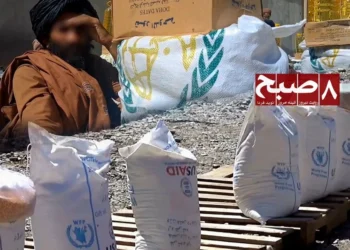
Sacks of WFP and USAID food aid are stacked on pallets as a man looks on in Zabul amid claims of Taliban interference in aid distribution. (Photo credit: 8am.media)
Daily Reports

Taliban Interference in Aid Distribution in Zabul Province Leaves the Needy Empty-Handed

8 October 2026 [t_time:1791460375]
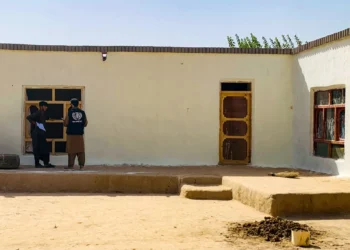
UN-Habitat assesses housing conditions in Afghanistan as part of efforts to support vulnerable communities (Photo: @UNHabitaAF)
Afghanistan News

UN Begins Repairs on 800 Shelters for Returning Families

8 October 2026 [t_time:1791460063]
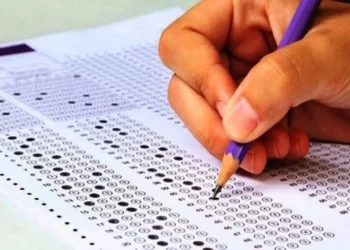
A student is filling an answer key sheet in an exam (Photo: social media)
Afghanistan News

Exit Exam to Be Held Tomorrow Without Female Candidates

8 October 2026 [t_time:1791454479]

Latest

Loading latest news...

Popular stories

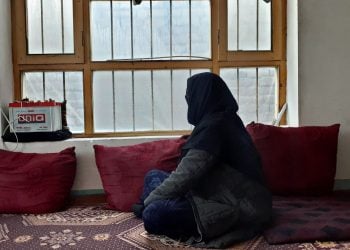
  • An Afghan woman gazes out of her home, reflecting the isolation and challenges faced by women in Afghanistan under Taliban rule. (Photo Credit: 8am.media)

    UN Report Reveals Shifts in Family Attitudes and Rise in Domestic Violence in Afghanistan

    Share
    Share Tweet
  • Taliban Shoot Young Man from Herat After Torturing Him with Hands Tied

    Share
    Share Tweet
  • Al-Qaeda Releases Hamza bin Laden Message on 9/11 Anniversary

    Share
    Share Tweet
  • Taliban Intelligence Deputy in Faizabad Killed with Two Guards

    Share
    Share Tweet
  • Iraq Reports Export of Two Million Barrels of Crude Oil Through Strait of Hormuz

    Share
    Share Tweet

Podcast

Insights
Insights

Join Lynne O’Donnell for 8AM’s podcast series, Insights.
Lynne talks with generals, diplomats, soldiers, journalists, politicians, activists, people who have front row seats for conflicts around the world, and citizens with a story to tell, happy or sad. For this first series, Afghanistan is the focus. Lynne and her guests talk about the collapse of the republic in August, 2021, and the impact since — for the people of Afghanistan, for the security of the region, for the safety of the world. It’s important, interesting and insightful.

Insights/22: Controlling the Narrative with Mina Sharif
byinsights8am

Controlling the Narrative

Lynne O’Donnell talks with Mina Sharif, author, activist, women’s rights campaigner, educator and mentor. They discuss who controls the narrative and who speaks for Afghanistan’s people when the Taliban appear to have seized control not only of the country but of the message, too.

Have a listen

Insights/22: Controlling the Narrative with Mina Sharif
Episode play icon
Insights/22: Controlling the Narrative with Mina Sharif
Episode Description
Episode play icon
Insights/21: Media Meltdown with Zahra Joya
Episode Description
Episode play icon
Insights/20: Terror Inc with Scott Richards
Episode Description
Episode play icon
Insights/19: Busting Stereotypes with Bushra Gohar
Episode Description
Episode play icon
Insights/18: Media Matters with Waliullah Rahmani
Episode Description
Episode play icon
Insights/17: What Goes Around Comes Around with Sima Samar
Episode Description
Search Results placeholder
Hasht-e Subh

8AM Media, also known as Hasht-e-Subh Daily, stands as Afghanistan's premier independent and non-profit newspaper, resonating as a beacon of journalistic integrity since its establishment in June 2007 by esteemed Afghan journalists and human rights advocates. With a steadfast commitment to citizen journalism and civic education, Hasht-e-Subh Daily has earned its place as the most esteemed publication in the nation.

Publisher: Sanjar Sohail
Email: [email protected]
Executive Director: Parwiz Kawa
Email: [email protected]

Read More

Online Work: A Way for Women in Afghanistan to Earn an Income

Film on Zarqa Yaftali Wins Silver Dolphin at Cannes

Taliban Interference in Aid Distribution in Zabul Province Leaves the Needy Empty-Handed

UN Begins Repairs on 800 Shelters for Returning Families

Years in Limbo in India: Asylum-Seeking Women from Afghanistan Demand Decisions on Their Cases

Editor’s Choice

Every Saturday morning, 8AM MEDIA English Services Department will guide you through the week’s biggest stories from Afghanistan and the international community.

Subscribe

© 2026 - ©Hasht-e Subh Daily

No Result
View All Result
8am.Media
پښتو ویب‌پاڼه
ویب‌سایت فارسی
اۉزبېکچه ویب‌سایت
  • Home
  • News
    • Afghanistan News
    • World News
  • Opinion
    • Editorial
    • Analysis
  • Reports
    • Daily Reports
    • Investigative Reports
  • Society
    • The story of people
  • Women’s Word
  • Columns
    • Three Years After Afghanistan’s Fall: The Taliban’s Resurgence
    • Towards Equality
    • The Resurgence of the Taliban: Two Years Since Afghanistan’s Fall
    • Hebatullah Report Special Edition
    • Resistance for Education Special Edition
    • Special Column on Taliban’s Education Curriculum
    • Nawroz
  • Interviews
  • Contact Us
    • About Us
    • 8AM MEDIA Annual Awards
    • Submit an Article to Hasht-e-Subh
  • 8am.media

© 2026 - ©Hasht-e Subh Daily