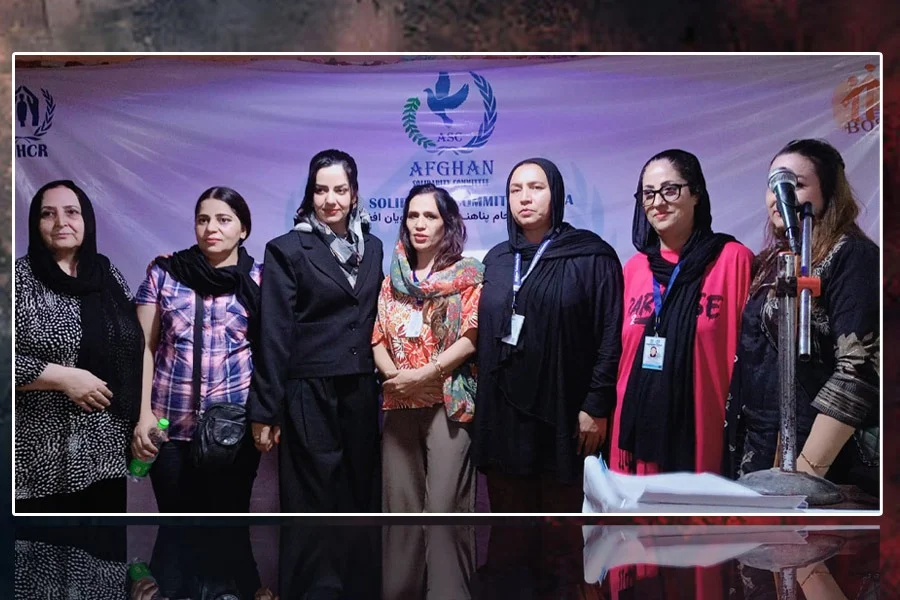
Several women from Afghanistan who have spent years in India waiting for a decision on their asylum cases are complaining about delays in processing those cases. They say that years of waiting for a response have left their lives and futures in limbo. According to them, the lack of residency documents and work permits has limited their access to job opportunities and made it difficult to cover living expenses. They add that these problems have also affected their children’s education, and that a number of families cannot afford school fees because of high education costs.
In interviews with the Hasht-e Subh Daily, these women say some migrant families from Afghanistan have been waiting in India for 10, 15, and even 29 years for a decision on their asylum cases. They also complain about difficulty accessing health services and what they describe as a lack of sufficient support from the United Nations (UN) and aid organizations. According to them, since 2024, part of the aid and financial support previously provided to asylum seekers from Afghanistan in India has been reduced or halted.
Shukria, a migrant from Afghanistan in New Delhi who has been waiting for her asylum case to be processed for 17 years, expresses concern about the slow pace of the process. She says that during this time she has repeatedly visited the UN office to follow up on her case but has not received a clear answer about its status. She adds that the prolonged wait, together with the lack of job opportunities, has made economic hardship and covering living expenses even harder for her.
The migrant says: “I have been registered with the UN office for 17 years, and throughout this time I have lived in a state of uncertainty. Even though I hold a diploma and a certificate in the medical field, I cannot work anywhere because I do not have Indian identity documents. I have repeatedly raised my problems and those of other women facing similar circumstances with the office of the United Nations High Commissioner for Refugees (UNHCR), but we have received no help so far.”
Khadija Payenda, another migrant woman from Afghanistan in India, says she has been registered as a refugee in the country for 10 years but has still not been referred to another country for resettlement. She adds that among the migrants from Afghanistan there are also families who have been left waiting for a decision on their cases for 13 to 29 years. According to her, the lack of sufficient support and the prolonged processing of cases have forced several women into marriages with foreign nationals to cover living expenses, and have left several young people facing mental health problems and addiction.
The woman, who is also the head of the Association of Afghanistan Migrant Women in India, says: “I have been registered as a refugee in India for 10 years, but throughout this time I have neither been referred to another country nor been given the opportunity for resettlement. A decade of my life has passed waiting for a decision, and during this time I have faced psychological and health problems. I know many families who have been living in uncertainty in India for 13, 16, 17, and even 23 years, and I also know a mother who has been waiting for a decision on her fate for 29 years. Migrants are being treated in a very ugly and inappropriate manner; the emails and calls of many migrants go unanswered, and for months we have not been allowed to go to the gate of the UN to follow up on our cases.”
She adds that the lack of visas and residency documents has limited migrants from Afghanistan’s access to job opportunities and health services, and that many families cannot afford their children’s education costs.
The migrant says: “After 2024, the humanitarian health aid we used to receive from the UN has been stopped. Many families cannot afford their children’s school fees, and several young people and teenagers have faced psychological problems and addiction. Among them are also girls who have become addicted to certain pills, but their families cannot afford the cost of treatment and rehabilitation. Several women have also been forced into marriages with foreign nationals because of economic problems and the high cost of living. Despite all these problems, migrants from Afghanistan in India have been somewhat forgotten in the past two years and are not receiving sufficient support from the responsible institutions.”
Jamila Ghiyasi, another migrant from Afghanistan in India, says that although her case has been accepted by the UN, she has been waiting for transfer to another country for six years. She adds that during this time she has lived alone in New Delhi, and that being far from her family in Afghanistan, along with economic and security problems, has made life difficult for her. The woman calls for faster processing of migrants’ cases and more support for them to end their uncertainty.
Ghiyasi says: “I have been living alone in Delhi for six years, and my family is in Afghanistan. Although I have received an acceptance card from the UN, during this time they have not referred me to any other country, and no attention has been paid to resolving my problems. Living alone in Delhi is very hard, and I am facing economic and security problems. We want you to convey the voices of all migrants from Afghanistan to the responsible authorities so that they address our problems.”
According to UNHCR information, more than 8,000 refugees and asylum seekers from Afghanistan were registered in India as of the end of February 2026. The agency has said that women and girls facing serious protection risks are considered a priority group in the resettlement process.
The UN in India has said that several applicants from Afghanistan who have completed the interview and appeal stages of their cases will gradually receive responses in 2026. According to the agency, reduced staff capacity has made the case review process time-consuming.
The long wait for decisions on asylum cases is not limited to migrants from Afghanistan in India. Several asylum seekers from Afghanistan in other countries, including Pakistan and Iran, have also been waiting for years for resettlement or transfer to third countries.
You can read the Persian version of this report here:
سالها بلاتکلیفی در هند؛ زنان پناهجوی افغانستان خواهان تعیین سرنوشت پروندههایشان هستند