• 8AM.MEDIA
  • ویب‌سایت فارسی
  • پښتو ویب‌پاڼه
  • اۉزبېکچه ویب‌سایت
  • Podcast
Thursday, October 22, 2026
Hasht-e Subh
  • Home
  • News
    • Afghanistan News
    • World News
  • Opinion
    • Editorial
    • Analysis
  • Reports
    • Daily Reports
    • Investigative Reports
  • Society
    • The story of people
  • Women’s Word
  • Columns
    • Three Years After Afghanistan’s Fall: The Taliban’s Resurgence
    • Towards Equality
    • The Resurgence of the Taliban: Two Years Since Afghanistan’s Fall
    • Hebatullah Report Special Edition
    • Resistance for Education Special Edition
    • Special Column on Taliban’s Education Curriculum
    • Nawroz
  • Interviews
  • Contact Us
    • About Us
    • 8AM MEDIA Annual Awards
    • Submit an Article to Hasht-e-Subh
  • 8am.mediaBack
Subscribe
No Result
View All Result
  • Home
  • News
    • Afghanistan News
    • World News
  • Opinion
    • Editorial
    • Analysis
  • Reports
    • Daily Reports
    • Investigative Reports
  • Society
    • The story of people
  • Women’s Word
  • Columns
    • Three Years After Afghanistan’s Fall: The Taliban’s Resurgence
    • Towards Equality
    • The Resurgence of the Taliban: Two Years Since Afghanistan’s Fall
    • Hebatullah Report Special Edition
    • Resistance for Education Special Edition
    • Special Column on Taliban’s Education Curriculum
    • Nawroz
  • Interviews
  • Contact Us
    • About Us
    • 8AM MEDIA Annual Awards
    • Submit an Article to Hasht-e-Subh
  • 8am.mediaBack
No Result
View All Result
Hasht-e Subh
No Result
View All Result

The Double Standards of Chauvinistic Leftists Regarding Social Movements

Bahram Aamoniyayee Bahram Aamoniyayee
17 October 2024 - Solar Hijri Date: 1403/07/26 [t_time:1729190290]
Leader of the Pashtun Tahafuz Movement (PTM) addressing supporters, highlighting the struggle for justice and rights in Pakistan's Pashtun regions. (Photo Credit: Pashtun Tahafuz)

Pashtun Tahafuz

The Pashtun Tahafuz Movement (PTM) in Pakistan has long been a source of heated debate among intellectuals in Afghanistan, including the leftists, gathering both supporters and critics. As ethnic politics deeply and decisively influence political movements in the country, an ethnic-centric approach toward the Pashtun Tahafuz Movement (PTM) has become evident. Among leftists, the overwhelming majority of Afghanistan’s Pashtuns support this movement, while non-Pashtun leftists approach the issue with more caution and reflection, sometimes even criticizing it. At times, the positions of both sides are so biased and unfair that, despite their shared leanings in many areas, a profound and unbridgeable gap over ethnicity exists among Afghanistan’s leftists. This divide is so deep that there seems little hope for the formation of a unified political project.

The problem with Afghan leftists has always been their inability to strike a middle ground in their political activism. Throughout history, they have either been excessively extreme and radical or overly passive and complacent. Sometimes, they become so awakened and active that it seems a significant transformation is underway, of which you are unaware; at other times, they fall into such deep silence and isolation that it feels as if they no longer exist and have become relics of history. Unfortunately, Afghan leftists mostly awaken and become active only when an event related to ethnic politics occurs in the country or its neighbors. Ethnic chauvinism has become so widespread that even leftists who claim to champion class struggle and proletarian internationalism have been severely affected. Non-Pashtun leftists, having suffered extensively from the ethnic-linguistic apartheid rooted in Pashtun chauvinism, perceive every political movement related to Pashtuns as part of the ongoing supremacist project in Afghanistan. To them, these movements are not only devoid of any emancipatory or justice-seeking nature but are fundamentally reactionary. This approach can be as catastrophic and destructive as the chauvinistic stance of Pashtun leftists toward deadly ethnic events.

These very Afghan chauvinistic leftists, who go to great lengths on social media to defend the Pashtun Tahafuz Movement (PTM) in Pakistan, were notably absent when social justice movements like the Tabasum Movement, the Enlightenment Movement, and the Uprising for Change emerged against the then-government of Afghanistan, led by a chauvinistic and ethnically biased Pashtun. They were rarely seen taking a stance in defense of these movements. Instead, chauvinistic leftists either remained silently complicit or, with biased and opportunistic positions aligned with the then-government, effectively sided with Ashraf Ghani and his corrupt and ethnocentric circle. Were the demands of those social movements unreasonable or wrong? If not, why didn’t leftist organizations that claim to champion freedom, democracy, and social justice offer their full and active support? Are only Pashtuns in Pakistan subjected to oppression and injustice by Punjabis, while in Afghanistan, wolves and lambs peacefully coexist? I am not saying that we shouldn’t criticize the oppressive policies of the Pakistani military, of which Pashtuns are major victims, or deem the Pashtun Tahafuz Movement (PTM)’s cause unjust. I believe we should support this movement. However, what we must not forget is that our stance toward justice movements must not be selective, biased, or tainted by ethnic chauvinism.

Selective Interpretation of Lenin

Vladimir Ilyich Lenin, the leader of Russian communists, is a well-known politician who launched an unrelenting struggle against all forms of chauvinism. He went so far as to defend the right of nations to self-determination, even to the point of secession from the Soviet Union. As a Russian, Lenin waged a fierce battle against Russian chauvinism and did not cease this effort until his death. Do the Afghan chauvinistic leftists, who proudly label themselves ardent Leninists, follow this revolutionary stance of Lenin? Not. They dislike highlighting this aspect of Lenin’s legacy. They only invoke Leninism when it serves their interests, not in all areas. These leftists still refuse to acknowledge the reality of Pashtun chauvinism, and by focusing on “class and capital contradictions,” “class struggle,” and “proletarian internationalism,” they attempt to sweep the ethnic supremacist nature of Afghanistan’s political sphere under the rug. They won’t even consider declaring war against their chauvinism, as Lenin did.

The chauvinistic left, while presenting itself as excessively revolutionary and devoted to Marx and Lenin, rarely leaves any trace of these two revolutionary thinkers in their actions. What is abundantly evident is caricatures of Marx and Lenin, invoked only when necessary to justify their claims. For them, merely quoting a few lines from Marx or Lenin is sufficient to validate their assertions. The Marx and Lenin created by these chauvinistic leftists are mere reflections of themselves: rigid, dogmatic, obstinate, deterministic, and reductionist. As if these two thinkers handed us the ultimate solution for humanity’s salvation, and all we need to do is use it. One of the solutions they proposed is reliance on class struggle to escape the exploitation of one person by another. But is reducing all conflicts, including ethnic ones, to class conflict a valid approach? Will it put an end to ethnic chauvinism? What if, given the deeply entrenched ethnic politics in Afghanistan, this reductionism exacerbates the current crisis? Is class conflict in our country severe enough to be taken so seriously? And now, the final question: Given Afghanistan’s chronic ethnic crisis and the deeply rooted Pashtun chauvinism in its politics, what guarantee is there that strengthening Pashtuns across the Durand Line won’t lead to an even worse situation for Afghanistan’s non-Pashtun ethnic groups, who are already suffering under Pashtun chauvinism, particularly in its Taliban form? These are important questions that the chauvinistic leftist supporters of the Pashtun Tahafuz Movement (PTM) must answer correctly. Without providing reasonable and logical answers to these questions, no serious or significant step can be taken toward resolving the current, deep-rooted crisis in Afghanistan.

You can read the Persian version of this analysis here:

برخورد دوگانه چپ شوونیست با جنبش‌های اجتماعی | روزنامه ۸صبح 

ShareTweetSendSendShare

Related Posts

A large crowd participates in a workers’ rights demonstration while a historical illustration depicts class divisions between elites and laborers. (Photo credit: Wikimedia + Wikipedia)
Analysis

Does Class Struggle Still Matter?

2 May 2026 [t_time:1777727454]

Latest

Loading latest news...

Popular stories

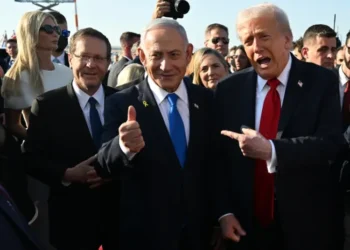
  • Donald Trump – U.S. President with Benjamin Netanyahu – Israeli Prime Minister in a gathering of people (Photo: Getty Images) Donald Trump – U.S. President with Benjamin Netanyahu – Israeli Prime Minister in a gathering of people (Photo: Getty Images)

    US Senator Criticizes Netanyahu’s Remarks Justifying War Against Iran

    Share
    Share Tweet
  • UN Report Reveals Shifts in Family Attitudes and Rise in Domestic Violence in Afghanistan

    Share
    Share Tweet
  • US Defense Secretary Warns Iran of “Destruction”

    Share
    Share Tweet
  • Trump Calls Iran’s Hope of War Lasting Beyond US Midterm Elections a “Dream”

    Share
    Share Tweet
  • Trump Again Says War with Iran Will End “Very Soon”

    Share
    Share Tweet

Podcast

Insights
Insights

Join Lynne O’Donnell for 8AM’s podcast series, Insights.
Lynne talks with generals, diplomats, soldiers, journalists, politicians, activists, people who have front row seats for conflicts around the world, and citizens with a story to tell, happy or sad. For this first series, Afghanistan is the focus. Lynne and her guests talk about the collapse of the republic in August, 2021, and the impact since — for the people of Afghanistan, for the security of the region, for the safety of the world. It’s important, interesting and insightful.

Insights/22: Controlling the Narrative with Mina Sharif
byinsights8am

Controlling the Narrative

Lynne O’Donnell talks with Mina Sharif, author, activist, women’s rights campaigner, educator and mentor. They discuss who controls the narrative and who speaks for Afghanistan’s people when the Taliban appear to have seized control not only of the country but of the message, too.

Have a listen

Insights/22: Controlling the Narrative with Mina Sharif
Episode play icon
Insights/22: Controlling the Narrative with Mina Sharif
Episode Description
Episode play icon
Insights/21: Media Meltdown with Zahra Joya
Episode Description
Episode play icon
Insights/20: Terror Inc with Scott Richards
Episode Description
Episode play icon
Insights/19: Busting Stereotypes with Bushra Gohar
Episode Description
Episode play icon
Insights/18: Media Matters with Waliullah Rahmani
Episode Description
Episode play icon
Insights/17: What Goes Around Comes Around with Sima Samar
Episode Description
Search Results placeholder
Hasht-e Subh

8AM Media, also known as Hasht-e-Subh Daily, stands as Afghanistan's premier independent and non-profit newspaper, resonating as a beacon of journalistic integrity since its establishment in June 2007 by esteemed Afghan journalists and human rights advocates. With a steadfast commitment to citizen journalism and civic education, Hasht-e-Subh Daily has earned its place as the most esteemed publication in the nation.

Publisher: Sanjar Sohail
Email: [email protected]
Executive Director: Parwiz Kawa
Email: [email protected]

Read More

Has the World Grown Accustomed to the Crisis in Afghanistan?

International Criminal Court Wins Sakharov Prize for Freedom of Thought

Guterres Calls for an End to Conflicts Worldwide

UNICEF: Millions of Children in Afghanistan Face Climate Risks

From the Shadows to Finding My Voice: A Story of Struggle and Resilience

Editor’s Choice

Every Saturday morning, 8AM MEDIA English Services Department will guide you through the week’s biggest stories from Afghanistan and the international community.

Subscribe

© 2026 - ©Hasht-e Subh Daily

No Result
View All Result
8am.Media
پښتو ویب‌پاڼه
ویب‌سایت فارسی
اۉزبېکچه ویب‌سایت
  • Home
  • News
    • Afghanistan News
    • World News
  • Opinion
    • Editorial
    • Analysis
  • Reports
    • Daily Reports
    • Investigative Reports
  • Society
    • The story of people
  • Women’s Word
  • Columns
    • Three Years After Afghanistan’s Fall: The Taliban’s Resurgence
    • Towards Equality
    • The Resurgence of the Taliban: Two Years Since Afghanistan’s Fall
    • Hebatullah Report Special Edition
    • Resistance for Education Special Edition
    • Special Column on Taliban’s Education Curriculum
    • Nawroz
  • Interviews
  • Contact Us
    • About Us
    • 8AM MEDIA Annual Awards
    • Submit an Article to Hasht-e-Subh
  • 8am.media

© 2026 - ©Hasht-e Subh Daily