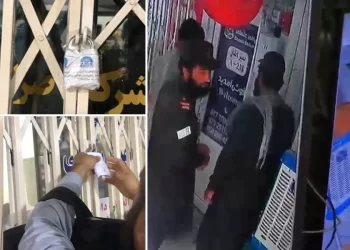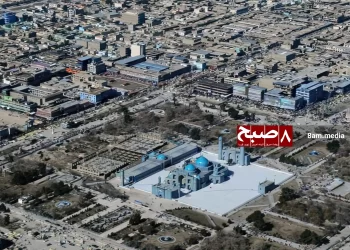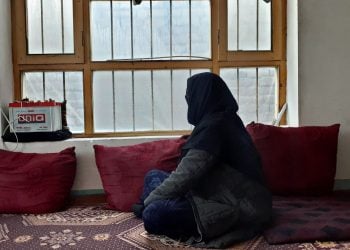

The Taliban’s extensive restrictions on women and girls in Afghanistan have forced thousands of women into their homes and left them unemployed. These limitations restrict women to a few areas of work, such as small businesses and street vending, in only a limited number of locations. Female street vendors in Balkh province report that they must pay 30 to 50 Afghanis daily to Taliban fighters to sell second-hand clothes on the streets.
In Balkh, some women entrepreneurs with modest investments have rented shops in the Noor (Khadijah al-Kubra) shopping center. However, many others, due to widespread poverty, cannot afford to rent space in the center and are therefore forced to sell their goods on the streets.
Zainab (pseudonym) is one of the women whose life has become even more burdened by poverty. After the death of her husband and taking on the responsibility of a family of five, she says that the daily grind has exhausted her, but she is forced to keep trying to cover her children’s living expenses.
Zainab says she leaves the house every day at 6:00 AM to provide food for her children and returns home around 6:00 PM. She adds: “My husband passed away four years ago, and that’s when the hardships began. In the early days, I didn’t know what to do. I went to relatives asking for loans, but life couldn’t go on like that, so I had to find a way to prevent my children from starving.”
She explains: “One day, I took a few pieces of my clothes, my husband’s, and my children’s, and brought them to sell because we had nothing to eat at home. When I came here [to the side of a road in Balkh City], a few women who were buying and selling clothes offered very little for them, and the money was insignificant. Later, I decided to sit in a corner myself and sell the clothes. That’s how I started, and now I work as a thrift seller.”
Now the sole breadwinner of her family, Zainab says her entire life revolves around meeting her children’s needs, and she has distanced herself from her femininity. She notes that she has three daughters and one son, and besides her role as a mother, she is forced to play the role of a father as well.
With a sense of longing for her past, she adds: “My husband used to work and provide, and we didn’t worry about the ups and downs of life. I’ve forgotten what it was like to live a woman’s life at home, being involved in household chores, hosting guests, and enjoying life. Now, my life resembles that of a man’s. I leave home at 6:00 AM to secure my spot so no one takes it, and at 6:00 PM, I buy some bread and return home.”
In addition to numerous social challenges, the Taliban have created significant problems for female street vendors. Zainab explains: “You know how the weather in Mazar is – it freezes in winter and burns in summer. But we have no choice but to endure it, and we are content with that. To ensure my children don’t go hungry, I am forced to pay bribes to the Taliban to allow me to sit on the street. Every morning, the first thing I must do is pay the ‘mujahideen’ (Taliban fighters), otherwise, they tell me to pack up and leave. They collect 30 to 50 Afghanis daily from each person.”
Zainab is not the only one enduring the harsh weather conditions on the streets of Mazar-e-Sharif. Several other women sit beside her, buying and selling second-hand clothes from morning to evening to make a living.
In the past three years, the Taliban have imposed widespread bans, depriving women and girls of the right to education, learning, and work. Currently, women in Afghanistan face extensive hardships, with girls at risk of forced marriages and underage marriages. Many have been compelled to become the second, third, or fourth wives of wealthy men, including Taliban fighters.
You can read the Persian version of this new here:
دشواریهای زنان دستفروش در بلخ؛ طالبان از هر نفر روزانه ۳۰ تا ۵۰ افغانی میگیرند | روزنامه ۸صبح