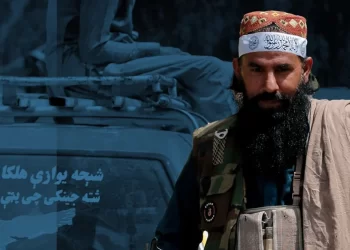
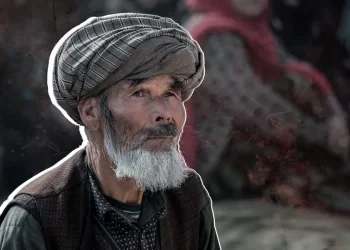
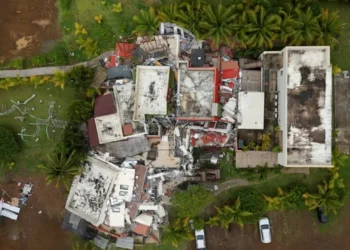
The Guardian has published an investigative report on the destruction of thousands of homes by the Taliban over the past three years. According to the Guardian, these demolitions were carried out with ethnic motivations in areas of Kabul predominantly inhabited by Tajiks and Hazaras. The report adds that, under the pretext of urban renewal in Kabul, the Taliban have displaced thousands of people, rendering them homeless, and have targeted the poorest and most vulnerable groups in society. The Guardian claims that in all six districts of Kabul where extensive demolitions have taken place, the majority of residents are Hazaras and Tajiks, giving these actions an ethnic undertone, aside from exacerbating poverty among the affected populations.
Their ethnicity and religion define the Taliban’s approach to the people of Afghanistan. For instance, the group frequently conducts house-to-house searches in Kabul. These searches are consistently concentrated in specific areas of Kabul, particularly those inhabited by Tajiks, especially Tajiks of Panjshir province. During these searches, Taliban fighters often humiliate, insult, and torture individuals, vandalize personal property, and sometimes even steal residents’ money and jewelry. During their first regime, the Taliban often faced resistance from the Tajik, Hazara, and Uzbek regions, which is why they now feel threatened by these areas and resort to widespread violence to suppress potential risks.
After the fall of the Taliban, Afghanistan’s major cities witnessed a massive influx of people, leading to rapid urban expansion and the emergence of informal settlements around cities. Several years ago, it was revealed that Taliban leaders were in telephone discussions with Hanif Atmar, then National Security Advisor, to facilitate an end to the war and bloodshed. According to media reports, one of the key issues discussed between the Taliban and Atmar was the reclaiming of “usurped lands” from land grabbers. This highlights that manipulating the demographic composition of major Afghan cities has been one of the Taliban’s priorities, sparing no effort in this endeavor. The Taliban believes the significant physical presence of Tajiks and Hazaras in Kabul has influenced political power and rendered the political center vulnerable. The geographical proximity of the north and Panjsher to Kabul is also a serious concern for Pashtun politicians with ethnic mindsets who oppose equality and social justice. They are likely to continue efforts to alter this equation in their favor. The Taliban’s excessive zeal in demolishing homes in Kabul, sometimes accompanied by violent measures, reveals the group’s ethnic agenda.
While doubts may exist about many issues, there is no doubt that the Taliban leadership is relentlessly pursuing its ethnic ambitions, even as they publicly proclaim different slogans about Islam, faith, and establishing an Islamic government and justice. Changing the demographic composition of various regions favoring a particular ethnicity is a policy that ethnonationalist politicians have pursued for at least a century. Now that the Taliban have fully seized control of Afghanistan, they aim to suppress and eliminate other ethnic groups to secure themselves against potential uprisings and rebellions. The Taliban’s three-year record reveals that this group has extensive plans for Afghanistan’s future, which they are gradually implementing in all spheres. This time, what aids the Taliban is the absence of any domestic rivals capable of challenging them or obstructing their plans.
In many countries, old political leaders are replaced by new ones without causing significant disruption. In some cases, political systems change, yet the daily lives of the populace remain relatively unchanged; people continue to live, work, earn, and enjoy leisure and travel as before. In Afghanistan, however, a change in the political system signifies a complete and fundamental upheaval in the lives of citizens. With Afghanistan falling into the hands of the Taliban, everything transformed dramatically—from the appearance and attire of its citizens to its symbols and values. The Taliban assert their right to intervene in even the smallest details, including deciding who can sell vegetables or fruits with street carts in specific areas of Kabul. In other words, a regime change in the country affects even the street vendors, who may be insulted or deprived of their livelihoods based on their ethnic background. The Taliban regime is one of the most oppressive and authoritarian governments globally.
The ethnic issue is one of the main challenges in Afghanistan’s contemporary history, and many of its devastations and regressions stem from this issue. There are two ways to address the ethnic problem: one is to deny or ignore it, leaving it unresolved and periodically resurfacing like an open wound, hindering the country’s progress. The other approach is to acknowledge its existence, identify its causes, and seek reasonable solutions to rescue society from it. The ethnic reality in Afghanistan is so deeply rooted that even the most internationalist Marxist-Leninists in the country failed to extricate themselves from it, instead exacerbating it more than others. Similarly, Islamist groups advocating a global Islamic government became so entrenched in ethnicity and ethnic prejudices that their actions were startling and unbelievable.
The Taliban, too, claim to enforce God’s Sharia and incessantly speak of Islam and Islamic law. Yet, their actions practically fulfill the aspirations of ethnonationalists, achieving their goals and dreams. It is no coincidence that some ethnic nationalists sympathize with the Taliban, ecstatic that political and military power has fallen into their hands. The Taliban’s governance experiences, both in the 1990s and now, have made it clear for the umpteenth time that “in Afghanistan, slogans are always national, but actions are ethnic.” Therefore, one must not be deceived by appearances.
You can read the Persian version of this analysis here: