The Taliban dragged my brother’s tortured body into our home and dumped it before my father, mother, and all of us. They had tortured and murdered him with ruthless, sinister cruelty. We buried his bloodied, mutilated corpse, and from that agonizing moment, none of us truly lived. My father couldn’t bear it and passed away. We heard nothing of my missing brother’s fate, and my mother descended into mental anguish.
This is the account of Rana, a survivor of the Taliban’s vengeance, which claimed three members of her family and forced the rest into exile. Rana and her family are among the survivors of victims targeted by the Taliban during Afghanistan’s Republic era. After the Taliban seized control and killed her elder brother, followed by her father’s death, Rana fled to Iran. She carries a heart-wrenching tale of how her brothers, who served in the Republic’s system, were killed or vanished. Her younger brother fought the Taliban on the frontlines in Kandahar. When the province fell, he disappeared. Four years later, Rana and her family still don’t know if he’s alive: “When we heard Kandahar had fallen, we called him immediately, but his phone was off. For two days, we called repeatedly, but no answer. We contacted his colleagues, but their phones were off too. For three years, we searched relentlessly, but found no trace of him. We don’t know where he is or how he’s doing. Is he a Taliban hostage, or did they kill him like my elder brother? We live in hope of one day learning his fate.”
As Kabul collapsed and the Taliban regained power, their fighters surrounded Rana’s home, seeking revenge. They took her elder brother. Her family, especially her parents, fought desperately to stop them, but the Taliban beat them back and dragged him away. After a week of brutal torture in their custody, they murdered him. Recalling those bitter days, Rana’s voice chokes with tears: “One night at eight, we were eating dinner when the Taliban stormed in and surrounded our house. They pounded on the door, and my father went to open it. As soon as he did, they barged in like savages, ransacking everything. They demanded to know about my younger brother, who worked in the system. We said we had no information. Then they seized my elder brother. None of us could stop them. My father tried, but they shoved him aside with violence and took my brother. The next day, we searched every police station in Kabul, but no one had news of him or would say where they’d taken him. For a week, we went from station to station, but found nothing. Then one night, they knocked again. My father opened the door to see a Taliban truck. They’d brought my brother’s tortured body, but he was no longer alive. They had tortured and killed him with cruel, mysterious brutality. They threw his body into our home and threatened to kill us all if we spoke to the media. We had no choice but to stay silent. That moment was the worst of our lives. It cost us my father, too, and shattered our family’s spirit.”
The unknown fate of her younger brother and the tortured body of her elder brother were tragedies that dragged her father to his deathbed. The bitter loss of his two sons, especially burying his elder son’s broken body, left an unhealing wound in his heart that stopped its beating. A year later, an incurable illness took him: “My father couldn’t endure my younger brother’s disappearance and my elder brother’s murder. He passed away. After his death, we were utterly alone. The heavy burden of the family fell on me and my younger sister. My mother merely breathes—she’s not truly alive. Since that tragedy, she’s suffered severe mental illness and is far from well.”
Devastated by loss and her family’s collapse, Rana resolved to stand against the Taliban and raise her voice. She joined a protest movement with other women barred from work and education, marching in the streets alongside them, shouting against the Taliban’s oppression. ‘My main goal in joining the women’s protest was to expose the Taliban’s crimes,’ Rana said. ‘They destroyed my family and left countless others grieving, turning our lives into a living hell.’
During her last protest at Kabul University’s entrance, the Taliban brutally beat her and tried to arrest her. With fierce resistance and help from other protesters, she escaped: “No matter how many lashes I took or how much they tortured me, I never silenced my voice. Though the pain was intense, their ignorant whips didn’t hurt as much as my heart. But after that protest, the Taliban hunted me relentlessly, forcing me to flee from province to province. I grew exhausted from running.”
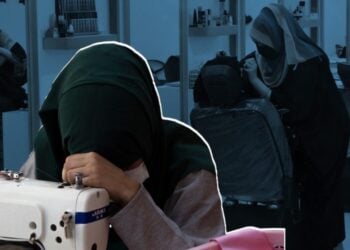
To save their lives, Rana and her family, carrying a burden of grief, fled to Iran as refugees. In exile, she endures grueling work and faces insults and humiliation to support her family and her mother’s treatment: “I clean houses for Iranians during the day and sew at night. It’s a struggle to cover our living costs and my mother’s care.”
Rana shows the scars from the Taliban’s lashes, still visible on her body. As she speaks of those unhealed wounds, she says: “None of these scars hurt as much as my brother’s lifeless, tortured body, my missing soldier brother, my father’s death, or the shattering of our family’s life.”
You can read the Persian version of this Afghan woman’s story here:
«طالبان دو عضو خانوادهام را کشتند و از سرنوشت برادرم خبری نیست» | روزنامه ۸صبح