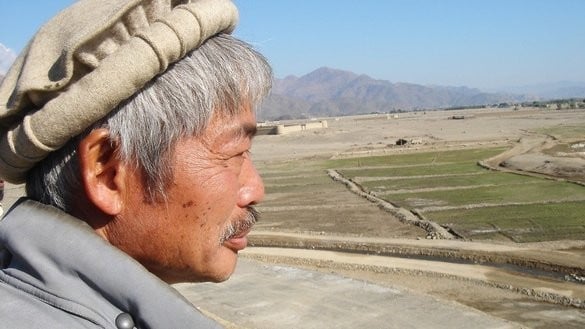
I often think of Dr. Tetsu Nakamura, a physician who came to Afghanistan to treat the sick but came to understand that hunger and the lack of water for food production were among the underlying causes of human suffering. In a country with rivers and a centuries-old agricultural tradition, he recognised that helping people grow food was itself a form of life-saving intervention. He understood that restoring dry farmland did not always require massive dams. Well-designed water intakes, restored irrigation canals and the timely diversion of flowing water could transform thousands of lives.
Working alongside local farmers in Nangarhar, Nakamura built irrigation canals and brought previously barren land back into cultivation. His message was simple: temporary food assistance cannot replace the ability to produce food sustainably. On 4 December 2019, Nakamura and five Afghan colleagues were killed. Yet the question raised by his life’s work remains: why did bringing water to farmland, and food to people’s tables, never become a central pillar of Afghanistan’s economy? (1)
Nakamura was neither a head of state nor an economic minister. He was a doctor who looked beyond treating individual patients to addressing the suffering of an entire society. Rather than indulging in grand visions of transforming impoverished Afghanistan into another Paris, or dreaming of metro systems while people struggled to feed their families, he focused on immediate human needs.
His approach did not reject technology, urban development or large infrastructure. It challenged misplaced priorities and the tendency to favour expensive, high-profile projects over people’s most basic needs. Any government claiming to serve its population must move beyond merely storing water and recognise its equitable delivery to farmland as a national responsibility.
Afghanistan does not have unlimited water resources. Much of the country is arid or semi-arid, and climate change increasingly affects rainfall and snow reserves. Nevertheless, its rivers and seasonal flows offer substantial opportunities for irrigation.
The contradiction is striking: during the wet season, water can flood and damage farmland, while months later the same farmer must dig a well to save a crop. Rivers alone do not create prosperity; effective water management turns them into productive assets. Success should be measured by agricultural output and income per cubic metre of water, while protecting downstream water rights and the environment.
During the former Afghan Republic (2001–2021), several major water projects were constructed or rehabilitated. The Salma Dam in Herat, inaugurated in June 2016, was designed to store approximately 633 million cubic metres of water, generate 42 megawatts of electricity and irrigate around 75,000 hectares of farmland.
The Kamal Khan Dam in Nimroz, inaugurated in March 2021, had a reported storage capacity of approximately 52 million cubic metres and a planned electricity generation capacity of 9 megawatts. Construction of the Pashdan Dam in Herat, with a capacity of 54 million cubic metres, and the Shah wa Arus Dam near Kabul, with approximately 9.4 million cubic metres, also began during the Republic. Their official inaugurations, however, took place in 2025 and 2024, respectively. (2, 3, 4, 5)
These projects represented important infrastructure achievements. Yet storing water is not the same as delivering it to farmers. Without completed irrigation canals, distribution structures, and fair water-sharing arrangements, reservoirs may fill while surrounding communities remain unable to benefit.
Some released water continues downstream and eventually crosses national borders. This should not automatically be considered waste: downstream rights and environmental needs must be respected. The real issue is the missed opportunity to make productive and equitable use of available water within Afghanistan.
The Salma Dam illustrates how a major investment can produce unintended local consequences when supporting infrastructure remains incomplete.
In April 2021, reports indicated that only about 40% of the planned irrigation canals associated with the dam had been completed. A study published in 2021, drawing on 25 field interviews in Zinda Jan district, documented worsening water shortages experienced by some downstream farmers following the dam’s operation. Poorly timed water releases, inadequate distribution networks and disruption of traditional water-sharing arrangements were among the problems identified. (6, 7)
Districts such as Zinda Jan, Ghoryan and Kohsan depend heavily on the Hari Rud River. When water does not reach farmland during critical growing periods, farmers may turn to groundwater extraction.
Not all water shortages or groundwater depletion in Herat can be attributed to Salma. Reduced rainfall, climate change, and increasing demand also contribute. Nevertheless, storing water upstream without ensuring reliable seasonal allocations downstream can increase dependence on wells and intensify disputes. Research in Zinda Jan found that water scarcity and management failures could contribute to tensions between neighbouring communities. (7)
The institutions responsible for planning, contracts, construction and oversight during the Republic must therefore be held accountable for shortcomings in project implementation. Conflict and insecurity explain some delays, but do not eliminate the need for accountability.
Today’s authorities likewise bear responsibility for completing unfinished irrigation networks and ensuring fair water distribution. A dam’s success should be measured not simply by how much water it holds, but by how much farmland it irrigates and how much food it helps produce.
The Republic also invested in irrigation rehabilitation. According to the World Bank, 215 irrigation schemes had been completed under one major programme by the end of 2020, improving irrigation services across approximately 284,000 hectares. These achievements deserve recognition, but the overall effort failed to produce a nationwide, lasting transformation in food production. (8)
An economy heavily dependent on foreign aid, large contracts and security expenditure sometimes prioritised visible, inauguration-ready projects over the maintenance of local irrigation systems and long-term agricultural development.
Claims that agricultural progress was deliberately obstructed require specific evidence. Yet the structural outcome is clear: domestic production never secured a sufficiently central and lasting place in Afghanistan’s economic strategy.
Combined with more recent political, economic and climate-related crises, this weakness has contributed to continued dependence on food imports and widespread vulnerability. Its consequences are visible today in poverty, hunger and severe food insecurity affecting millions of Afghans.
When surface irrigation systems fail, deep wells may appear to offer an immediate solution. But extracting groundwater faster than it can naturally replenish threatens the reserves needed by future generations. Solar-powered pumps can accelerate this pressure if extraction remains unregulated.
A 2025 Mercy Corps report found that groundwater levels in parts of Kabul had fallen by approximately 25–30 metres over a decade, while annual extraction exceeded natural recharge by an estimated 44 million cubic metres. Population growth, pollution and drought further aggravate the crisis. Groundwater should serve as a strategic reserve during periods of scarcity, not as a permanent substitute for managing surface water. (9)
Large dams remain necessary in some locations for hydropower, urban water supply and flood regulation. Agricultural development, however, should not be postponed until such projects are completed.
A 2024 study of the Kabul River Basin estimated that, under a particular modelling scenario, storing and regulating approximately 38% of the water volume examined could nearly double dry-season flows and potentially make close to two billion cubic metres of water available annually for agricultural development.
This finding depends on specific reservoir and irrigation scenarios. It does not mean that 38% of Afghanistan’s total water resources would meet the country’s entire demand. Its significance lies in demonstrating the value of regulating seasonal flows. Alongside major infrastructure, rehabilitating local canals, developing small reservoirs and reducing water losses could substantially improve agricultural productivity. (10)
Afghanistan needs a national agricultural mobilisation—a civilian effort bringing together knowledge, investment, water management and local labour to confront hunger and poverty. Its immediate priority must be sustainable food security, beginning with greater production of essential crops, particularly wheat and pulses, according to each region’s water availability, soil conditions and climate.
This requires better irrigation management, drought-resistant seeds, soil-moisture conservation and less water-intensive crops in arid areas. Yet food security involves more than higher yields. It also requires employment, household income, affordable agricultural credit, quality seeds, storage facilities, rural roads and functioning markets.
Agricultural transformation must therefore advance alongside rural industrialisation. Grain mills, food-processing facilities, cold storage, fruit packaging, dairy processing and stronger links between farmers and markets can reduce losses and increase the value of agricultural production.
Such development could generate employment, particularly for women and young people, while transforming agriculture from a predominantly subsistence activity into a productive pillar of the national economy.
The starting point should be a practical assessment of water sources, cultivable land, damaged irrigation networks, and the seasonal needs of farming communities. Farmers, traditional water managers known as mirabs, and local workers should participate directly in constructing and maintaining small seasonal reservoirs and irrigation canals, supported by qualified engineers.
Using suitable locally available materials and natural terrain gradients to channel water from streams, rivers,s and seasonal flows can reduce costs, generate rural employment, and provide supplementary irrigation during critical growing periods.
This community-based approach builds on Afghanistan’s long tradition of local water management. Its success, however, requires careful geographic assessments, engineering design, realistic estimates of water demand, safe construction and protection of downstream rights. Cooperation among technical specialists, research institutions and local communities can help establish affordable, sustainable models that can be replicated elsewhere. (11)
Afghanistan’s path out of hunger and economic dependence requires more than expensive, highly visible infrastructure. It requires intelligent resource management and a stronger productive economy.
Agricultural transformation must begin with water, but its purpose must extend to food security, employment and sustainable development. Its success should be measured not by the volume of water stored, but by the food produced, the income generated and the dignity restored to people’s lives.
References
- Ministry of Foreign Affairs of Japan. Statement on the killing of Dr. Tetsu Nakamura and his Afghan colleagues, December 2019.
- Government of India, Press Information Bureau. Official information on the Afghan-India Friendship (Salma) Dam, June 2016.
- Pajhwok Afghan News. Report on the inauguration and capacity of Kamal Khan Dam, March 2021.
- Amu TV. Report on the inauguration of Pashdan Dam in Herat, August 2025.
- Office of the Deputy Prime Minister for Economic Affairs, Afghanistan. Report on the inauguration of Shah wa Arus Dam, December 2024.
- TOLOnews. Report on the underutilisation of Salma Dam due to incomplete irrigation canals, 2021.
- Krampe, F., Smith, E. S., and Hamidi, M. D. Study of the security implications of hydropower development for farming communities in Herat. Political Geography, 2021.
- World Bank. Afghanistan Irrigation Restoration and Development Project: Implementation Completion and Results Report, 2022.
- Mercy Corps. Kabul’s Water Crisis: An Inflection Point for Action, April 2025.
- Taraky, Y. M., et al. Advancing Water Security and Agricultural Productivity: A Case Study of Transboundary Cooperation Opportunities in the Kabul River Basin. Environments, 2024.
- World Bank. Documentation on community water organisations and traditional mirab water management in Afghanistan.