
In Afghanistan, celebrating Nowruz is a rich tradition. Throughout history, both the populace and various rulers, including kings, presidents, and other leaders, have revered Nowruz as a cherished cultural festivity, symbolizing the revival of nature. For the past forty years, Nowruz ceremonies have been closely intertwined with governmental affairs. Despite the authoritarian rule of past administrations, many officials have partaken in Nowruz celebrations. However, the Taliban, in the last three years, have prohibited Nowruz festivities, labeling them as unIslamic. The group’s decree dictates that no one in Afghanistan should observe Nowruz. This stands in stark contrast to the United Nations’ recognition of Nowruz as a global festival, with over 300 million people worldwide participating in its observance. The UN views Nowruz as a unifying symbol of cultural heritage and centuries-old traditions, fostering human connections and aspirations for peace. Meanwhile, some Afghan citizens have accused the Taliban of perpetrating cultural genocide and promoting gender apartheid.
According to historical documents, various dynasties such as the Seljuk Empires, Khwarazmshahs, Ghaznavids, Ghorids, and Timurids have celebrated Nowruz. Despite religious, cultural, and political obstacles throughout different historical periods in Afghanistan, the Nowruz celebration has persisted. People in different provinces have celebrated this day with variations, adhering to their traditions, customs, and practices.
Before the Taliban’s rule, Nowruz festivities in Mazar-i-Sharif, the capital of Balkh Province, were more magnificent than anywhere else in the country. Senior government officials shared in the “Jandabala” ceremony in Balkh and Kabul. Apart from extending Nowruz greetings to the people, they also presented the government’s achievements during these ceremonies.
Many renowned artists and singers from various parts of the world would visit Balkh or perform concerts in Kabul, adding to the joy and festivity of the people. Simultaneously, visual and audio media broadcasting these concerts further heightened the people’s joy and happiness. Now, however, all these sounds have fallen silent.
Nowruz celebration in Afghanistan holds numerous traditions, many of which bear similarities to those in Nowruz-celebrating countries. The most important and valuable of these traditions include joy, happiness, and wishing for a good year for all. “Jandabala” ceremonies, Samanu cooking, “Haft-Seen” table setting, Nowruz songs, organizing sports competitions, and visiting relatives and friends are among the essential cultural elements of Nowruz celebrations.
Over the past two decades, the Nowruz celebration has been officially banned only during two periods of Taliban rule. Even during their initial governance, the Taliban prohibited the Nowruz celebration. With the Taliban’s recent resurgence, some had hoped they might not impose their past strict policies, yet it’s evident they have adopted even stricter measures.
Last year, Mohammad Yahya Arif, a Taliban official from the Ministry for Propagation of Virtue and Prevention of Vice, stated in a video message: “Those who celebrate and respect Nowruz are stepping out of the circle of Islam.” He referred to Nowruz as “the festival of Magians, non-Muslims, and polytheists.”
However, many religious scholars and Islamologists view this Taliban approach as a fundamentalist interpretation of Nowruz. According to them, the Nowruz celebration isn’t specific to any ethnicity, region, or particular belief but is considered a cultural achievement of human civilization.
Mohammad Moheq, an Islamologist, states that there is no Islamic decree regarding the prohibition of Nowruz. He adds: “Absolutely, there is nothing in the Quran about Nowruz, and there is nothing in authentic prophetic hadiths against it.” According to him, the weak narrations and some existing fatwas have emerged as a result of political and historical struggles.
In the past three years, the Taliban regime has prevented the traditional Nowruz celebrations in nature and pilgrimage sites, including the shrine known as the “Shrine of Hazrat Ali” in Mazar-i-Sharif, the capital of Balkh Province. Previously, Nowruz was widely and officially celebrated in these places.
However, some citizens of the country state that despite Taliban threats and prohibitions, many families celebrate this traditional festival in smaller circles. They add that by cooking Samanu, singing spring songs, preparing the seven fruits, visiting relatives, and going to mountainous areas, they honor the tradition of Nowruz.
Jamshid, a citizen of the country, says: “Nowruz has always had adversaries, but defending cherished historical values and traditions requires continuous cultural work and civil resistance. The Taliban have indeed banned Nowruz celebrations, but people continue their ceremonies on a smaller and more intimate scale. They cook Samanu, listen to music, and set up their Nowruz tables. Although these may seem small in appearance, they are a strong fist against fundamentalism and Talibanism.”
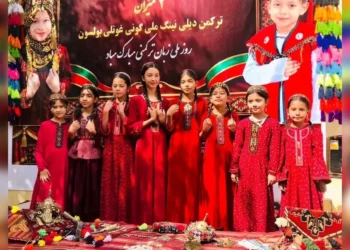
Meanwhile, some protesting women and girls have celebrated Nowruz by organizing Samanu cooking programs, tambourine playing, and poetry recitations. They have congratulated the people of Afghanistan and the Nowruz civilization. These protesters, dressed in traditional and local attire, have once again described the Taliban’s restrictions on women as “anti-human and misogynistic” and have demanded the formal recognition of gender apartheid in Afghanistan under Taliban rule.
On the other hand, social media users have extensively congratulated Nowruz by sharing pictures of their festive tables. They emphasize that no group or government can prevent the celebration of Nowruz and the revival of nature. Most of these users consider the Taliban as enemies of cultural and civilizational values, asserting that this group has institutionalized “cultural genocide and gender apartheid” in Afghanistan.
Simultaneously, some political and cultural activists view Nowruz as a platform for shared culture and a factor for regional cultural convergence. They argue that in the current situation where the region is experiencing conflicts and political deadlocks, presenting a strategic narrative of Nowruz for countries in this cultural sphere is vital.
Marziya Ahmadi, a political activist, suggests that intellectuals in the Nowruz cultural sphere can transform Nowruz into a strategic narrative through a dialogue on its common geography, extending its influence beyond the region. This political activist adds that there is significant potential in countries within the Nowruz cultural sphere that can turn it into an effective force for regional stability and convergence, providing an effective and strategic counter to religious fundamentalism.
However, some citizens consider opposition to Nowruz as a cultural enmity with the civilizational values of this region. According to them, certain groups in Afghanistan, using the guise of religion, oppose all cultural values in the country and denigrate the ancient heritage. In their belief, Nowruz has been generating joy and vitality amid the struggle between prohibition and celebration for thousands of years, symbolizing the promise of spring against the darkness and chill of winter.
While the Taliban have opposed the celebration of Nowruz, previously recognized as a global festival by the United Nations, the General Assembly of the UN, on February 23, 2010, adopted a resolution designating the 1st of Hamal (Solar Hijri calendar) as International Nowruz Day. The UN stated: “Nowruz marks the beginning of the New Year for over 300 million people worldwide and has been celebrated for over three thousand years in areas including the Balkans, the Black Sea region, the Caucasus, Central Asia, the Middle East, and other parts of the world.”
In past years, in addition to the officials of countries within the Nowruz cultural sphere, the UN Secretary-General, the President of the United States, the Prime Minister of Canada, and officials from some Western countries have also extended congratulations on Nowruz by holding special ceremonies.
Afghanistan, as one of the countries within the Nowruz cultural sphere, that hosted the leaders of member countries of this sphere in the 1393 (2014) Solar Hijri year, is committed to commemorating this day in a dignified and official manner and preserving Nowruz traditions.
Currently, 12 countries in the world, including Afghanistan, Iran, Iraq, India, Kazakhstan, Pakistan, Kyrgyzstan, Turkmenistan, Uzbekistan, Azerbaijan, and Turkey, celebrate Nowruz. These countries have registered Nowruz as a shared dossier with UNESCO, and hence they are referred to as the Nowruz cultural sphere countries.
Much has been said about the history of Nowruz, but its exact origin is uncertain. In some accounts, Nowruz is attributed to the Babylonians. Nowruz is considered one of the most ancient festivals in this region by historians. Ferdowsi, the creator of the Shahnama, and Abu Rayhan Biruni have attributed this day to Jamshid, the king of the Pishdadian dynasty. Many historians, writers, and other cultural figures also regard this day as the day of Jamshid’s coronation.
In Afghanistan, celebrating Nowruz is a rich tradition. Throughout history, both the populace and various rulers, including kings, presidents, and other leaders, have revered Nowruz as a cherished cultural festivity, symbolizing the revival of nature. For the past forty years, Nowruz ceremonies have been closely intertwined with governmental affairs. Despite the authoritarian rule of past administrations, many officials have partaken in Nowruz celebrations. However, the Taliban, in the last three years, have prohibited Nowruz festivities, labeling them as unIslamic. The group’s decree dictates that no one in Afghanistan should observe Nowruz. This stands in stark contrast to the United Nations’ recognition of Nowruz as a global festival, with over 300 million people worldwide participating in its observance. The UN views Nowruz as a unifying symbol of cultural heritage and centuries-old traditions, fostering human connections and aspirations for peace. Meanwhile, some Afghan citizens have accused the Taliban of perpetrating cultural genocide and promoting gender apartheid.
According to historical documents, various dynasties such as the Seljuk Empires, Khwarazmshahs, Ghaznavids, Ghorids, and Timurids have celebrated Nowruz. Despite religious, cultural, and political obstacles throughout different historical periods in Afghanistan, the Nowruz celebration has persisted. People in different provinces have celebrated this day with variations, adhering to their traditions, customs, and practices.
Before the Taliban’s rule, Nowruz festivities in Mazar-i-Sharif, the capital of Balkh Province, were more magnificent than anywhere else in the country. Senior government officials shared in the “Jandabala” ceremony in Balkh and Kabul. Apart from extending Nowruz greetings to the people, they also presented the government’s achievements during these ceremonies.
Many renowned artists and singers from various parts of the world would visit Balkh or perform concerts in Kabul, adding to the joy and festivity of the people. Simultaneously, visual and audio media broadcasting these concerts further heightened the people’s joy and happiness. Now, however, all these sounds have fallen silent.
Nowruz celebration in Afghanistan holds numerous traditions, many of which bear similarities to those in Nowruz-celebrating countries. The most important and valuable of these traditions include joy, happiness, and wishing for a good year for all. “Jandabala” ceremonies, Samanu cooking, “Haft-Seen” table setting, Nowruz songs, organizing sports competitions, and visiting relatives and friends are among the essential cultural elements of Nowruz celebrations.
Over the past two decades, the Nowruz celebration has been officially banned only during two periods of Taliban rule. Even during their initial governance, the Taliban prohibited the Nowruz celebration. With the Taliban’s recent resurgence, some had hoped they might not impose their past strict policies, yet it’s evident they have adopted even stricter measures.
Last year, Mohammad Yahya Arif, a Taliban official from the Ministry for Propagation of Virtue and Prevention of Vice, stated in a video message: “Those who celebrate and respect Nowruz are stepping out of the circle of Islam.” He referred to Nowruz as “the festival of Magians, non-Muslims, and polytheists.”
However, many religious scholars and Islamologists view this Taliban approach as a fundamentalist interpretation of Nowruz. According to them, the Nowruz celebration isn’t specific to any ethnicity, region, or particular belief but is considered a cultural achievement of human civilization.
Mohammad Moheq, an Islamologist, states that there is no Islamic decree regarding the prohibition of Nowruz. He adds: “Absolutely, there is nothing in the Quran about Nowruz, and there is nothing in authentic prophetic hadiths against it.” According to him, the weak narrations and some existing fatwas have emerged as a result of political and historical struggles.
In the past three years, the Taliban regime has prevented the traditional Nowruz celebrations in nature and pilgrimage sites, including the shrine known as the “Shrine of Hazrat Ali” in Mazar-i-Sharif, the capital of Balkh Province. Previously, Nowruz was widely and officially celebrated in these places.
However, some citizens of the country state that despite Taliban threats and prohibitions, many families celebrate this traditional festival in smaller circles. They add that by cooking Samanu, singing spring songs, preparing the seven fruits, visiting relatives, and going to mountainous areas, they honor the tradition of Nowruz.
Jamshid, a citizen of the country, says: “Nowruz has always had adversaries, but defending cherished historical values and traditions requires continuous cultural work and civil resistance. The Taliban have indeed banned Nowruz celebrations, but people continue their ceremonies on a smaller and more intimate scale. They cook Samanu, listen to music, and set up their Nowruz tables. Although these may seem small in appearance, they are a strong fist against fundamentalism and Talibanism.”
Meanwhile, some protesting women and girls have celebrated Nowruz by organizing Samanu cooking programs, tambourine playing, and poetry recitations. They have congratulated the people of Afghanistan and the Nowruz civilization. These protesters, dressed in traditional and local attire, have once again described the Taliban’s restrictions on women as “anti-human and misogynistic” and have demanded the formal recognition of gender apartheid in Afghanistan under Taliban rule.
On the other hand, social media users have extensively congratulated Nowruz by sharing pictures of their festive tables. They emphasize that no group or government can prevent the celebration of Nowruz and the revival of nature. Most of these users consider the Taliban as enemies of cultural and civilizational values, asserting that this group has institutionalized “cultural genocide and gender apartheid” in Afghanistan.
Simultaneously, some political and cultural activists view Nowruz as a platform for shared culture and a factor for regional cultural convergence. They argue that in the current situation where the region is experiencing conflicts and political deadlocks, presenting a strategic narrative of Nowruz for countries in this cultural sphere is vital.
Marziya Ahmadi, a political activist, suggests that intellectuals in the Nowruz cultural sphere can transform Nowruz into a strategic narrative through a dialogue on its common geography, extending its influence beyond the region. This political activist adds that there is significant potential in countries within the Nowruz cultural sphere that can turn it into an effective force for regional stability and convergence, providing an effective and strategic counter to religious fundamentalism.
However, some citizens consider opposition to Nowruz as a cultural enmity with the civilizational values of this region. According to them, certain groups in Afghanistan, using the guise of religion, oppose all cultural values in the country and denigrate the ancient heritage. In their belief, Nowruz has been generating joy and vitality amid the struggle between prohibition and celebration for thousands of years, symbolizing the promise of spring against the darkness and chill of winter.
While the Taliban have opposed the celebration of Nowruz, previously recognized as a global festival by the United Nations, the General Assembly of the UN, on February 23, 2010, adopted a resolution designating the 1st of Hamal (Solar Hijri calendar) as International Nowruz Day. The UN stated: “Nowruz marks the beginning of the New Year for over 300 million people worldwide and has been celebrated for over three thousand years in areas including the Balkans, the Black Sea region, the Caucasus, Central Asia, the Middle East, and other parts of the world.”
In past years, in addition to the officials of countries within the Nowruz cultural sphere, the UN Secretary-General, the President of the United States, the Prime Minister of Canada, and officials from some Western countries have also extended congratulations on Nowruz by holding special ceremonies.
Afghanistan, as one of the countries within the Nowruz cultural sphere, that hosted the leaders of member countries of this sphere in the 1393 (2014) Solar Hijri year, is committed to commemorating this day in a dignified and official manner and preserving Nowruz traditions.
Currently, 12 countries in the world, including Afghanistan, Iran, Iraq, India, Kazakhstan, Pakistan, Kyrgyzstan, Turkmenistan, Uzbekistan, Azerbaijan, and Turkey, celebrate Nowruz. These countries have registered Nowruz as a shared dossier with UNESCO, and hence they are referred to as the Nowruz cultural sphere countries.
Much has been said about the history of Nowruz, but its exact origin is uncertain. In some accounts, Nowruz is attributed to the Babylonians. Nowruz is considered one of the most ancient festivals in this region by historians. Ferdowsi, the creator of the Shahnama, and Abu Rayhan Biruni have attributed this day to Jamshid, the king of the Pishdadian dynasty. Many historians, writers, and other cultural figures also regard this day as the day of Jamshid’s coronation.