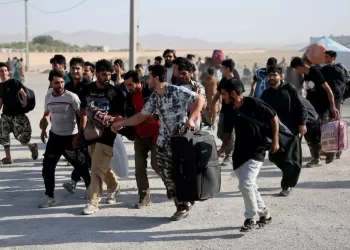
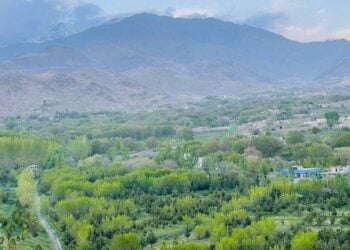
The hot wind of the border smells of gunpowder. In the eastern mountains of Afghanistan, the sound of artillery falls silent at times and then echoes again. The villagers spend their nights in darkness and fear, and their days under the sky’s dread, searching for a loaf of bread to stay alive.
Once again, the recklessness of those who, for the sake of tribal ties and cross-border loyalties, have turned an entire nation into a playground for power politics, is burning this weary land and its patient people in the fire of irrational policies. The tribal mindset and logic still block our path to civility and drag our people into the whirlpool of recurring crises.
On the surface, what is seen is a border clash between the Taliban and the Pakistani army; but in truth, it is a curtain drawn over a deeper and darker scene, a war not for territory, but for the conquest of minds, wills, and the future of a nation.
In recent months, these clashes have become a recurring pattern. First, Pakistan accuses the Taliban of sheltering militants of Tehrik-e-Taliban Pakistan (TTP) inside Afghanistan. Then the artillery and drones come into play; the borders close, cargo trucks stand still in endless queues, and the media echo conflicting narratives. A few days later, a temporary calm is restored through regional mediation. Yet, before the border dust has settled, the cycle begins anew, this time with the same chaos but a fiercer flame.
This familiar pattern reveals a carefully calculated war of attrition, a war that Islamabad has engineered to exhaust the Taliban without engaging in a full-scale conflict, while simultaneously showing the world that it remains the key player in Afghanistan’s equation.
The Taliban, meanwhile, try to project an image of power and authority. By stirring primitive thinking and tribal emotions, they seek to rally public opinion and disguise their diplomatic incapacity as national pride and patriotic zeal. They replace political wisdom with the cry of ignorance, and national reason with tribal fervor, urging a people standing on the edge of an abyss to leap into war with one of the region’s nuclear powers, a country with a population nearly six times that of Afghanistan and one of South Asia’s most powerful armies, not for country or compatriot, but for blood and clan ties that stretch beyond the border.
At the same time, remnants of the failed political factions from the previous regime—those acting as the “Fifth Column of Ashraf Ghani”—are, with hidden motives and old rivalries, indirectly fueling this process. Instead of offering rational critique, they inflame the people’s emotions with ethnic slogans and hollow promises, driving them, in the name of Afghan honor, into the trap of death.
Behind this mask lies another reality. The Taliban’s administrative structure is neither a state nor an army; it is a patchwork of local networks, scattered commanders, and conflicting decisions. In Kabul and Kandahar, leaders speak of politics in secret meetings, while in Paktia, Khost, and Nangarhar, field commanders and militias fight without following any unified strategy. A semi-centralized chain of command, weak intelligence, and limited financial and military resources have made this group vulnerable to any external pressure. Each time the border closes, supply lines stop, and tensions between factions rise. The Taliban, who once saw themselves as heirs to absolute power, are now trapped in a slow-burning attrition that consumes them from within.
Pakistan, with cold and calculated precision, measures and manipulates this weakness. Its goal is not military victory, but equilibrium. With each limited strike, it applies a bit more pressure, exposes a few more cracks, and forces the Taliban to bow a little lower. This is the war without war; a battle aimed at weakening decision-making capacity and eroding the spirit of resistance in the opposing authority.
Pakistan has designed the battlefield so that the fighting neither advances a step beyond the border nor retreats behind it, remaining fixed on that narrow line of blood and soil, exactly where it inflicts maximum cost on the Taliban and minimum risk on itself.
Meanwhile, the defenseless border population pays the price: homes destroyed, fields burned, trade paralyzed, and hope extinguished. Afghanistan is once again caught in a cycle where tanks and guns speak, and diplomacy falls silent. Our people still remember well the fire and war of the 1990s.
Yet, within this tragedy lies a historic opportunity for Afghanistan’s opposition, a chance that may never return. As the Taliban grow weary under external pressure and internal crises, the international community is also searching for a rational and credible alternative voice.
Here, the opposition’s role takes shape. The opposition cannot gain legitimacy through the repetition of hatred and empty slogans; it must instead forge a new narrative out of this very crisis, one that is national, humane, and hopeful. It must declare: We are the voice of the people, not the echo of war. Its discourse must carry the signs of peace, reason, and vision. Afghan men and women are tired of false saviors; they long for genuine honesty.
To reach such a position, the opposition must take several fundamental steps: first, to build a national and human discourse grounded in the pain and hope of the people, not in ethnic or factional divisions; second, to create a coherent and transparent structure in exile so that fragmentation turns into unity, for as long as the opposition cannot achieve organizational unity abroad, it will never succeed within Afghanistan. Both the world and the suffering Afghan people know this truth well. The heroics and theatrical gestures of some self-proclaimed leaders may please themselves, but they heal none of the wounds of Afghanistan’s oppressed women and men; third, to pursue active diplomacy with the world and the region, freeing Afghanistan’s image from the grip of the Taliban and their propaganda; and fourth, to document meticulously the realities on the ground, from civilian casualties to border closures and the destruction of livelihoods. Every record and testimony can preserve a truth that the Taliban and their patrons seek to hide.
Today the war is at the border, but destiny is being written in the minds and wills of people. The Taliban fight with guns; yet, if the opposition truly seeks to be an alternative, it must fight with the pen, with thought, prudence, and planning to lead this land from primitivism to civility.
Afghanistan can no longer endure another revolution or the endless spilling of blood. What is needed now is the rebuilding of trust and a practical plan to feed the hungry and offer the youth a hopeful future. If a voice rises that, instead of the cry for revenge, speaks of peace, education, and human dignity, perhaps hope will once again take root in this soil.
In the shadow of tanks, cannons, and fear, anyone who defends reason and humanity can nurture a new generation. A day will come when these burning borders will hear not explosions, but dialogue, and Afghanistan, after decades, will finally breathe anew.
You can read the Persian version of this analysis here: