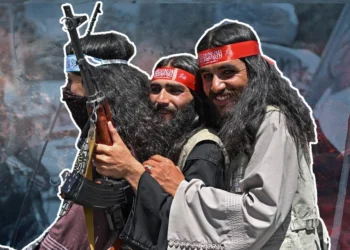

Women and girls in Afghanistan accuse foreign tourists of whitewashing the Taliban’s image, claiming that these tourists enter the country at the direct invitation of the Taliban. According to these women, foreign tourists, seeking to attract attention and enjoy their travel experiences, deliberately overlook the suffering and deprivation of women stripped of all their human rights. They emphasize that the actual situation of women in Afghanistan is far grimmer than what is portrayed in the media.
Several women and girls in Afghanistan, living under the oppressive restrictions imposed by the Taliban, accuse foreign tourists, particularly female tourists, of distorting reality for the sake of enjoyment and personal safety during their travels in Afghanistan. They claim these tourists not only ignore the dire circumstances faced by women but also enter the country with the direct support and invitation of the Taliban.
Marwa, a woman who has personally experienced the Taliban’s restrictions, says that foreign tourists, knowingly or unknowingly, have become part of the Taliban’s propaganda campaign to normalize the situation in Afghanistan. She stresses that many of these tourists, in pursuit of “likes” and “comments” on social media, produce superficial and trivial content, disregarding the suffering and deprivation of Afghan women while portraying the Taliban’s image as normal to the world.
Marwa says, “What tourists claim does not align with the reality of Afghanistan today. Afghanistan has become a prison for girls and women, and young people are turning to migration to escape this situation. When foreign women come to Afghanistan, they are provided with facilities. If they don’t praise this situation, who will?”
Sakina says that the life of a woman in Afghanistan cannot be understood merely by visiting historical buildings, recreational sites, or colorful markets. She adds that, despite being aware of the severe restrictions imposed by the Taliban, tourists ignore these realities in the videos and images they share of Afghanistan, presenting the country’s conditions in a way that benefits the Taliban.
Sakina says: “If foreign tourists are not whitewashing the Taliban’s image, then why, when they are aware of the bans and restrictions imposed on women by the Taliban, do they take photos with them and talk about security?”
She emphasizes that the fall of the previous government and the Taliban’s takeover have ended over 90 percent of the conflicts in Afghanistan, which the Taliban themselves fueled, but this does not equate to overall security in the country.
Sajida, another woman, considers the behavior of foreign tourists an insult to the pain and suffering of Afghan women and urges them to stop whitewashing the Taliban’s image. She says: “The Taliban exploit the presence of foreign tourists to present a better and more acceptable image of themselves in global media. For this reason, they treat them kindly and provide all necessary travel facilities.”
She adds: “Foreign tourists, by posting positive images on their social media pages, ignore the suffering of Afghan women. They may have come to see Afghanistan and experience something new, but their behavior normalizes the Taliban’s crimes. They take photos and smile alongside those whose hands are stained with the blood of the Afghan people up to their elbows, and whose crimes continue to this day.”
Meanwhile, some women’s rights activists also believe that the entry of foreign tourists into Afghanistan is meticulously planned to normalize the situation under Taliban rule. These activists call on the international community to look beyond fabricated and orchestrated images and acknowledge the bitter and painful reality of Afghan women’s lives and respond accordingly.
Roqia Saei, a women’s rights activist, says: “Women in Afghanistan have no social or personal freedoms and are living in the worst psychological and economic conditions. There is no institution to support them. The Taliban are the main cause of this situation, yet in such a dire and terrifying crisis, some foreign tourists, supported by the Taliban, travel to provinces, take photos and videos, and portray the situation as completely normal, claiming that the condition of Afghan women is fine. If they claim women’s conditions are good, why have suicide and femicide rates increased?”
Following the release of these videos, Taliban members and their supporters have reposted them on social media, presenting them as symbols of their government’s progress and achievements. However, alongside this narrative, harsh realities persist. In several instances, Taliban security forces have detained and harassed local tourists, particularly young people, for having long hair or not having a beard.
Previously, dozens of foreign female tourists visited Afghanistan, sparking significant reactions among users. One such tourist, Whitney Wright, a well-known American adult film actress, traveled to Taliban-controlled Afghanistan and was warmly received by the Taliban.
Toyosi Osideinde, a 30-year-old British tourist, claimed during her trip to Afghanistan that he had entered a personal relationship with an armed Taliban member. He described his experience, saying he was “sensitive and knew what to do.”
According to statistics from the Taliban’s National Statistics and Information Authority, in the first two months of 1404 (March 21–May 20, 2025), over 5,000 foreign nationals entered Afghanistan through border crossings and airports. The agency reported that 168 of them were women, most of whom traveled to visit historical and recreational sites.
These visits occur despite most countries and travel websites listing Afghanistan at the top of their “full travel warning” lists, advising against travel due to the “unstable security situation.” These sources emphasize that tourists traveling to Afghanistan risk everything and strongly recommend avoiding travel to the country.
Furthermore, reputable international travel websites, including the U.S. State Department’s travel advisory program, New Zealand’s travel safety program, and the foreign ministries of the UK, France, Canada, and Australia, have placed Afghanistan at the highest travel warning level, stressing that their citizens should not travel to Afghanistan under any circumstances.
According to these institutions’ advisories, tourists traveling to Afghanistan face serious risks, including insecurity, terrorist attacks, kidnapping, lack of consular services, and absence of diplomatic support. Additionally, the Taliban’s severe restrictions on individual freedoms heighten the level of security threats against foreign tourists, creating opportunities for their exploitation.
You can read the Persian version of this report here:
سفر با دعوت طالبان؛ لذت گردشگران، در سایه رنج زنان افغانستان