The United Nations Secretary-General has released his quarterly report on Afghanistan, titled “The situation in Afghanistan and its implications for international peace and security” The report covers key security, economic, political, and human rights developments over the past three months. It highlights that ISIS has continued its propaganda efforts against both the Taliban and the international community, mocking the Taliban’s security claims through a video. The report also notes 73 armed attacks carried out by the National Resistance Front of Afghanistan (NRF) and the Afghanistan Freedom Front (AFF) against the Taliban. Between May 14 and July 31, 2,127 security incidents were recorded in Afghanistan, representing a 53% increase compared to the same period last year.
The report documents ongoing torture, arrests, and killings of former military personnel despite the Taliban’s public declaration of a general amnesty. Arrests and killings of former government soldiers have persisted.
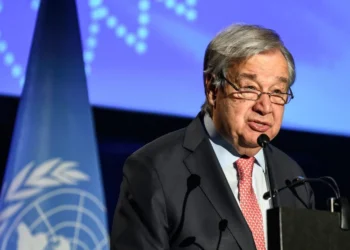
On Tuesday, September 17, Antonio Guterres, the United Nations Secretary-General, presented his report, which highlighted ISIS’s ridicule of the Taliban’s claims of providing security. The report states that ISIS-Khorasan Province (ISKP) continued its propaganda against the Taliban and the international community over the past three months. In May, they released a video mocking the Taliban’s security efforts.
The report notes a 53% rise in security incidents, with 2,127 incidents recorded from May 14 to July 31. Additionally, 73 armed attacks were conducted by the NRF and AFF against the Taliban.
During this period, there were 80 armed clashes in Afghanistan, compared to 37 the previous year. Explosions from improvised explosive devices (IEDs) increased by six, reaching 13 incidents, compared to last year.
Though opposition groups like the NRF and AFF have not managed to capture territory, they conducted 73 attacks against the Taliban. The NRF was responsible for 53 attacks, the AFF for 21, while the perpetrators of 19 attacks remain unknown. ISIS carried out four attacks in Bamyan, Kandahar, and Kabul between May 14 and July 31.
The report further emphasizes that the Taliban have continued to torture, arrest, and kill former military personnel, despite promises of amnesty. The UN documented four extrajudicial killings, nine arbitrary detentions, and six cases of torture and mistreatment involving former government officials and members of Afghanistan’s previous National Defense and Security Forces. The report does not identify the individuals responsible.
The Secretary-General also pointed out that in 2024, 23.7 million people in Afghanistan will need humanitarian assistance. As of August 30, only 24.9% of the $2.9 billion required to assist Afghanistan had been raised.
The report notes that Taliban officials have continued to appoint loyalists to national and local government positions. At the national level, the Taliban appointed two ministers, seven deputy ministers, one deputy spokesperson, the head and first deputy of the central bank, and 12 directors across various ministries.
According to the report, the Taliban appointed four provincial governors, four deputy governors, two mayors, at least 26 local directors, and 24 district governors loyal to the group. Noor Ahmad Agha, the new head of Afghanistan’s central bank, remains under UN Security Council sanctions.
The report reveals that in the first four months of the fiscal year, starting March 1, the Taliban generated $1 billion in revenue, reflecting an 11% increase.
The Secretary-General attributed this increase to a 30% rise in taxes. However, the Taliban’s customs revenue saw a 2% drop compared to the same period last year, due to reduced coal export taxes and lower tariffs on certain goods.
The Taliban’s domestic revenue increased by 22% in the first two months of the fiscal year, reaching approximately $204 million compared to the same period in 2023.
The report notes that, despite a 93% reduction in poppy cultivation in 2023, cultivation continued in Badakhshan, Kandahar, Nangarhar, and Takhar in 2024. Taliban officials destroyed about 860 hectares of poppy fields across various parts of Badakhshan. Between May and July, the average price of poppy increased by only 0.1%, from $737 to $738 per kilogram, a decrease from December 2023, when it was $802 per kilogram.
Antonio Guterres stressed that the people of Afghanistan are facing severe challenges, including a weak economy and widespread violations of rights and freedoms under Taliban rule. He noted that the Taliban’s restrictive policies have worsened these challenges.
The Secretary-General also highlighted the humanitarian crisis, natural disasters, and the effects of climate change as additional challenges for the Afghan people. The report added that the lack of compliance with international commitments, particularly regarding women’s and girls’ rights, continues to hinder efforts to raise the necessary resources.
The Secretary-General’s report, issued quarterly in accordance with UN General Assembly Resolution 11/68 and Security Council Resolution 2727, covers political, humanitarian, and human rights efforts from May 13 to July 2024.
You can read the Persian version of this daily report here:
گزارش دبیر کل سازمان ملل: داعش ادعای طالبان درباره تامین امنیت را مسخره میکند | روزنامه ۸صبح