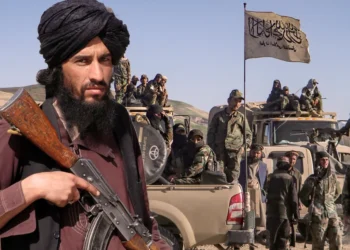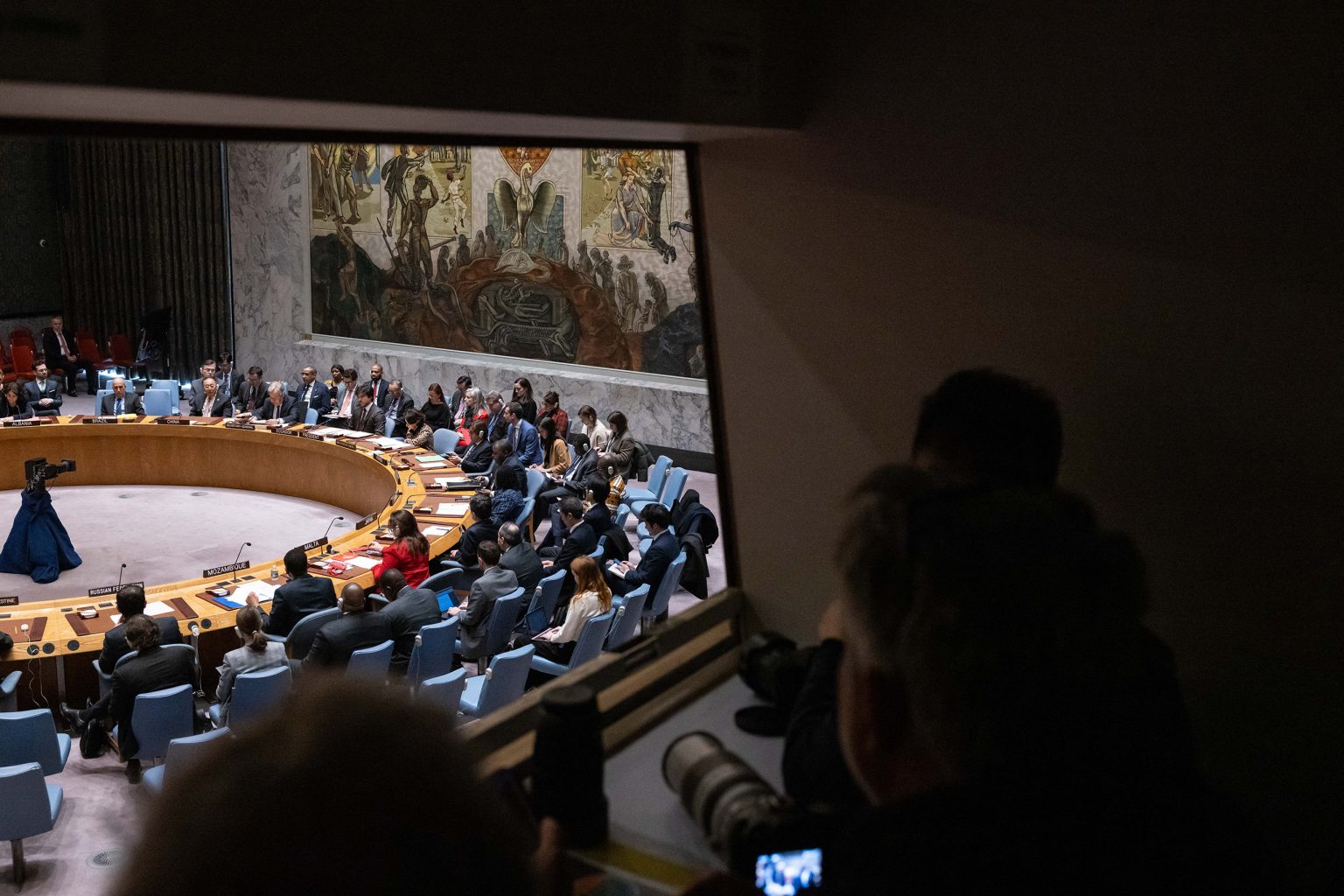
The United Nations Security Council, in its latest report, has stated that terrorist groups consider Afghanistan a haven. According to the report, the Taliban’s leniency towards terrorist groups has facilitated the infiltration of terrorism into neighboring countries. The report emphasizes the Taliban’s inability has revitalized Al-Qaeda and ISIS. Al-Qaeda has secretly reestablished its bases in five provinces, including Kabul and Nangarhar. The report specifies that Al-Qaeda is strategically patient and collaborates with other terrorist groups. It also notes that ISIS is seeking to intensify its attacks on Central Asia and has infiltrated various levels of the Taliban’s security institutions. The report states that 61 senior Taliban members, including cabinet members, are on the Security Council’s sanctions list, and Pashtun Taliban control decision-making within the group’s regime. Additionally, the report mentions that the Taliban’s leadership does not have a uniform approach towards ISIS and Al-Qaeda, with the group’s Salafi members sympathizing with ISIS, and paying off TTP members to prevent them from joining ISIS.
According to the report, the Taliban continue their “theocratic” policies and have not accepted the demands of the people of Afghanistan and the international community. The group’s governance methods closely resemble those of former Taliban supreme leader Mullah Omar.
The 26-page report from the Security Council states that the Taliban’s leadership remains predominantly Pashtun and non-inclusive. It also highlights that Afghanistan has witnessed the widespread imposition of Taliban policies and ideology over the past year, with a narrower definition of Pashtun identity concepts.
Despite specific ethnic and factional loyalty tensions, Hibatullah has maintained his power, compelling the group’s interior and defense ministers to comply, leaving them no choice but to accept his orders.
The report notes that the Taliban supreme leader’s orders to ban poppy cultivation in Badakhshan have been ignored, and he is trying to strengthen his position in the north and control over non-Pashtun Taliban. The report highlights that internal Taliban conflicts in Badakhshan have raised the group’s concerns about increasing insecurity in the province, prompting the reshuffling of Taliban officials in Badakhshan, Takhar, and Baghlan to strengthen Kandahar’s influence.
According to the report, despite quelling internal protests in Badakhshan, the Taliban’s rule in the province faces threats and internal dissent, potentially challenging Badakhshan’s security for the Taliban.
Profits From Poppy Ban For Taliban And Losses For Farmers
The Security Council report indicates that it is still early to assess the impact of the poppy ban, but senior Taliban officials benefit from it while farmers suffer losses. The report states: “Due to poppy stockpiles, drug trafficking in Afghanistan is significant.”
Taliban and Al-Qaeda Relations
The Security Council’s sanctions monitoring team in its report states that the Taliban’s inability has revitalized Al-Qaeda and ISIS, and this network has reestablished its bases in five provinces, including Kabul and Nangarhar.
The report states that Al-Qaeda is strategically patient, collaborates with other terrorist groups, and prioritizes maintaining its relationship with the Taliban. The network continues its activities secretly to portray the Taliban’s adherence to the Doha Agreement.
According to the report, Al-Qaeda is rebuilding its operational capabilities, but its ability to conduct large-scale attacks is limited. The report emphasizes that the network’s intent for large-scale terrorist attacks remains unchanged, and it works with its partners to conduct external operations.
The report states: “Al-Qaeda has used Afghanistan for reorganization, recruitment, and establishing a network of training camps and safe houses in at least five provinces. This expansion has brought more Al-Qaeda fighters from abroad to Afghanistan.”
According to the report, there is no specific information on the whereabouts of the Al-Qaeda leader and the group’s power in Afghanistan. Still, the network’s leaders continue to engage with warlords in Afghanistan. According to the report, experienced Al-Qaeda preachers, recruiters, financiers, and trainers have gone to Afghanistan to strengthen the network’s dispersed branches.
One member state reported that Al-Qaeda seeks to enhance its activities and strengthen its positions within the Taliban’s military structures in the north of Afghanistan for joint operations and shifting the center of terrorist activities to Central Asia by collaborating with the East Turkestan Islamic Movement (ETIM) and the Tajikistan Ansarullah Group.
The report, citing member states, states that Al-Qaeda cells are active in several provinces, mainly in the southeast of the country, possessing training bases and safe houses, and have returned to their former camps in Jalalabad and Kandahar provinces. They also have bases in Kunar, Nuristan, and Takhar provinces.
The report mentions that the Taliban have informed Arab Al-Qaeda fighters to avoid going to Kabul and have asked senior members of the network to undergo biometric registration in Kabul. According to the report, 180 to 200 Al-Qaeda fighters are training TTP fighters in Farah, Herat, Helmand, Kandahar, and Nimruz.
Previously, the Hasht-e Subh Daily in an investigative report had found that the Taliban had built four settlements for Al-Qaeda and TTP in Ghazni province.
Isis Activities And Efforts To Penetrate Central Asia
In its report, the United Nations Security Council stated that ISIS poses a significant threat to Afghanistan, the region, and beyond. Despite the Taliban’s claims of suppressing ISIS, the group continues its attacks.
The report highlights that there are disagreements within the Taliban leadership regarding how to deal with ISIS and Al-Qaeda, with the Taliban’s Salafi members sympathizing with ISIS. According to the report, ISIS exploits these internal conflicts within the Taliban to target religious minorities and has strong planning and attack capabilities.
NATO member states have assessed that ISIS’s efforts aim to delegitimize the Taliban. The group uses its Afghan members for attacks in Pakistan and Pakistani members for attacks in Afghanistan. The report specifies that ISIS has utilized Tajik citizens for attacks in Iran and Russia, while the Taliban claim that foreign terrorists are not operating out of Afghanistan for their attacks.
Several United Nations members estimate that the number of ISIS fighters in the region, especially in India and Pakistan, and ISIS Khorasan in Afghanistan, has increased to between four and six thousand. The ISIS core group numbers between two thousand and three thousand five hundred fighters, successfully infiltrating the Taliban’s ministries of defense, interior, and intelligence, gaining access to welfare benefits, weapons, and training.
The report states that Sanaullah Ghafari, also known as Shahab al-Muhajir, remains the leader of ISIS Khorasan (IS-K). However, after an unsuccessful Taliban attempt to capture him in Kunar province, he has gone into hiding. According to the report, ISIS has dispersed from its central strongholds in the provinces of Kunar and Nangarhar, with some members relocating to Badakhshan and northern Afghanistan, others to Herat and Nimruz, some to Balochistan in Pakistan and major cities, including Kabul, and some ISIS members moved to Iran in 2023.
The report indicates that ISIS’s presence in northern Afghanistan has increased. A member state reported that ISIS is planning to recruit Tajiks and Uzbeks and stockpile weapons and explosives in remote and mountainous areas.
A United Nations Security Council member stated that ISIS is seeking territorial control, and the Taliban are concerned about ISIS Khorasan taking root in Badakhshan province. The report also provides evidence suggesting that ISIS has established a special operations force in Iran.
The report emphasizes that ISIS aims to control specific territories in Afghanistan to expedite its influence in Central Asian countries and Russia. A member state noted that ISIS leaders are focusing on attracting financial aid, receiving approximately $2.5 million in 2023 from various sources to destabilize some regional countries. The attack on March 22, 2024, at the Crocus City Hall near Moscow is cited as part of these efforts.
Other Terrorist Groups Active Under Taliban Rule
Member states have reported that Tehrik-e Taliban Pakistan (TTP) is the largest terrorist group operating in Afghanistan, with an estimated 6,000 to 6,500 fighters. The report states that the collaboration between TTP and Al-Qaeda could transform TTP into a trans-regional group. According to the report, Sirajuddin Haqqani, the Taliban’s Minister of Interior, plays a crucial role in transferring weapons to TTP and releasing ISIS prisoners on the condition that they join TTP.
The report also mentions that the Taliban are concerned that excessive pressure on TTP might push the group towards collaborating with ISIS, and therefore, they aim to keep TTP satisfied. According to the report, in addition to individual monetary gifts, the Taliban provided TTP leader Noor Wali Mehsud with a monthly stipend of 3.5 million Afghanis and supplied TTP forces with leftover foreign weapons, especially night-vision equipment.
The report states that the Taliban’s policy towards TTP changed in mid-2023, with their intelligence service preparing three new guesthouses in Kabul for TTP leaders and issuing work permits, movement authorizations, immunity from arrest, and weapons permits for senior TTP figures.
When the media reported that the TTP leader met with Taliban supreme leader Hibatullah Akhundzada on March 5, 2024, the group immediately denied the meeting.
The report emphasizes that managing TTP and related groups poses significant challenges for the Taliban, and it appears that Sirajuddin Haqqani, the head of the Haqqani Network, has been sidelined from mediating between Pakistan and TTP. The report also mentions the visit of Mullah Shirin, the Taliban governor of Kandahar and a close associate of the group’s leader, to Pakistan for talks.
East Turkistan Islamic Movement (ETIM)
The report states that the situation with the East Turkistan Islamic Movement remains unchanged, with several member states highlighting the collaboration between TTP and the group’s fighters in shared training camps. It also mentions that Taliban officials cooperate with TTP and the Baloch Liberation Army in tax collection and targeting Pakistani and Chinese interests.
According to the report, the East Turkistan Islamic Movement has strengthened its “localization” efforts in Afghanistan, aiming to secure a permanent foothold by integrating into Afghan society and engaging in mining and other activities.
The Taliban On The Blacklist
The UN sanctions monitoring team has listed 61 Taliban officials under global sanctions. The report indicates that 35 of these individuals are members of the Taliban cabinet and leadership.
Notable names include Mullah Hassan Akhund, Prime Minister of the Taliban; Abdul Ghani Baradar, Abdul Salam Hanafi, and Abdul Kabir, deputies of the Prime Minister; Amir Khan Muttaqi, Foreign Minister; Sirajuddin Haqqani, Interior Minister; Abdul Haq Wasiq, Head of Intelligence; Noor Mohammad Saqib, Minister of Hajj and Religious Affairs; Khairullah Khairkhwa, Minister of Information and Culture; Khalil-ur-Rahman Haqqani, Minister of Refugees and Repatriation; and Noorullah Noori, Minister of Borders and Tribal Affairs.
Key Haqqani Network members listed are Yahya Haqqani, brother of Sirajuddin Haqqani; Wali Jan Hamza, Kabul police chief; Rahmatullah Kakazada, head of public information at the Interior Ministry; Mohammad Tahir Haqqani, Haqqani Network advisor; Shams-ur-Rahman, senior advisor to the Interior Minister; Mohammad Muslim Haqqani, advisor to the Minister of Refugees and Repatriation.
Other prominent Taliban officials on the sanctions list include:
– Nooruddin Turabi, Head of Disaster Management
– Shahabuddin Delawar, Head of the Afghan Red Crescent Society
– Mohammad Zahid, Deputy Minister of Labor and Social Affairs
– Qudratullah Jamal, Deputy Minister of Commerce and Industry
– Jan Mohammad Madani, Financial Advisor to Mullah Hibatullah
– Shamsuddin Shariati, Head of Follow-up and Supervision of Decrees and Orders
– Ahmad Shahid Khaili, Deputy Minister for Propagation of Virtue and Prevention of Vice
– Azamullah Haqqani, Deputy Financial Inspector
– Abdul Qadir Haqqani, Deputy Minister of Finance
– Sher Mohammad Abbas Stanekzai, Deputy Foreign Minister
– Saaduddin Saeed, Deputy Minister of Information and Culture
– Esmatullah Asim, Deputy Mayor of Kabul
– Abbas Akhund, former head of the Afghanistan National Disaster Management Authority (ANDMA)
– Abdul Samad Achakzai, Commander of the Helmand Corps
– Mohammad Aleem Noori, Third Secretary at the Taliban Embassy in Tehran
– Mohammad Rasul Ayoob from the Kandahar Borders and Tribal Affairs Office
Additionally, Taliban higher education officials listed include Mohammad Ibrahim Omari, Abdul Baqi Haqqani, Fazlullah Rabi, and Abdul Qudus Mazhari, a professor at Kabul University. Other notable figures are:
– Gul Mohammad, Governor of Nangarhar Province
– Zia-ur-Rahman Madani, Governor of Logar Province
– Fazil Mazloom, Deputy Minister of Defense
– Abdul Jabbar Omari and Abdul Rahman Agha, senior officials of the Ministry of Defense
Furthermore, Abdul Haseeb Alizai, a businessman accused of drug trafficking, and Faizullah Khan Noorzai, a trader, and Malik Noorzai, a logistics officer for Kandahar province, are also on the UN sanctions list.
The report states that these individuals are prohibited from traveling outside Afghanistan without UN Security Council authorization and their overseas assets are frozen. It also mentions that the sanctions committee regularly receives requests to lift travel bans on Taliban officials but has not received any requests to unfreeze the group’s financial assets.
You can read the Persian version of this daily repot here:
گزارش شورای امنیت سازمان ملل؛ باجدهی طالبان به گروههای تروریستی