
• 8AM.MEDIA
  • ویب‌سایت فارسی
  • پښتو ویب‌پاڼه
  • اۉزبېکچه ویب‌سایت
  • Podcast
Friday, November 13, 2026
Hasht-e Subh
  • Home
  • News
    • Afghanistan News
    • World News
  • Opinion
    • Editorial
    • Analysis
  • Reports
    • Daily Reports
    • Investigative Reports
  • Society
    • The story of people
  • Women’s Word
  • Columns
    • Three Years After Afghanistan’s Fall: The Taliban’s Resurgence
    • Towards Equality
    • The Resurgence of the Taliban: Two Years Since Afghanistan’s Fall
    • Hebatullah Report Special Edition
    • Resistance for Education Special Edition
    • Special Column on Taliban’s Education Curriculum
    • Nawroz
  • Interviews
  • Contact Us
    • About Us
    • 8AM MEDIA Annual Awards
    • Submit an Article to Hasht-e-Subh
  • 8am.mediaBack
Subscribe
No Result
View All Result
  • Home
  • News
    • Afghanistan News
    • World News
  • Opinion
    • Editorial
    • Analysis
  • Reports
    • Daily Reports
    • Investigative Reports
  • Society
    • The story of people
  • Women’s Word
  • Columns
    • Three Years After Afghanistan’s Fall: The Taliban’s Resurgence
    • Towards Equality
    • The Resurgence of the Taliban: Two Years Since Afghanistan’s Fall
    • Hebatullah Report Special Edition
    • Resistance for Education Special Edition
    • Special Column on Taliban’s Education Curriculum
    • Nawroz
  • Interviews
  • Contact Us
    • About Us
    • 8AM MEDIA Annual Awards
    • Submit an Article to Hasht-e-Subh
  • 8am.mediaBack
No Result
View All Result
Hasht-e Subh
No Result
View All Result

Virginia Woolf and the Courage of Presence: A Message for the Women of Afghanistan

Translated by Farhad Farhaad | Originally written in Persian by Madina Karimi

Mohammad Farhaad Mohammad Farhaad
18 October 2026 - Solar Hijri Date: 1405/07/26 [t_time:1792347101]
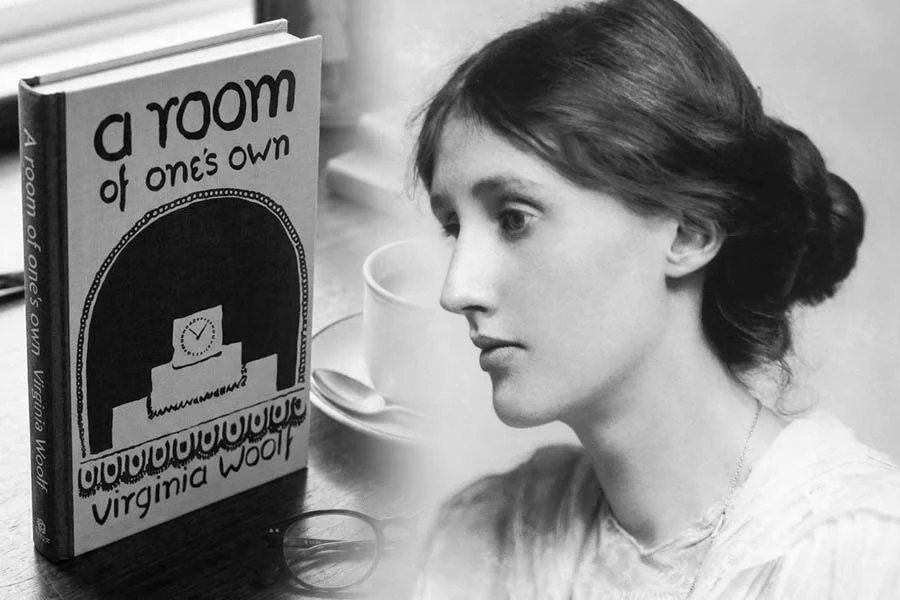
A copy of Virginia Woolf’s book A Room of One’s Own sits beside a portrait of the English writer, whose work inspires women’s writing. (Photo credit: Wikipedia)

Wikipedia

Virginia Woolf, a woman in twentieth-century England, was preoccupied with the obstacles that women faced on the path to writing. Her effort was exploratory, bold, and defiant of tradition, both in the realm of literature and against the “gender-centered” order of her society. In A Room of One’s Own, Woolf recounts the story of women and their writing in a language that is at times humorous, at times painful, and occasionally tinged with longing.

Her account of the fate of women of that era is not unrelated to her own personal experiences. While their brothers were sent to schools, private academies, and universities, Virginia and other women in England at the time were deprived of similar educational opportunities.

In my view, now that I am reading this book for the second time, the two key phrases, and in fact the central themes of Woolf’s emphasis on the condition of women, are these: “a room of one’s own” and “personal income.” In her belief, these two are keys to unlocking many of the knots in women’s lives. At the same time, the two are never separate. A woman who has an independent income can have a room of her own, and a woman who has a room of her own seems to have attained a power, the power of authorship and writing. Of course, the room is meant as a symbol of a space in which a woman can think, read, and write without the interference and control of others.

What stands out most in my mind from this book by Virginia Woolf is the issue of women’s writing. It is as if writing, in that dark era for women and in every age, is one of the means of breaking the stereotypes and taboos that society and its customs have placed in the path of women.

Woolf visits public libraries, the same libraries that today, in a country called Afghanistan, are off-limits to many girls and women, with their doors closed to them. Yet Woolf takes every opportunity to go to libraries, to leaf through a variety of books, and to write her innermost feelings and thoughts among their pages.

She suffers from reading claims that even the most intelligent women are weaker than the least intelligent men. She also feels bitter that so few women have been present in the field of writing. Had there been women who broke the existing order and took up the pen, the path would eventually have been opened, and today many women could have been the authors of these very books.

In one of her most candid reflections, Woolf comes to believe that the dire and undesirable condition of women is not solely the product of the unequal order of society, a society that, in her view, had placed women in a position lower and even less entitled than that of slaves. In her belief, women themselves also share responsibility for the continuation of this situation, because they have accepted an order that confines them and have made less effort to break it, unlike writers such as Emily Brontë, Charlotte Brontë and Jane Austen, who stood against the restrictions of their time with their pens and opened a path for women’s presence in literature.

Woolf was, of course, fortunate. She possessed both of her master keys. On the one hand, she had access to many books, and on the other, she earned an annual income of five hundred pounds from an inheritance left by her aunt. At the same time, she could use her father’s private library and, in her own words, devour all of those books. This access to books and an independent income to some extent replaced the education from which she had been excluded, an opportunity that many women of her generation did not have. She was able to have “a room of one’s own” and eventually to write A Room of One’s Own as well.

Virginia Woolf was the creator of novels such as Mrs Dalloway and To the Lighthouse, and the author of various essays in different fields.

The message Woolf may hold for the women of Afghanistan today is the courage of “presence,” presence through writing and storytelling. This is so even as Afghanistan’s society closes the paths of presence to women and girls more with each passing day and creates new obstacles. What Woolf went through is not unlike the experience of the women of Afghanistan today. Through writing, Woolf announced her presence and transformed the existing order from a normal and accepted condition into a phenomenon that raises questions and is inhumane and abnormal, something that the women and girls of Afghanistan have also done, to the best of their ability, over the past five years or more, despite ever-increasing restrictions.


You can read the Persian version of this article here:
ویرجینیا وولف و جسارت حضور؛ پیامی برای زنان افغانستان

ShareTweetSendSendShare

Related Posts

Afghan author Homeira Qaderi appears beside the cover of her memoir “Where in the Night Should I Hide,” which recounts the fall of Kabul. (Photo credit: Exclusive)
Interviews

“Many People Should Not Read This Book”: Interview with Homeira Qaderi

11 November 2026 [t_time:1794389345]
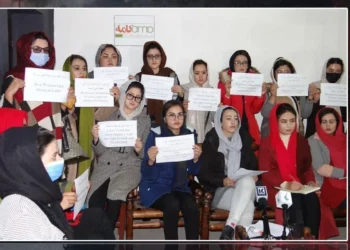
Women activists hold handwritten signs demanding the right to work and education during a press conference in Afghanistan. (Photo credit: Exclusive)
Opinion

Beyond Victimhood: How the Women of Afghanistan Became Actors of Civil Resistance Against Gender Apartheid

21 October 2026 [t_time:1792587024]
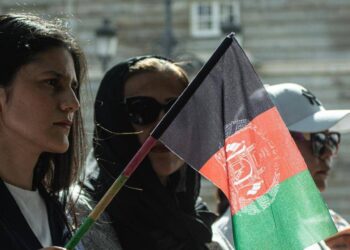
Women of Afghanistan gather beside the Afghanistan flag as Chatham House honors their courage and resistance. (Photo credit: CHATHAM HOUSE)
Afghanistan News

Women of Afghanistan Win 2026 Chatham House Prize

25 August 2026 [t_time:1787669611]

Latest

Loading latest news...

Popular stories

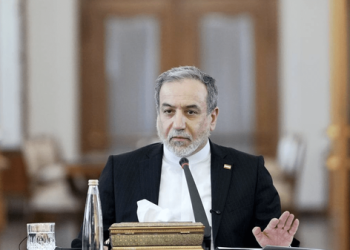
  • Iranian Foreign Minister Seyed Abbas Araghchi speaks during a public appearance (Photo: Farsnews)

    Araghchi Warns: US Must Choose Between Accepting Iran’s Proposal and Continuing the War

    Share
    Share Tweet
  • Taliban Order Female Doctors to Have Male Guardians to Work With Male Colleagues

    Share
    Share Tweet
  • ISIS-Khorasan: A Real Threat to the People of Afghanistan and a Political Opportunity for the Taliban

    Share
    Share Tweet
  • UAE Official: Risk of War Between US and Iran Remains

    Share
    Share Tweet
  • Iranian Media Report Explosions in Southern Iran

    Share
    Share Tweet

Podcast

Insights
Insights

Join Lynne O’Donnell for 8AM’s podcast series, Insights.
Lynne talks with generals, diplomats, soldiers, journalists, politicians, activists, people who have front row seats for conflicts around the world, and citizens with a story to tell, happy or sad. For this first series, Afghanistan is the focus. Lynne and her guests talk about the collapse of the republic in August, 2021, and the impact since — for the people of Afghanistan, for the security of the region, for the safety of the world. It’s important, interesting and insightful.

Insights/22: Controlling the Narrative with Mina Sharif
byinsights8am

Controlling the Narrative

Lynne O’Donnell talks with Mina Sharif, author, activist, women’s rights campaigner, educator and mentor. They discuss who controls the narrative and who speaks for Afghanistan’s people when the Taliban appear to have seized control not only of the country but of the message, too.

Have a listen

Insights/22: Controlling the Narrative with Mina Sharif
Episode play icon
Insights/22: Controlling the Narrative with Mina Sharif
Episode Description
Episode play icon
Insights/21: Media Meltdown with Zahra Joya
Episode Description
Episode play icon
Insights/20: Terror Inc with Scott Richards
Episode Description
Episode play icon
Insights/19: Busting Stereotypes with Bushra Gohar
Episode Description
Episode play icon
Insights/18: Media Matters with Waliullah Rahmani
Episode Description
Episode play icon
Insights/17: What Goes Around Comes Around with Sima Samar
Episode Description
Search Results placeholder
Hasht-e Subh

8AM Media, also known as Hasht-e-Subh Daily, stands as Afghanistan's premier independent and non-profit newspaper, resonating as a beacon of journalistic integrity since its establishment in June 2007 by esteemed Afghan journalists and human rights advocates. With a steadfast commitment to citizen journalism and civic education, Hasht-e-Subh Daily has earned its place as the most esteemed publication in the nation.

Publisher: Sanjar Sohail
Email: [email protected]
Executive Director: Parwiz Kawa
Email: [email protected]

Read More

Mullah Hibatullah Changes Kandahar’s Name to “Kandahar Sharif”

23-Year-Old Man Dies During Buzkashi Competition in Badakhshan

Kabul-Nangarhar Highway Closed Due to Heavy Rainfall and Landslides

UNICEF Provides Treatment and Special Food to Malnourished Children in Afghanistan

Putin: Presence of Foreign Forces in Ukraine Is Unacceptable

Editor’s Choice

Every Saturday morning, 8AM MEDIA English Services Department will guide you through the week’s biggest stories from Afghanistan and the international community.

Subscribe

© 2026 - ©Hasht-e Subh Daily

No Result
View All Result
8am.Media
پښتو ویب‌پاڼه
ویب‌سایت فارسی
اۉزبېکچه ویب‌سایت
  • Home
  • News
    • Afghanistan News
    • World News
  • Opinion
    • Editorial
    • Analysis
  • Reports
    • Daily Reports
    • Investigative Reports
  • Society
    • The story of people
  • Women’s Word
  • Columns
    • Three Years After Afghanistan’s Fall: The Taliban’s Resurgence
    • Towards Equality
    • The Resurgence of the Taliban: Two Years Since Afghanistan’s Fall
    • Hebatullah Report Special Edition
    • Resistance for Education Special Edition
    • Special Column on Taliban’s Education Curriculum
    • Nawroz
  • Interviews
  • Contact Us
    • About Us
    • 8AM MEDIA Annual Awards
    • Submit an Article to Hasht-e-Subh
  • 8am.media

© 2026 - ©Hasht-e Subh Daily