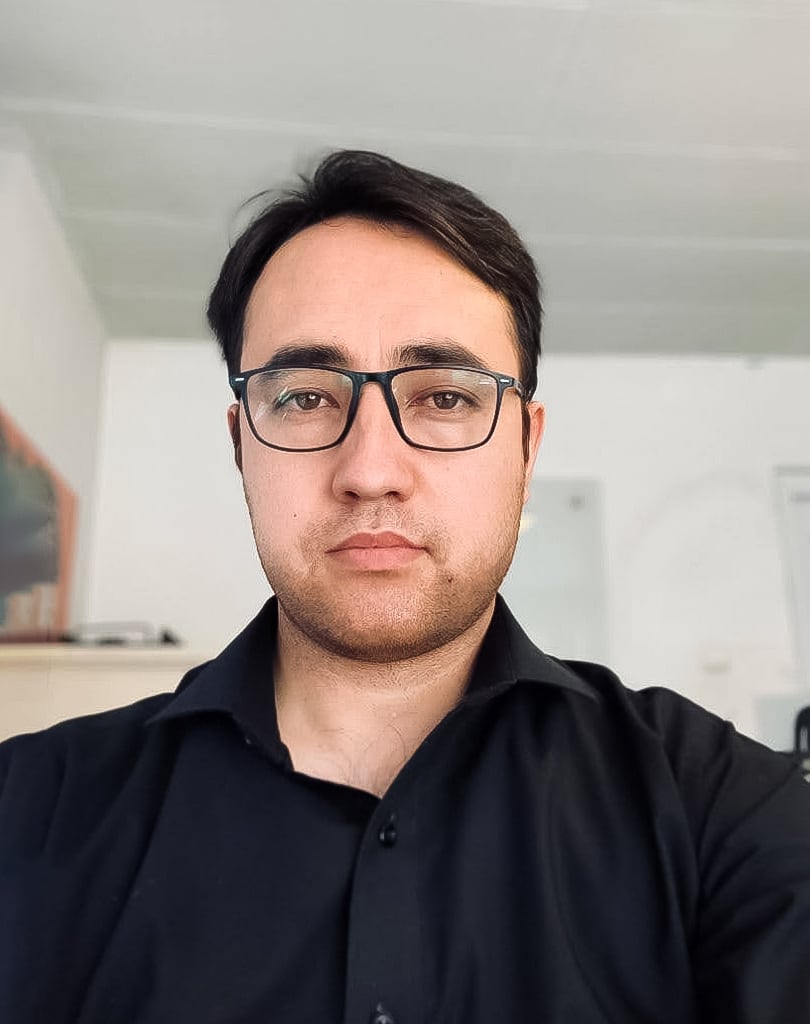

Professor Giorgia Pietropaoli is an Italian writer, investigative journalist, researcher, and cultural activist from Rome. She studied Classical Literature as well as Persian language and literature, and earned her PhD in Political Science.
Through her work as a journalist and researcher, she has focused on human rights, women’s voices, and cultural narratives. She recently published an investigative essay titled Afghanistan: Dove Tutto Cambia per Non Cambiare Mai (“Afghanistan: Where Everything Changes So Nothing Ever Changes”).
The complete audio version of this interview is available on the Hasht-e Subh Daily Podcast. The conversation has been lightly edited for length and clarity.
Hasht-e Subh Daily: Tell me more about yourself and your journey. I would also love to know what drew you to your work as a writer.
Pietropaoli: First of all, I am really happy about your invitation, and it is an honor to be here with you.
I am Italian, but I am very fond of your culture. I love Afghan literature, and I love Persian literature as well. I know that, at this moment, Afghanistan needs to be brought to the attention of the international community.
I am a professor by profession. I currently teach literature, including Italian, Ancient Greek, and Latin literature. But I also studied Persian literature at university and began learning Farsi, so my interest in your culture grew over time.
I became more and more interested in your history, especially that of recent years, and I noticed that international coverage has not done a good job of reporting your story, the human rights situation, and what has been happening since the Taliban came to power.
One person has been very important in this. Some years ago, I met Somaia Ramish, a major Afghan intellectual, and we became not only friends but companions on the same path: drawing attention to the situation in Afghanistan.
Hasht-e Subh Daily: You seem to move between literature and politics in your work, and you studied politics.
Pietropaoli: Yes, I studied political science as well, and I currently write for an important international news magazine. I helped open a window onto the Middle East and Afghanistan, because the magazine was originally focused on African issues. Now we also follow developments in the Middle East and Afghanistan.
As I said, I grew closer to your culture. I began translating some of your poetry, and I started publishing books in Italy about a country that many Italians do not even realize exists in this way.
I wanted to highlight the situation in Afghanistan, but above all, to show that the Afghan people are not only the Taliban. You have a great culture behind you, and you are, of course, the victims of a terrible regime.
I have written a great deal about the regime and the human rights violations in your country. But I also wanted to show that you have a great country, that you are educated, that you have a rich culture, and that you are fighters. You are not only victims; you are strong fighters for your rights.
For example, when I started reading Hasht-e Subh, a friend of mine, who had been a teacher in Herat some years ago, told me, “Look at this outlet. They are doing great work.”
So I began following you and the work of your journalists, and I said to myself, “I want the international community to know what they are doing. They are excellent journalists, and they are people who are still fighting for their rights, even in this terrible situation.”
And so I kept writing. A few months ago, I published this book, which you can see here, and it deals entirely with the past four or five years, almost five now, since 2021.
In our Western countries, we do not know much about you. So what I wanted to do was show people what is happening, what people are doing, and what their real lives are like. And I collected many stories.
Hasht-e Subh Daily: That is a very important and powerful point. I would like to hear more about your recent work, the book you showed me, which is fascinating in many ways, especially its title, Afghanistan: Where Everything Changes So Nothing Ever Changes. What inspired you to write this book, and from what perspective or framework did you approach Afghanistan?
Pietropaoli: It all started from a personal story. I had a friend, the same friend who introduced me to your work, who was an important professor in Herat. For a year, I completely lost contact with him. I did not know where he was or what had happened to him, and I could not ask anyone, because I was afraid of putting his family in danger.
For that whole year,r I was going out of my mind, because I knew nothing. He had been threatened by the Taliban several times. At the same time, another close friend, an important journalist in your country, kept telling me, “I cannot even work anymore, because the Taliban are threatening me.”
My heart was full of sadness at this situation, and I kept asking myself: What can I do for this country? What can I do for these people?
I have only one weapon: my pen. That is all I have. I can put my words into a book and try to help by drawing attention to the situation.
I am very glad that, although this book was published only in the last days of January this year, it has already reached a very large audience. It is spreading widely. I even presented it to the Italian government, because they invited me. They wanted to learn about what has happened in your country.
Until now, almost no one in Italy has been talking about Afghanistan. So what I want to do is encourage governments here and across Europe to take action for your country.
In the coming months, I will also travel to the European Union in Brussels, where I have been invited. There, I want to speak openly about what is happening in your country, and about why Western countries have almost completely forgotten to help you.
We betrayed you. We left you alone. Not me personally, of course, and not the humanitarian organizations; I know many who are still doing their best to help. But your situation is extremely difficult.
The world cannot remain silent. Yes, I know there are many wars at this moment. There is conflict involving the United States and Iran, and there are many wars in Africa as well. But your situation has gone on for too long.
You are living without fundamental human rights. The situation of women is unbelievable. How can women be treated like this?
You are suffering under gender apartheid, and I want you to know that we are aware of it. I want Afghan women to know that we are doing our best to support you. We are not forgetting you. We are talking about you. And I want the bond between women around the world to grow stronger day by day, because together we can do something.
This is my position. I live in a free world. I live in a free and democratic country. But I want you to have your own free and democratic country. I cannot accept that I am free while you are not. If you are not free, then I am not truly free either. Together we can do something. I strongly believe that. And I hope you agree with me.
Hasht-e Subh Daily: Yes, I absolutely agree, and that brings me to the next question. You believe that literature can change the world’s perspective on Afghanistan, and especially on women in Afghanistan. As we discussed earlier, women in Afghanistan are often portrayed as silent, as objects, or simply as victims. Do you think literature can help change that narrative, and how might that change happen?
Pietropaoli: I strongly believe that literature can help. Education and knowledge are the foundation; they are the pillars that can change the world, and especially the world’s opinion of you.
Let me show you one of the books I published, Symphony for Peace. On the back cover, you see a woman with her words, and her hijab is flying away. She is free.
I strongly believe that literature, communication, and even poetry can change the narrative around Afghan women. I know you are fighting hard for your rights. You were teachers, doctors, lawyers, journalists, singers, and also ordinary housewives. So why should the world think of you only as victims? Why?
You are not only victims. You are real people who fight every day for your rights and for your lives.
And no, I do not believe that violence can bring meaningful change. What can bring real change is how you use your words. That is why the Taliban are closing schools. In schools, people learn to think, to express their opinions, and to understand the world around them. They closed the schools because education, because literature, is more powerful than a gun.
As Somaia Ramish said, “Load your poems like guns.” You have to load your poems. Your poetry is more powerful than anything. That is why I published these two books of Afghan poetry. Through these words, people can understand what you are feeling. They understand that you are not only victims. Yes, you are suffering, but you can take your pen and write your future.
Your future is in your words. And our conversation itself is proof that words can truly change the world.
Hasht-e Subh Daily: Since you mentioned Somaia Ramish’s work, I am eager to ask about Words from Exile, which you translated into Italian. What did you find particularly powerful or unique in her writing, and what made you feel that this was a voice that needed to be translated and introduced to Italian readers?
Pietropaoli: When I first read Somaia, I was deeply moved by her words and by her style. She is so contemporary. Even though she comes from a great and ancient poetic tradition, she writes in a strikingly contemporary way. I was almost taken aback, because I had often assumed that Afghan poetry was tied only to old traditions, not to modern or contemporary expression.
She showed me otherwise: “Look, I am a contemporary woman. Look at how I write.” I compared her poems to some of the greatest poems of all time. I think she has done something very important for your country, because this book is not only about her personal experience of exile. It also highlights the harsh situation of women in Afghanistan.
And especially, as I mentioned with the phrase “load your poems like guns,” she captures the reality of the situation and shows what can change the narrative of Afghanistan. Only precise words, poetry, and the beauty of language can change that narrative.
Women, and Afghan people in general, are living through a terrible situation. You are under a terrible regime. But you are not only the victims. You are strong warriors trying to change the narrative.
You are trying to win your freedom. You are people who are not defined only by Taliban rule. You are people full of culture, art, and all the beauty that Western countries need to understand.
Afghanistan is not only the Taliban. It is not only suffering. Afghanistan can also be a country of young people, art, culture, and literature. That is what we must tell the world.
Of course, we must also speak about the harsh realities: poverty, a country damaged by failed politics, and a society facing extraordinary challenges. A country where some fathers are forced to sell their children just to find food. But it is also a country where people keep fighting for life and freedom.
And yes, Somaia Ramish has done an extraordinary job of capturing all of this through contemporary poetry. She carries your tradition on her shoulders while also facing the future. I love her style. I truly love the way she presents your situation directly, without hesitation or unnecessary embellishment. She goes straight to the point.
Hasht-e Subh Daily: Words are powerful, and I am glad you have chosen women’s voices to represent Afghanistan; that in itself is a powerful message. Building on that, after working on these two books, how do you personally understand what it means to be a woman in Afghanistan, or the experience of exile?
Pietropaoli: I know that many people are now living in exile, and I know they are suffering greatly. But I also know that those in exile have not forgotten the people who remain inside the country, and they are doing a great deal to support them.
Exile is something truly painful. Even though many now live in Western countries, I know they still suffer deeply and dream of returning to Afghanistan. I hope they can return one day, because Afghanistan needs its brightest minds. Right now, many of the country’s most talented and educated people are living in exile, and that is not good for any country.
A country cannot thrive without the people who can help rebuild a democratic process. What you need is the ability to choose your own government. I hope you regain your freedom and begin, day by day, to rebuild a democratic society in which women and men can work together to give their children a better future.
I truly believe you deserve the right to decide your own future. This Taliban regime cannot last forever. I am convinced it will eventually end because it lacks the capacity to build a sustainable future for the country.
They are destroying Afghanistan. They are destroying the economy. There is no real political vision. There is no policy for the people living inside the country, only control. They are destroying everything. How long can such a system last? I believe it will eventually end. And I hope that, when that day comes, you will be able to rebuild your country freely.
Hasht-e Subh Daily: As a final question, what message would you like to share with Afghan women, both those living inside Afghanistan and those living abroad?
Pietropaoli: What can I say to you? I am here, and my goal is to build a bridge with you, because together we can achieve more. My message is this: you are not alone. No one is neglecting you. No one is forgetting you.
I am trying to bring attention to your situation. I am trying to encourage both political and literary communities to focus on your reality. And I am simply trying to be a sister who stands beside her sisters. I strongly believe in women’s solidarity, and we must continue along this path of sisterhood, because together we can accomplish so much.
Woman, Life, Freedom
Bread, Work, Freedom
In hope of freedom
You can listen to the podcast here:
ریزموجها/8: گفتوگو با جورجا پیتروپائولی (Giorgia Pietropaoli)