Misogyny is a historical, global, and deeply rooted phenomenon that manifests in various forms, from domestic abuse and systemic discrimination to femicide. Although its cultural, political, and economic underpinnings differ from one country to another, the outcome remains universally the same: the persistent domination of patriarchy and the systematic exclusion of women from spheres of power, decision-making, and even everyday life.
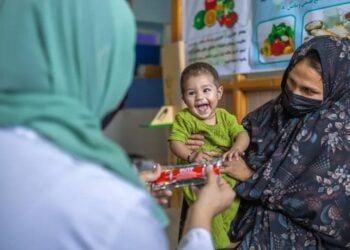
One of the most glaring examples of institutionalized misogyny today is Taliban-ruled Afghanistan. Since the Taliban’s return to power in August 2021, Afghan women have been erased from public, educational, economic, and cultural life on an unprecedented scale. Girls have been banned from attending school beyond the primary level. Women have been expelled from government offices and barred from appearing in the media, visiting parks, and entering public baths. These actions are not merely a series of social restrictions; they constitute a clear case of gender apartheid. Under international law, this level of systemic exclusion and discrimination may amount to a crime against humanity, as outlined in Article 7 of the Rome Statute of the International Criminal Court, which explicitly defines such acts as prosecutable when carried out on a widespread and systematic basis against a group of people based on gender.
In addition to institutional exclusion, Afghanistan has witnessed a surge in so-called honor killings, suicides induced by psychological trauma, and suspicious deaths of women over the past few years. In many regions, entrenched tribal and traditional structures prevent these crimes from being investigated or even publicly acknowledged. Women have been effectively removed from the formal judicial system, while cultural taboos discourage families from reporting such atrocities. As a result, femicide in Afghanistan has become a disturbingly normalized phenomenon.
Yet the crisis of women’s rights is not confined to Afghanistan. Misogyny and femicide are global in scope. In over 30 countries, adolescent girls are subjected to the painful and dangerous practice of female genital mutilation (FGM), under the pretext of preserving or proving their chastity. Rooted in patriarchal traditions, FGM inflicts not only severe physical harm but also long-term psychological and social trauma. According to estimates by the World Health Organization, more than 200 million women and girls worldwide have undergone this brutal procedure.
In Mexico, femicide rates are so alarmingly high that the country has become one of the most dangerous places in the world to be a woman. According to reports, over 1,000 cases of femicide were officially recorded in 2022 alone, with the majority driven by gender-based motives. Despite repeated government promises to address the crisis, weak judicial systems, police indifference, and deeply rooted patriarchal norms have rendered accountability nearly impossible. And Mexico is not an isolated case; countries like Brazil, Honduras, Guatemala, and El Salvador face similar challenges, where violence against women is embedded in daily life and met with either a lack of capacity or willingness from legal institutions.
Another, less visible yet equally devastating form of violence is psychological and emotional abuse. This manifests through humiliation, neglect, threats, coercive control, identity erasure, and the denial of decision-making power. Unlike physical violence, psychological abuse leaves no bruises, but its impact is gradual and deeply destructive. Often institutionalized within cultural norms, this form of violence is not even recognized by many victims as abuse—instead, it is internalized as part of a woman’s “role” in society.
These examples make it clear that violence against women is not merely a cultural issue or a challenge specific to certain countries. It is a global human rights crisis. As such, the international community has a responsibility to treat it as a transnational and systemic phenomenon. Silence in the face of femicide is a tacit acceptance of inequality. Indifference toward female genital mutilation is a form of complicity in violence. And inaction in the face of the systematic erasure of women is an endorsement of atrocity.
Throughout history, women have stood firm against discrimination, humiliation, and violence. Their stories of resistance have never been silenced. Today, if we are to build a more just and equitable future, we must amplify women’s voices and unify global efforts against misogyny. International organizations, civil society actors, and human rights institutions must work collectively to ensure femicide is recognized and prosecuted as a crime against humanity. Change is possible, but not through silence. It will come through awareness, solidarity, and steadfast resistance.
You can read the Persian version of this article here: