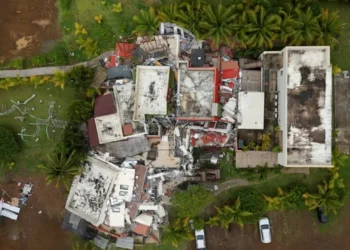
The twelve-day war between Israel and Iran, marked by targeted strikes on Iran’s nuclear facilities, senior commanders of the Islamic Revolutionary Guard Corps (IRGC), nuclear scientists, and key state infrastructure, including IRIB broadcasting headquarters and intelligence centers, triggered a paradigmatic shift in the security landscape of the Middle East. Israel’s focused strategy of precision strikes on predetermined targets, coupled with superior intelligence and operational acumen, allowed Tel Aviv’s security apparatus to swiftly gain and expand its intelligence and tactical superiority over Iran’s security domain. For a period, Israel even maintained de facto control over Iran’s airspace. The situation reached a point where certain Iranian officials, including the foreign minister, reportedly required Israel’s approval to exit the country, an unprecedented revelation that starkly underscored Iran’s diminished deterrent capacity in the region after 46 years of aggressive security posturing.
However, this paradigm shift extended beyond military and intelligence dynamics or the mere weakening of Iran’s regional axis. It heralded a broader behavioral transformation among key players across the Middle East. One notable example was Hezbollah’s conspicuous inaction during the twelve-day conflict. Despite its foundational purpose, established by Iran in 1982 to pursue Tehran’s regional objectives and serve as a strategic lever against Israel, Hezbollah refrained from any military engagement. This restraint was striking, particularly given Hezbollah’s traditional role in responding to escalations involving Israel.
On a regional level, one of the most telling post-war developments was the political discourse and social reactions from segments of Afghanistan’s intellectual elite concerning the Iran-Israel war. Afghan political figures, cultural leaders, poets, intellectuals, and university professors expressed varied reactions on social media, voicing support for the Islamic Republic of Iran against the Israeli state. This stance seemingly stemmed from a belief system rooted in shared linguistic, religious, cultural, and geographical ties between the Afghan and Iranian peoples. For these Afghan elites, endorsing Iran in its confrontation with Israel was perceived as a dual test, both cultural and political, through which they sought to reaffirm a sense of regional solidarity and emerge morally vindicated.
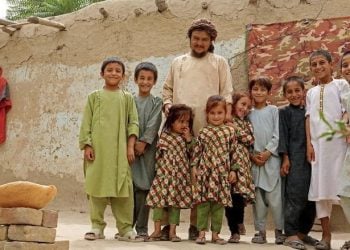
Iran’s response, however, was as swift as it was dismissive. All the cultural, linguistic, and religious commonalities emphasized by Afghan intellectuals were disregarded. Instead of reciprocating the gestures of solidarity, Tehran accelerated the expulsion of Afghan migrants in the immediate aftermath of the twelve-day war. Moreover, Iranian authorities began accusing Afghan refugees alongside ethnic minorities such as Kurds, Azerbaijanis, and Balochs of espionage on behalf of Israeli intelligence agencies. A telling example came in the form of remarks by Sardar Talaei, a former commander of Tehran’s police force. In an interview following the war, Talaei alleged that several former soldiers from Afghanistan’s previous government, trained by the United States in military and intelligence operations, had plotted to seize two Iranian military bases. Beyond these claims, Talaei expanded on what he described as security threats posed by Afghan migrants across Iran’s economic, cultural, social, and political spheres. Simultaneously, a wave of xenophobia swept through Iran, intensified by a coordinated online campaign targeting Afghan refugees. This digital assault significantly contributed to accelerating the expulsion process. Afghan migrants, once viewed through the prism of cultural kinship, were now being vilified as existential threats to Iran’s national security.
The fundamental premise of this essay is that the Islamic Republic of Iran cannot be a reliable actor for its natural allies in the region. Since its establishment in 1979, Iran has consistently turned its back on natural alliances and instead forged strategic partnerships with unnatural allies, prioritizing ideological and geopolitical expediencies over shared cultural and historical bonds. Natural alliances usually form when regional players seek security and threat mitigation by aligning with states and groups that share common cultural, linguistic, religious, or geopolitical traits. Examples include the Arab League, the Organization of Islamic Cooperation (OIC), and the Gulf Cooperation Council (GCC), whose unifying factors are Arab identity, Islamic values, oil price coordination, or collective security concerns against Iran.
Conversely, unnatural alliances emerge when regional actors align with partners lacking shared values or objectives. A historical case in point is Iran’s alliance with Arab, Ba’athist Syria during the Iran-Iraq War, forged solely to counter Saddam Hussein’s aggression. Similarly, Tehran’s establishment of Arab proxy groups like Hezbollah in Lebanon was a strategic maneuver to challenge Israel’s regional influence. While these alliances may invoke shared elements of Shia Islam or anti-Zionist sentiment, they diverge fundamentally from Iran’s Persian-speaking, Nowruz-celebrating civilizational identity rooted in cultural pillars such as the Persian language, Nowruz, and the Greater Khorasan heritage. The core intellectual foundations of Iran, thus, are inherently Persian and non-Arab, transcending its Shia Islamic affiliations.
Based on this framework, Iran’s natural allies would include Afghanistan, Tajikistan, Azerbaijan, and the Kurdistan regions, bound by linguistic, cultural, and civilizational ties to the Persian world. Yet, Iran’s behavioral pattern since the inception of the Islamic Republic has starkly contradicted this alignment. Instead, Tehran has prioritized unnatural alliances, structured largely around the ideological axis of revolutionary Shiaism, engaging Arab, Shia, and even Sunni Jihadist groups such as Islamic Jihad and Hamas for strategic leverage.
Remarkably, Iran has not only formed alliances with unnatural partners but has also actively undermined its natural allies by leveraging these same unnatural actors. For example, during Afghanistan’s republican era, Tehran maintained covert ties with factions of the Taliban, despite the group’s opposition to Iran’s cultural heritage. Iran’s Foreign Ministry and intelligence agencies conducted parallel engagements with Taliban representatives in Tehran, while Afghanistan’s government, sharing deep cultural and linguistic bonds with Iran, expected far greater solidarity and support.
Similarly, following the defeat of ISIS by Kurdish Peshmerga forces and the international coalition, Iran orchestrated a campaign through its proxies, such as Iraq’s Popular Mobilization Forces (PMF), to seize the strategic city of Kirkuk in October 2017. This maneuver aimed to cripple the Kurdish independence movement at a critical juncture.
In Tajikistan, another of Iran’s natural allies, Tehran’s post-2015 support for the Islamic Renaissance Party of Tajikistan, banned for its alleged ties to ISIS and an attempted coup, deeply strained bilateral relations. Despite Dushanbe’s explicit opposition, Tehran extended an invitation to the party’s exiled leader for the International Conference on Islamic Unity in Tehran that same year, exacerbating diplomatic tensions.
These actions reflect a consistent policy orientation within the Islamic Republic, whereby strategic investments are disproportionately directed towards actors lacking civilizational commonality with Iran, while natural allies rooted in the Nowruz cultural sphere are marginalized. Regionally, this trend is evident in Iran’s duplicitous foreign policy toward the Persian states, as well as its interactions with both state and non-state actors. Domestically, this pattern manifests in the diminishing prominence of Nowruz in the Supreme Leader’s public statements and an evident reluctance to officially celebrate traditional Iranian cultural events.
While Iran may occasionally highlight shared values and cultural affinities in its official rhetoric, its actual policies consistently betray these declarations. Consequently, the support shown by segments of Afghanistan’s intellectuals during Iran’s times of crisis—invoking common linguistic, cultural, and historical bonds—has proven to be a one-sided affair, rarely reciprocated by Iranian political and cultural institutions. This reality became starkly apparent in the aftermath of the twelve-day war between Iran and Israel. Despite public displays of solidarity from Afghan intellectuals on social media, Tehran accelerated the mass detention and deportation of Afghan refugees, accusing them of espionage for Israeli intelligence agencies. The widespread anti-Afghan xenophobic campaigns that followed highlighted Iran’s security-driven worldview, wherein cultural and linguistic commonalities held no weight in policymaking. In sum, the Islamic Republic of Iran, whose airspace was effectively controlled by Israel during the twelve-day conflict and whose regional ambitions have suffered repeated setbacks, demonstrated through its post-war security policies that it cannot be a reliable natural ally for Afghan society. Iran’s prioritization of ideological expediency over cultural kinship has rendered any expectation of a genuine partnership with Persian societies both impractical and untenable.
You can read the Persian version of this analysis here:
چرا جمهوری اسلامی ایران نمیتواند متحد طبیعی برای جامعه افغانستان باشد؟