• 8AM.MEDIA
  • ویب‌سایت فارسی
  • پښتو ویب‌پاڼه
  • اۉزبېکچه ویب‌سایت
  • Podcast
Sunday, October 18, 2026
Hasht-e Subh
  • Home
  • News
    • Afghanistan News
    • World News
  • Opinion
    • Editorial
    • Analysis
  • Reports
    • Daily Reports
    • Investigative Reports
  • Society
    • The story of people
  • Women’s Word
  • Columns
    • Three Years After Afghanistan’s Fall: The Taliban’s Resurgence
    • Towards Equality
    • The Resurgence of the Taliban: Two Years Since Afghanistan’s Fall
    • Hebatullah Report Special Edition
    • Resistance for Education Special Edition
    • Special Column on Taliban’s Education Curriculum
    • Nawroz
  • Interviews
  • Contact Us
    • About Us
    • 8AM MEDIA Annual Awards
    • Submit an Article to Hasht-e-Subh
  • 8am.mediaBack
Subscribe
No Result
View All Result
  • Home
  • News
    • Afghanistan News
    • World News
  • Opinion
    • Editorial
    • Analysis
  • Reports
    • Daily Reports
    • Investigative Reports
  • Society
    • The story of people
  • Women’s Word
  • Columns
    • Three Years After Afghanistan’s Fall: The Taliban’s Resurgence
    • Towards Equality
    • The Resurgence of the Taliban: Two Years Since Afghanistan’s Fall
    • Hebatullah Report Special Edition
    • Resistance for Education Special Edition
    • Special Column on Taliban’s Education Curriculum
    • Nawroz
  • Interviews
  • Contact Us
    • About Us
    • 8AM MEDIA Annual Awards
    • Submit an Article to Hasht-e-Subh
  • 8am.mediaBack
No Result
View All Result
Hasht-e Subh
No Result
View All Result

Divorce Denied: Women Become Victims of Violence in Taliban Courts

Translated by Farhad Farhaad | Originally reported in Persian by Adrina Behzad

Mohammad Farhaad Mohammad Farhaad
10 September 2026 - Solar Hijri Date: 1405/06/19 [t_time:1789046620]
A woman looks toward the Taliban's Supreme Court building, where many women say their divorce requests have been rejected despite evidence of domestic violence. (Photo credit: Rukhshana + NUG)

Rukhshana + NUG

Several women whose divorce requests have been rejected by Taliban courts say that these courts decided on their cases without hearing about their problems. According to them, even though their husbands beat them and left marks of violence on their bodies, Taliban courts, instead of supporting them, advised these women to obey their husbands. Meanwhile, the former chairperson of the Afghanistan Independent Human Rights Commission (AIHRC) says that Taliban courts do not operate on the assumption that their goal is to support women and secure their human and religious rights.

Samira (pseudonym) says that she made her way to the Taliban court with great difficulty. She adds that she thought if she went to the court, the judge would understand her situation, her husband would be punished for the violence he had committed against her, and she herself would be able to obtain a divorce. According to her, however, despite seeing burn marks and bruises on her body, the judge told her, “You must have done something that forced your husband to do this.”

Samira says the Taliban judge told her, “Either you live with your husband, or you spend two or three months in prison so that you learn to value him.”

She adds, “When my divorce request was rejected, my husband’s beatings increased. Every time, he warns me that if I do not do as he says, he will go and file a complaint against me. He says the Taliban are on his side and will imprison me. I feel like I am not a human being; I am an object he empties himself into by beating me whenever he is angry. Rather than living like this, it would be better to die.”

According to her, her husband is addicted to drugs, and she did not know about his addiction at first. Samira says that after marriage she realized her husband used narcotics, but despite this, she continued their life together. She adds that after he became unemployed, he began selling the household belongings one by one, and every time she objected to this, he beat her.

Samira says, “I was pregnant twice, and both times I miscarried because of the severity of the beatings. The last time, he wanted my gold earrings, and when I did not give them to him, he beat me severely. He hit me with an electric cable and burned my hands and feet with hot water. The burn marks are still on my hands and feet to this day. He hits me with whatever is in his hand; he hits me with a stick and an electric wire. He punches and kicks me. I cannot endure this any longer. I do not know how much more I can bear.”

Suhaila (pseudonym), whose divorce request was also rejected by a Taliban court, says she has three children and that her husband leaves the house for days at a time without saying where he is going. She says she works herself and covers her children’s expenses, but whenever her husband comes home, he fights and quarrels with her.

Suhaila says, “When I tell him that the maintenance and expenses of his children are his responsibility, and ask him where he goes and why he disappears for two or three weeks, he beats me again. He even slaps our children or hits them with whatever is in his hand.”

She adds, “I was forced to go to court to establish my rights, but they did not allow me to explain my problems. On the contrary, they advised me to obey my husband absolutely. My husband lied to the judge in court, saying that he travels to earn a living.” According to her, the Taliban judge ruled that she was obligated to obey her husband.

Suhaila says, “I told them to let me speak and explain my problems. They said, ‘You are a woman, and you are still talking? You are not allowed to say anything.'”

She adds, “I studied myself, and I understand what my rights are. Until now I stayed silent so that people would not talk behind my back, but I no longer have patience. I do not know where to turn, what to do, or from whom to seek help. Rather than having a husband like this, it would be better to be alone. How much longer must I endure this humiliation?”

Meanwhile, Shahrzad Akbar, the former chairperson of the AIHRC, says that Taliban courts do not operate on the assumption that their goal is to support women and secure their human and religious rights.

According to her, the Taliban’s main goal is more about controlling society, preserving men’s interests, and preventing women from disobeying their orders. She adds that from the Taliban’s perspective, certain behaviors by women are considered a cause of the breakdown of the family foundation.

Ms. Akbar says, “The laws the Taliban have issued, including the principles on the separation of spouses, have made divorce conditions for women very difficult. Even women’s access to court is difficult. If a woman wants to obtain a divorce and go to court, she must go with a mahram, has no access to a defense lawyer, and must discuss her problems with a male judge.”

She adds, “The entire situation is arranged in a way that forces women to remain in oppressive and violent marriages. Unfortunately, until this view changes, the opportunities for women to use the Taliban’s legal system to protect their human and religious rights remain very limited.”

This comes as Heather Barr, head of the Women’s Rights Division at Human Rights Watch (HRW), had described the Taliban’s “principles on the separation of spouses” as concerning. She had written on her X account on May 15, 2026, that under these principles, women do not easily have the right to request separation even in cases such as a husband’s disappearance, abandonment of the family, or domestic violence.

The “principles on the separation of spouses,” which took effect after approval by Hibatullah Akhundzada, the Taliban Supreme Leader, stipulate that in many cases, a woman’s right to separation depends on the opinion of the group’s judge, the husband’s consent, confession, a witness, or an oath.


You can read the Persian version of this report here:
رد درخواست طلاق؛ زنان قربانی خشونت در محاکم طالبان

ShareTweetSendSendShare

Related Posts

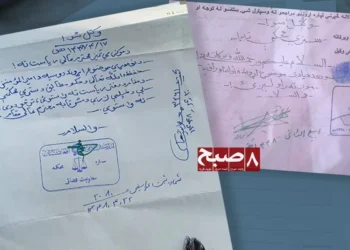
Handwritten Taliban court letters show documents related to the Omid-e Sabz Township being requested for transfer to Kandahar for review. (Photo credit: 8am.media)
Daily Reports

Despite Review Order, Sharay Presses On with Omid Sabz Township Evictions

11 October 2026 [t_time:1791711709]
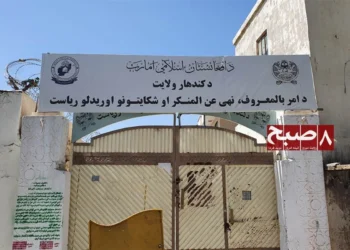
The closed gate of the Taliban’s Propagation of Virtue and Prevention of Vice office in Kandahar Province, where Morality Police activity has expanded. (Photo credit: 8am.media)
Opinion

Under the Guise of Virtue: Taliban Seek to Consolidate Illegitimate Rule

10 October 2026 [t_time:1791639625]
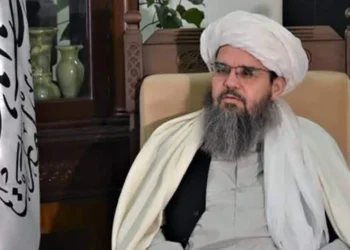
Shahabuddin Delawar, head of the Afghan Red Crescent Society under Taliban control, speaks about women’s rights and the Doha Agreement. (Photo credit: Social Media)
Afghanistan News

Shahabuddin Delawar: Women Were Not Mentioned in Doha Agreement

10 October 2026 [t_time:1791628392]

Latest

Loading latest news...

Popular stories

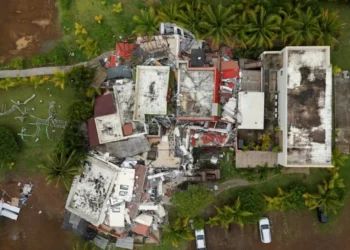
  • An aerial view shows collapsed buildings and widespread damage following an earthquake in Panama (Photo: Reuters)

    More Than 200 Aftershocks Recorded in Panama Since Friday’s Earthquake

    Share
    Share Tweet
  • Trump Again Says War with Iran Will End “Very Soon”

    Share
    Share Tweet
  • Axios: Trump Expects Ukraine Not to Attack Russian Oil Refineries

    Share
    Share Tweet
  • UN Report Reveals Shifts in Family Attitudes and Rise in Domestic Violence in Afghanistan

    Share
    Share Tweet
  • US Defense Secretary Warns Iran of “Destruction”

    Share
    Share Tweet

Podcast

Insights
Insights

Join Lynne O’Donnell for 8AM’s podcast series, Insights.
Lynne talks with generals, diplomats, soldiers, journalists, politicians, activists, people who have front row seats for conflicts around the world, and citizens with a story to tell, happy or sad. For this first series, Afghanistan is the focus. Lynne and her guests talk about the collapse of the republic in August, 2021, and the impact since — for the people of Afghanistan, for the security of the region, for the safety of the world. It’s important, interesting and insightful.

Insights/22: Controlling the Narrative with Mina Sharif
byinsights8am

Controlling the Narrative

Lynne O’Donnell talks with Mina Sharif, author, activist, women’s rights campaigner, educator and mentor. They discuss who controls the narrative and who speaks for Afghanistan’s people when the Taliban appear to have seized control not only of the country but of the message, too.

Have a listen

Insights/22: Controlling the Narrative with Mina Sharif
Episode play icon
Insights/22: Controlling the Narrative with Mina Sharif
Episode Description
Episode play icon
Insights/21: Media Meltdown with Zahra Joya
Episode Description
Episode play icon
Insights/20: Terror Inc with Scott Richards
Episode Description
Episode play icon
Insights/19: Busting Stereotypes with Bushra Gohar
Episode Description
Episode play icon
Insights/18: Media Matters with Waliullah Rahmani
Episode Description
Episode play icon
Insights/17: What Goes Around Comes Around with Sima Samar
Episode Description
Search Results placeholder
Hasht-e Subh

8AM Media, also known as Hasht-e-Subh Daily, stands as Afghanistan's premier independent and non-profit newspaper, resonating as a beacon of journalistic integrity since its establishment in June 2007 by esteemed Afghan journalists and human rights advocates. With a steadfast commitment to citizen journalism and civic education, Hasht-e-Subh Daily has earned its place as the most esteemed publication in the nation.

Publisher: Sanjar Sohail
Email: [email protected]
Executive Director: Parwiz Kawa
Email: [email protected]

Read More

Lavrov Arrives in Bahrain for Russia–Gulf Cooperation Council Talks

Two People Killed After Vehicle Drives onto Football Field in US

US Defense Secretary Warns Iran of “Destruction”

Explosion at Iraqi Popular Mobilization Forces Base Kills One

Saudi-Led Coalition Says It Intercepted Two Missiles

Editor’s Choice

Every Saturday morning, 8AM MEDIA English Services Department will guide you through the week’s biggest stories from Afghanistan and the international community.

Subscribe

© 2026 - ©Hasht-e Subh Daily

No Result
View All Result
8am.Media
پښتو ویب‌پاڼه
ویب‌سایت فارسی
اۉزبېکچه ویب‌سایت
  • Home
  • News
    • Afghanistan News
    • World News
  • Opinion
    • Editorial
    • Analysis
  • Reports
    • Daily Reports
    • Investigative Reports
  • Society
    • The story of people
  • Women’s Word
  • Columns
    • Three Years After Afghanistan’s Fall: The Taliban’s Resurgence
    • Towards Equality
    • The Resurgence of the Taliban: Two Years Since Afghanistan’s Fall
    • Hebatullah Report Special Edition
    • Resistance for Education Special Edition
    • Special Column on Taliban’s Education Curriculum
    • Nawroz
  • Interviews
  • Contact Us
    • About Us
    • 8AM MEDIA Annual Awards
    • Submit an Article to Hasht-e-Subh
  • 8am.media

© 2026 - ©Hasht-e Subh Daily