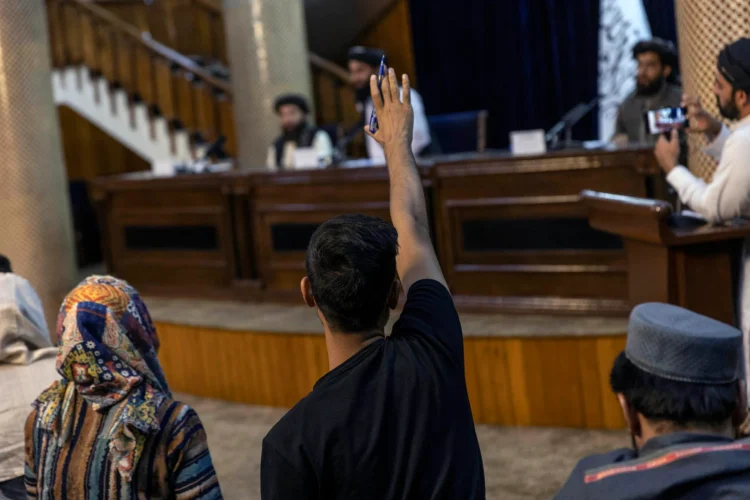
As the world marks World Access to Information Day, journalists and media outlets in Afghanistan under Taliban rule say they are facing growing restrictions on access to information and media activities.
Several journalists told the Hasht-e Subh Daily on Monday, September 28, that concerns over arrest, threats, and security consequences prevent them from freely covering certain events and issues.
They said restrictions imposed on media outlets have made it increasingly difficult for journalists to access information and carry out independent reporting.
The arrest of journalists, censorship, restrictions on publications, a ban on broadcasting images of living beings, restrictions on live political programs, the suspension of media outlets, and limitations on access to information have created serious challenges for independent reporting in the country.
These restrictions have violated the legal rights of journalists and media outlets and reduced transparency and accountability.
Meanwhile, several female journalists said they have been barred from attending some meetings and events. They said these restrictions have also affected employment opportunities for women in the media, with some outlets reducing or halting the hiring of female journalists.
Afghan journalists in exile have also complained about difficulties in accessing first-hand information.
They said restrictions on communication with sources have made it difficult for them to access reliable information and direct sources.
Previously, the United Nations Assistance Mission in Afghanistan (UNAMA) said in a report that the Taliban have continued to restrict media freedom by detaining journalists, suspending media activities, and imposing restrictions on publications.
These restrictions come as free and equal access to information is considered a fundamental right of citizens and one of the foundations of informed decision-making and an inclusive society.