Every generation faces a problem whose resolution, at least to some extent, rests on the shoulders of that same generation. The problem of our generation in Afghanistan is also clear: a country grappling with chronic underdevelopment, widespread poverty, a shortage of job opportunities, and weak development institutions. The fundamental question is this: if we, as the young generation, educated and equipped with knowledge and expertise, distance ourselves from this problem, who is supposed to work to solve it?
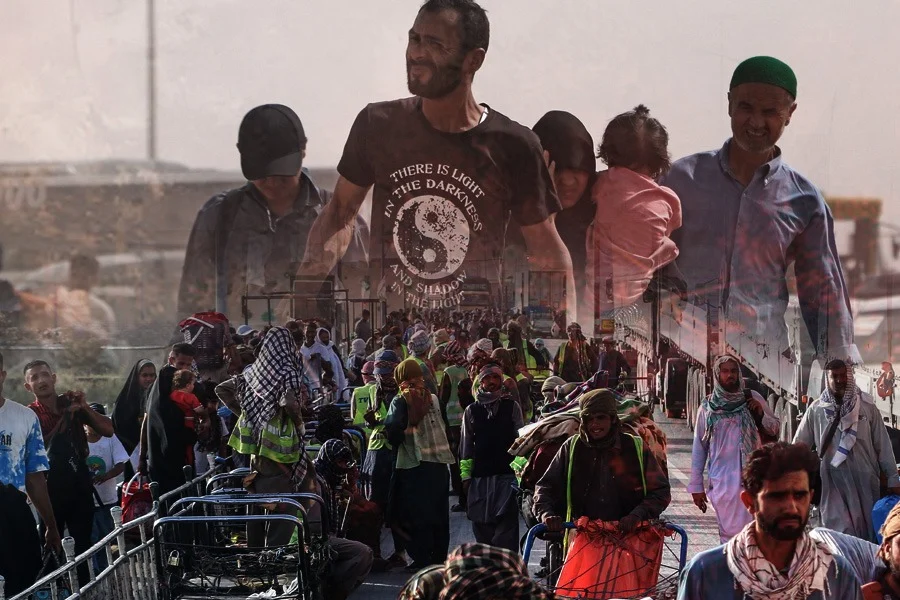
A significant portion of our educated people, for various reasons and motivations, leave the country to live in societies that have more facilities, broader opportunities, and a higher level of welfare. Of course, many of these reasons are real and understandable, from the lack of job opportunities and economic restrictions to insecurity, instability, and the hardships of daily life. These realities cannot be ignored, nor can we simply expect otherwise from those who migrate to secure the future of themselves and their families.
But alongside these realities, a serious question exists: is migration the only possible path for all educated people? Can a link not be forged between striving to build a personal future and feeling responsible for the future of the country? If a large share of the society’s skilled and capable human resources distance themselves from taking part in solving domestic problems, who, and with what resources, is supposed to shoulder this responsibility?
A problem we distance ourselves from does not vanish. It may well become more complex and costly over time. Underdevelopment is not among those problems that resolve themselves with the passage of time and without deliberate intervention. When job opportunities are not created in proportion to population growth, human capital leaves the country, institutions remain weak, and productive capacity does not increase, economic and social problems can reinforce one another and trap the country in a cycle of poverty and underdevelopment.
Breaking such a cycle requires a precise understanding of the problem, planning, expertise, and sustained effort. This question remains: who should take the lead in understanding and solving these problems? Is the educated generation, which has the necessary scientific and specialized tools at its disposal, supposed to withdraw from this responsibility and expect others alone to carry its burden?
I have met many friends in master’s and doctoral programs who regard the government, the ruling authority, or the traditional structures of society as the main cause of the problems. Some are dissatisfied with the government’s performance, some feel alienated by social and cultural restrictions, and others cite the absence of a clear outlook for the future as the reason for their departure. Many of these criticisms may be valid, but my question is this: after identifying these problems, what responsibility falls on ourselves?
When we hand over all responsibility to the government, society, or external circumstances, we may unintentionally place ourselves outside the circle of responsibility, as if nothing can be done by us until the structures are reformed. This view, although it may stem from bitter experiences and real setbacks, can ultimately lead to passivity, and that passivity itself contributes to the continuation of the very situation with which we are dissatisfied.
I have spent several years of my life learning development studies, and I am now continuing along this same specialized path. This experience has led me to believe that the role of the educated generation in developing society goes far beyond employment in government or holding an official post. A specialist, if equipped with a proper understanding of society and of his or her own responsibility, can make a difference even at the lowest level of economic and social activity.
Imagine an educated person who has not found the chance to work in a government body or a private organization, and who takes up work in agriculture, a small business, or a local trade. Can such a person no longer contribute to development? Certainly they can. Their knowledge, their way of making decisions, their professional conduct, their manner of dealing with others, and their efforts to improve work and life can all influence their surroundings. If they use better methods, share their knowledge with others, and value responsibility and cooperation in social relations, they can help gradually improve society.
Development does not always begin with large projects, massive investments, or government decisions. Part of it takes shape in changing the way of working, increasing productivity, expanding social trust, transferring knowledge, and gradually reforming behaviors. These measures do not replace sound policymaking and institutional reform, but they can provide the social and human foundation needed to make those reforms more effective.
The role of the educated does not end here. A specialist can be an entrepreneur, launching a small business and providing jobs for several people. They can transfer their knowledge and skills to farmers, artisans, workers, and local business owners, and, by teaching better methods of production, resource management, and marketing, help raise productivity. A single small activity may not transform the country’s economy on its own, but a collection of small, sustainable activities can gradually increase the economic capacity of society.
The educated can also play a part in forming civil and social institutions, from local associations and educational groups to trade bodies and volunteer initiatives. Such institutions, if built on trust, cooperation, and accountability, can enhance people’s ability to identify and solve shared problems.
Moreover, specialists can, through research, writing, dialogue, and media activity, shed light on the real problems of society and propose evidence-based solutions. Sometimes a rigorous study, a documented report, or a responsible public debate can turn a neglected problem into a matter of attention for society and decision-makers. For development, society needs not only executive managers. It also needs those who diagnose problems correctly, evaluate solutions, and raise serious questions about the consequences of decisions.
This is where the educated generation can play its role as a demander of accountability and a reformer. Constructive advocacy does not necessarily mean permanent confrontation with the government or a presence in the streets. It can be pursued through scientific reasoning, practical proposals, civic activity, documented critique, and sustained follow-up. The goal should be to increase problem-solving capacity, not merely to reproduce political and social conflicts.
Of course, we should not imagine that individual conduct, civic activity, or small initiatives alone can solve the structural problems of Afghanistan. Development also requires effective public policies, efficient institutions, security, investment, and economic opportunities. But this reality does not remove our individual and social responsibility. Rather, it shows that to achieve development, we must strengthen individual, social, and governmental capacities side by side.
Another problem of ours is the notion we hold of development. We often do not see the process and are enamored only with the result. We want a country that has faced crises, instability, and economic weakness for decades to become a developed society in a short time. We expect that with the change of a government, the arrival of a leader, or the implementation of a single program, all problems will be solved, as if development were a sudden event that begins with one political decision and reaches results in a short time.
But more than being an event, development is a gradual, complex, and multidimensional process. It requires the accumulation of knowledge, the strengthening of institutions, social learning, policy reform, increased productivity, and the formation of economic capacities. Many of the transformations we observe in developed countries today are the product of years and sometimes decades of effort, trial and error, correction, and accumulation of experience. If we ignore this reality, we both lose sight of the true path of development and may, because we do not see immediate results, grow discouraged about continuing the effort.
We must move away from the notion that change is possible only through two paths: seizing power by force or widespread street protests. These methods do not represent the full capacity for social change. Society can change through other paths as well, from expanding education and knowledge to reforming production methods, developing social institutions, raising public awareness, and engaging in sustained advocacy.
Gradual changes are sometimes less visible, but they can be impactful in the long run. When a farmer improves his production method, a young person learns a new skill, an entrepreneur creates a job opportunity, a teacher raises the quality of education, or a group of citizens cooperates to solve a local problem, the capacity of society for development increases. These actions are not substitutes for major reforms. Rather, they are part of a process that can make reforms more feasible and more sustainable.
The experience of various countries shows that economic and social transformation has not been solely the product of government decisions. Education, innovation, the activity of entrepreneurs, social organizations, researchers, and the participation of citizens have also contributed to it. What matters is that development requires the participation of a range of social and economic forces, and specialists are among the most important of these.
The young, educated generation of Afghanistan can also be part of this capacity, provided that it does not define itself merely as an external critic or an applicant for government jobs. Expertise gains greater social value when it serves problem-solving. Knowledge of development, economics, management, agriculture, engineering, law, education, and other fields can help improve people’s lives only when it goes beyond the confines of academic degrees and connects with the real needs of society.
For this reason, I believe a responsible, educated person can hardly remain entirely indifferent to their surroundings. A person who knows the problem, understands the existing capacities, and takes steps to improve conditions, even if their impact is limited at first, can gradually expand their sphere of influence, just like a lamp that does not withhold its light from its surroundings.
I write these words as a friendly reminder to my friends, peers, and comrades on the front of science and knowledge. Let us understand our position and responsibility better and think more seriously about the share we can have in the future of society. If returning to the country and working in it is possible, let us not set aside this option solely because of limited opportunities or the absence of ideal conditions. Sometimes one can start at a small level, gain experience, build connections, and gradually expand the scope of activity.
Of course, returning to the country is not the only form of responsibility. Someone living outside Afghanistan can also contribute to the development of the country through knowledge transfer, investment, remote teaching, building professional connections, supporting domestic businesses, and cooperating with scientific and social institutions. What matters is that geographical distance should not mean a complete severing of ties with the problems of society. Our responsibility should not be measured solely by where we live. We should look at what contribution we make to solving the country’s problems with the resources and abilities at our disposal.
Living in a country whose previous generations, through knowledge, effort, and a sense of responsibility, provided the groundwork for the prosperity and comfort of later generations is in itself not at all faulty. Benefiting from better opportunities, security, and welfare is the right of every human being. But an ethical question arises when we benefit from the achievements of others while feeling no responsibility for our own share in solving the problems of the society from which we have risen.
Many developed societies were not always in their present condition. Generations in those societies worked, learned, built institutions, made mistakes, and corrected their course so that living conditions would be better for later generations. We too can make such a contribution to the future of Afghanistan, not necessarily through big, high-profile actions, but through considered, sustained work proportionate to our abilities. Beyond improving life today, development is also a responsibility toward future generations.
Returning to Afghanistan may be accompanied by many difficulties in terms of material facilities, job opportunities, or quality of life. This is a reality that cannot be dismissed with simple moral advice. But alongside material calculations, one should also consider the possibility of taking part in building the future of the country. Sometimes a small activity, a local business, an educational initiative, or the transfer of practical knowledge can smooth part of the difficult path of development. The value of such activities lies not in their apparent size but in the problem they solve and the effect they have on people’s lives.
In conclusion, I must emphasize one point: I am not opposed to migration as such, and I do not intend to ignore the hardships of people’s lives or their right to choose where to live. Many families in Afghanistan are forced to migrate to secure their livelihood, safety, and their children’s future. The migration of labor, the transfer of capital and skills, and the creation of economic ties between the country of origin and the destination country can also, if suitable conditions exist, contribute to the development of the country of origin.
Therefore, my words are not directed at all migrants. Rather, they are addressed most of all to those educated and specialized people who have the knowledge and ability necessary to take part in solving the problems of Afghanistan and who can maintain an effective link with the future of the country in various ways. This generation is expected not to limit its responsibility to finding a better position for personal life, but also to think about the contribution it can make to improving the conditions of society.
The problem does not vanish through flight. If we do nothing to solve it, it may become more complex, and its costs may fall on the shoulders of future generations. We are not responsible for solving all of Afghanistan’s problems alone, but we can accept responsibility for our share. Perhaps we cannot change the country overnight, but we can begin somewhere: with knowledge, with work, with building, with passing on experience, and with commitment to the future.
You can read the Persian version of this article here: