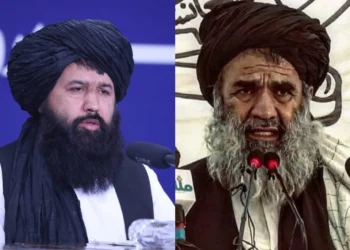
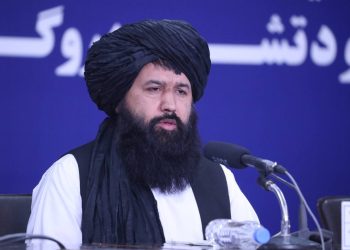
The Taliban have begun removing images of living beings from government offices and media outlets. An investigation by Hasht-e Subh Daily into the Taliban’s Ministry of Higher Education website, as well as the sites of Kabul, Herat, and Balkh universities, shows that this process is underway. Since late September, the Ministry of Higher Education has eliminated all images and videos related to its activities, including those of Neda Mohammad Nadeem. These have been replaced with images of buildings and symbols. The report states that the Taliban’s Ministry of Justice is the second institution to remove the minister’s image from its website, and some news articles and texts no longer feature any images of living beings. However, several university professors argue that the Taliban have emptied universities of knowledge, filling them instead with the group’s ideology. They warn that the future of higher education under the Taliban is perilous and destructive. Recently, the Taliban’s Minister of Higher Education in Khost province urged university professors to combat “intellectual occupation,” a reference to democratic values and human rights, and to instill the Taliban’s ideology in students.
A review of the Taliban’s Ministry of Higher Education website reveals that all images of living beings, including those of the group’s officials, have been removed from the homepage and replaced with images of buildings and animations. Moreover, news reports and videos of the ministry’s activities on the website do not show any people, with one exception where only logos and images of buildings are used. In a recent incident, the acting Minister of Higher Education prohibited reporters from taking photos of his speech and meeting during his visit to Khost province.
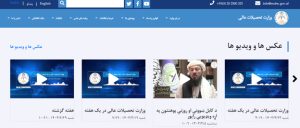
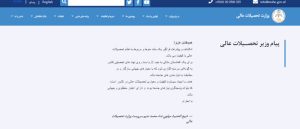
Previously, the Taliban’s Ministry of Higher Education published an image of Neda Mohammad Nadeem, the acting minister, but this image has since been removed, leaving only texts attributed to him. Both written and visual news lack images. These changes reflect the Taliban’s increasingly extremist approach to managing content and presenting information to the public.
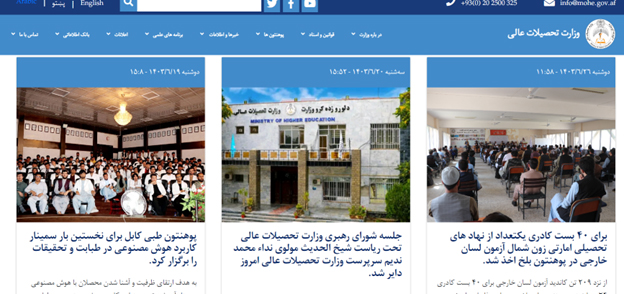
The last news story in which the Taliban’s Ministry of Higher Education used an image was on Monday, September 16, 2024. The story was titled “A Foreign Language Test for 40 Academic Positions of Emirate’s Educational Institutions in the Northern Zone Held at Balkh University.” Since that date, the ministry has not included any images in its news or reports.
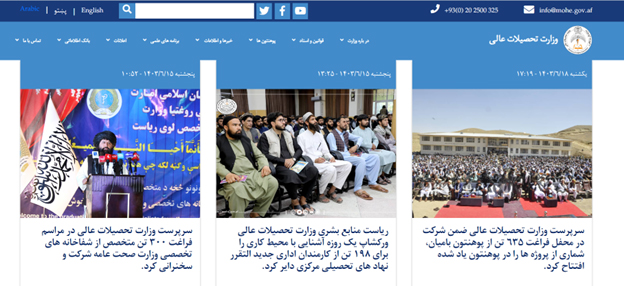
Additionally, the last photo of Neda Mohammad Nadeem published by the Ministry of Higher Education appeared on Thursday, September 5, 2024. This image was from a program titled “Acting Minister of Higher Education Participates and Delivers a Speech at the Graduation Ceremony of 300 Specialists from the Ministry of Public Health’s Specialized Hospitals.” Since then, the ministry has refrained from using images in its news and reports.
Since September 25, the Taliban’s Ministry of Higher Education has published at least 12 news reports, none of which contain images. Furthermore, the ministry’s video reports on its website also lack any depictions of living beings. This comes as Neda Mohammad Nadeem, the Taliban’s Minister of Higher Education, is regarded as an extremely radical figure and a close associate of Hibatullah Akhundzada. Many university professors believe his presence is damaging the higher education system, as efforts to fully “Talibanize” the universities are rapidly advancing.
The Taliban-controlled Ministry of Higher Education website primarily uses animations for news, announcements, job postings, and e-learning materials. In the ministry’s latest announcement on e-learning, a human figure is visible, but the image is cropped from the neck upward.
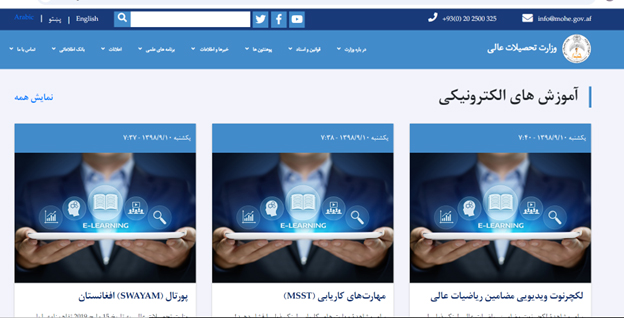
During his recent visit to Khost province, where he prohibited reporters from taking photos, Neda Mohammad Nadeem stated that professors are responsible for instilling this “ideology” in students. Some university professors believe that by “ideology,” Nadeem means the Taliban’s way of thinking and that he is actively trying to purge the educational system of knowledge, replacing it with Taliban teachings. This approach has raised significant concerns among professors and students, many of whom fear it will severely degrade the quality of education in the country.
During his trip to Khost, the Taliban’s Minister of Higher Education warned that “intellectual occupation” still exists in Afghanistan and that professors must resist it. The ministry’s website quotes Nadeem as saying, “Try to shape your thoughts in the light of Islamic Sharia, for although the enemy’s physical presence is not here, the ideology of occupation continues. Many people, under the name of Islam, are destroying Muslims and attempting to dismantle our unity. Keep yourselves and your society away from such individuals. Professors must play an important role in providing ideology to students.” These statements underscore the Taliban’s focus on education based on their ideology, raising concerns about its impact on educational quality and intellectual diversity in universities.
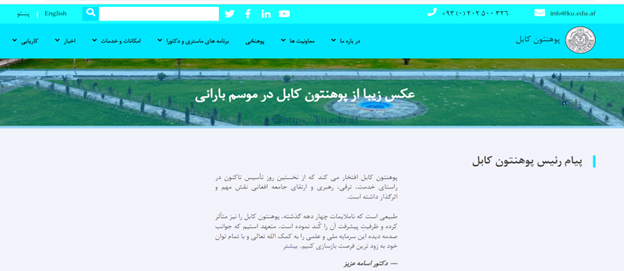
Meanwhile, an examination of Kabul University’s website reveals that the removal of images of living beings has commenced. In a message attributed to Osama Aziz, the Taliban’s head of Kabul University, his photo has been omitted, leaving a blank space where it would normally appear. This action likely relates to the Taliban’s new policies of controlling and limiting images of living beings and managing content in universities, raising concerns about freedom of expression and the presentation of information in educational institutions.
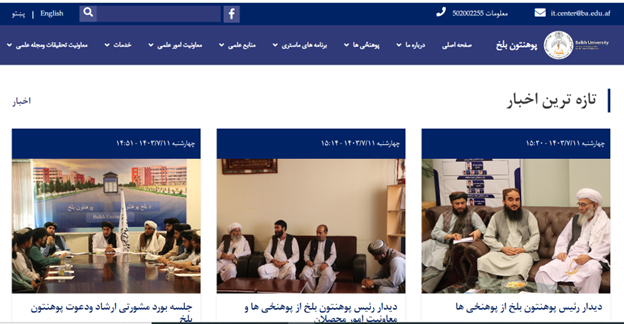
However, this process has not yet been implemented at Balkh University. The Taliban’s head of Balkh University has retained his photo on the website, and images and videos of the institution’s activities remain posted. This difference in content management may reflect varying policies among Taliban-controlled universities, indicating the group’s diverse approaches to communication and information presentation in educational institutions.
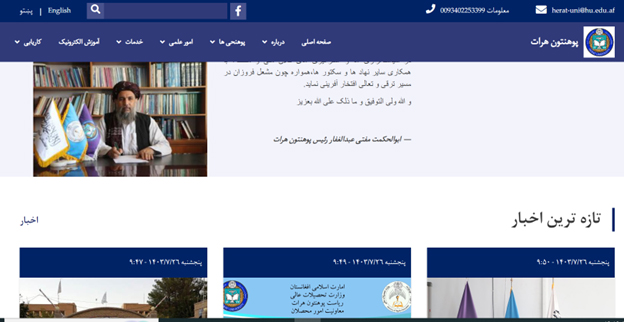
At Herat University, the Taliban have adopted a dual approach to publishing images. The website displays a photo of the Taliban’s head of Herat University, but images of awardees and other news reports utilize animations instead of actual pictures. This mixed approach reflects the Taliban’s contradictory policies on content management and information presentation in universities, which could influence how students and professors interact with educational information and activities.
The Taliban’s Acting Minister of Justice, Abdul Hakim Sharei, who plays a key role in enforcing the group’s bans on Afghan citizens, has also had his photo removed from the ministry’s website. He previously stated that mentioning the names of political parties is a “crime” and that no criticism or opposition to the regime is permitted.
The Taliban’s Ministry of Higher Education previously forced female professors to remain at home and “purged” libraries in universities and higher education institutions. They have removed books related to Jafari jurisprudence, political movements, and prominent figures. Additionally, the banning of Jafari jurisprudence, the appointment of Morality Police to teach prayer in universities, curriculum changes, and increased hours for Islamic cultural studies are among the significant alterations the Taliban have made.
Scholars at Risk (SAR) have reported that academic freedom in Afghanistan is under threat. According to this report, researchers and students face repeated and widespread attacks on academic freedom and the independence of the institutions where they work. The report highlights the Taliban’s policies to extend their control over educational content and curricula, noting that they have instructed higher education institutions and libraries to replace all texts inconsistent with Hanafi jurisprudence.
At the same time, the Taliban’s Ministry for the Propagation of Virtue and Prevention of Vice has initiated a campaign against images and videos of living beings. An official from this ministry stated on Saturday, October 19, 2024, that photographing and displaying images in offices or homes contravenes Sharia law. The Taliban have formally started preventing photography, videography, and the operations of some visual media outlets in various provinces.
This ministry of the Taliban posted the statements of Mohammad Yahya Aref, one of the group’s clerics, on the social media platform X. He declared: “Photography of all living creatures, including donkeys, dogs, lions, and birds, is prohibited. These images should not be sold, purchased, or kept in homes.” He instructed the public to refrain from taking and displaying pictures, as he believes this act is a “sin” that will bring “divine punishment.”
You can read the Persian version of this daily report here:
گامی دیگر به عقب؛ وزارت تحصیلات عالی طالبان تصاویر زندهجانها را از وبسایت خود حذف کرد