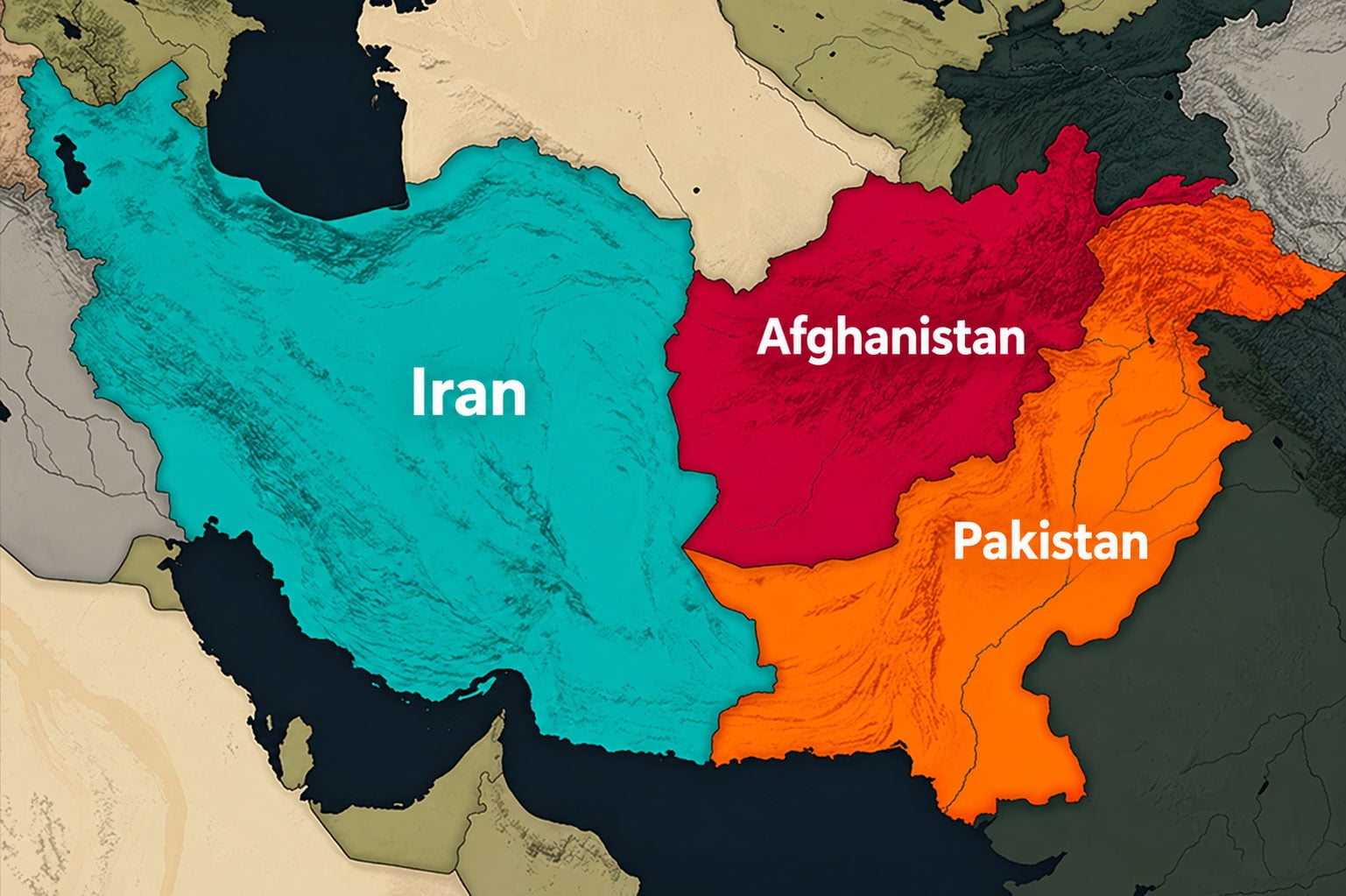
Recent developments in relations between Afghanistan and Pakistan have once again placed a fundamental question at the center of the region’s political calculations: can Afghanistan’s neighbors play a decisive role in the collapse of Taliban rule, or have the security, economic, and geopolitical interests of these same countries become a factor in sustaining it? The answer cannot be found solely in the Taliban’s historical ties with Pakistan or in the group’s diplomatic relations with regional countries. The issue is more complex than that. Each neighboring country views Afghanistan through the lens of its own national interests, and this difference in perspective limits the possibility of a shared regional policy toward the Taliban.
It is worth noting that opposition to some Taliban policies does not necessarily mean a desire to see their rule fall. Many governments in the region may disagree with the Taliban’s conduct, yet at the same time worry about the consequences of a sudden collapse, a power vacuum, the spread of armed groups and a new wave of migration. This is where the central contradiction begins: countries that are able to pressure the Taliban may, at the same time, benefit from the continued existence of a governing structure in Kabul that they can negotiate with.
Pakistan holds a different position in this equation. The historical ties between the Taliban and Pakistan’s power structures have always been a central theme in analyses of developments in Afghanistan. However, the Taliban’s return to power in August 2021 did not, contrary to the expectations of some circles, lead to a lasting resolution of Islamabad’s security concerns. Today, Tehreek-e-Taliban Pakistan (TTP) has become one of the main sources of dispute between the two sides. Islamabad accuses the Taliban regime of failing to prevent the group’s fighters from using Afghanistan’s territory, a claim that Taliban officials reject.
The border clashes of October 17, 2026, show the continuation of this crisis. The dispute has gone beyond political statements and has resulted in military confrontation, trade disruption, and growing mistrust. But does the escalation of these tensions mean that Pakistan wants the Taliban to collapse? Not necessarily.
From a security standpoint, Islamabad must distinguish between two risks: the continuation of a government in Kabul that is either unable or unwilling to respond to Pakistan’s security demands, and a structural collapse that could expose the two countries’ long border to wider instability. For this reason, Pakistan’s military pressure may be aimed more at changing the Taliban’s behavior than at a definitive change of Afghanistan’s political system. Of course, the practical outcome of such pressure will not necessarily match its initial goal.
Iran also faces a set of conflicting interests and concerns. The security of its eastern borders, the issue of migrants from Afghanistan, the water rights of the Helmand River, trade, and regional security developments all influence Tehran’s policy toward Kabul. At the same time, Afghanistan is an important trade market and communication route for Iran. The expansion of economic exchanges and the use of Iran’s transit routes have gained greater importance, particularly when Pakistan’s crossings are closed.
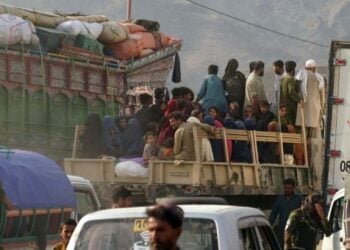
Tehran may disagree with some Taliban policies, but that disagreement alone does not mean it prefers an uncertain and unstable situation along its eastern border. The increase in the return of migrants from Iran to Afghanistan also shows that the domestic decisions of a neighboring country can place considerable economic and social pressure on Afghanistan, without necessarily being taken to change the government. Iran’s policy should therefore be examined within the framework of managing threats and protecting its economic and security interests, rather than merely in terms of support for or opposition to the Taliban.
China views Afghanistan from a different angle. For Beijing, the security of the Xinjiang region, preventing the activities of cross-border armed groups, protecting economic interests, and the stability of communication routes are of fundamental importance. China has established diplomatic and economic relations with the Taliban, but this engagement cannot be interpreted as unconditional acceptance of all of their policies.
China’s mediation in the tensions between the Taliban and Islamabad in 2026 is a clear example of Beijing’s security-centered approach. On one hand, China has deep strategic ties with Pakistan; on the other, instability in Afghanistan could threaten its regional security and economic opportunities. From this perspective, China is more focused on Afghanistan’s security conduct and predictability than on determining the ideological form of its government.
Tajikistan, Uzbekistan and Turkmenistan also do not share a single policy toward the Taliban. Tajikistan has taken a more cautious approach because of concerns over the activities of armed groups in border areas, as well as its historical and cultural ties with part of Afghanistan’s society. Even so, border, economic and security contacts between the two sides show that even difficult political relations have not prevented all forms of practical cooperation.
By contrast, Uzbekistan sees Afghanistan as a potential route for connecting Central Asia economically to South Asia. The Trans-Afghan Railway project and the expansion of trade are among the issues that encourage Tashkent to maintain working relations with Kabul. Turkmenistan, meanwhile, looks at Afghanistan from an energy perspective. Progress on the Herat section of the Turkmenistan-Afghanistan-Pakistan-India (TAPI) gas pipeline in 2026 shows that long-term economic interests can create grounds for cooperation even amid political disagreements.
For these countries, a stable Afghanistan could be a route for trade and energy, whereas an Afghanistan mired in civil war would be a security risk and an obstacle to investment. The role of regional countries is not limited to the direct neighbors alone.
In July 2025, Russia became the first country to formally recognize the Taliban government. This decision marked an important shift in relations between Moscow and Kabul. The Moscow regional meeting in October 2026 also made clear that engagement with the Taliban has become part of the region’s active diplomacy.
India, despite its history of close relations with Afghanistan’s former republic, has also expanded its practical dealings with the Taliban regime. The upgrading of diplomatic relations in 2025 is an example of this shift. For New Delhi, relations with Afghanistan, in addition to economic and security matters, can be examined within the framework of broader regional relations, including those with Pakistan and China.
Taken together, these developments show that the Taliban no longer face only the problem of diplomatic isolation; they are also affected by the rivalry and differing priorities of regional powers. In analyzing the Taliban’s future, three concepts must be distinguished: the weakening of a government, the collapse of a power structure, and a change of political system.
Economic or military pressure can limit a government’s resources, but on its own it does not create a mechanism for the transfer of power. An external threat may even increase the internal cohesion of the ruling forces for a time or provide grounds for mobilizing national sentiment. On the other hand, continued economic pressure, limited resources, and political disputes can reduce the capacity to govern the country. Which effect prevails depends on internal factors and on how the government and society respond. Afghanistan’s experience has also shown that the collapse of a political structure, without an agreed alternative and reliable institutions, does not necessarily lead to stability.
Therefore, the main question should not merely be who has the power to weaken the Taliban, but what the possible consequences of such weakening would be and which forces would be capable of managing a potential political transition. Too much focus on the rivalry among neighbors can obscure a fundamental truth: the future of Afghanistan is not solely the product of agreement or disagreement among foreign powers. The economy, political legitimacy, social participation, citizens’ basic rights, and the government’s ability to provide public services are the decisive factors in the survival or change of any power structure.
The World Bank reported in 2026 that, despite limited growth in Afghanistan’s economy, population growth and the large-scale return of migrants have kept per capita income and the welfare of many families under pressure. At the same time, according to an assessment by the United Nations (UN), the restrictions imposed on women’s and girls’ education and work are not only a human rights issue but also an obstacle to the country’s development and lasting stability. In such circumstances, even the expansion of regional trade cannot, on its own, fill the gap left by the absence of political participation, human capital and social trust.
The future of Taliban rule cannot be predicted solely from the level of Pakistan’s pressure, Iran’s economic relations, China’s investment, or Russia’s diplomatic engagement. The reality is that Afghanistan’s neighbors do not share the same interests. Some prioritize border security, some trade and energy, and some the regional balance of power. This very difference in interests can both provide grounds for pressure on the Taliban and preserve the possibility of continued relations with them.
As a result, regional countries may want a change in the Taliban regime’s behavior without having a plan or shared agreement for changing the power structure in Afghanistan. But the decisive point goes beyond the survival of a government. The continuation of a ruling system does not mean achieving lasting stability, just as the weakening of a government will not mean the emergence of a better political order.
Afghanistan’s fate is shaped at the intersection of its neighbors’ interests and its own internal realities. Any analysis that ignores the role of the people of Afghanistan, citizenship rights and the need to build accountable institutions will explain only part of the reality.
Perhaps the most important question for the future is not which country will play a greater role in the survival of the Taliban or in a change of their rule, but whether regional interests will ultimately align with the need of the people of Afghanistan for security, development, participation and a lasting political order, or whether the future of this country will once again be defined in the shadow of rivalry among outside powers.
You can read the Persian version of this analysis here: