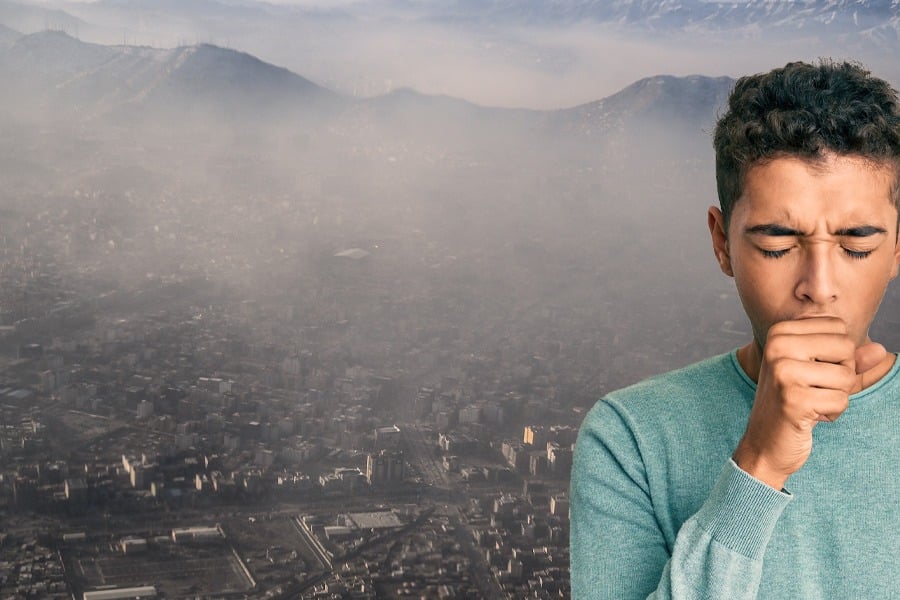
Suppose one day we are asked what the greatest hidden cost of poverty, war, weak governance, and “unregulated development” in Afghanistan is; the answer should not be sought only in ruined roads, collapsed buildings, and destroyed infrastructure. Part of this cost has accumulated more quietly: in people’s lungs, in polluted water, in soil, in food, in workers’ workplaces, and ultimately in the human body. Unfortunately, our country is facing a rise in various types of non-communicable diseases, and cancer is one of the most concerning aspects of this. Estimates by GLOBOCAN, affiliated with the International Agency for Research on Cancer (IARC), put the number of new cancer cases in the country at around 24,000 for 2022, with nearly 17,000 deaths resulting from it. These figures are estimates, not complete records. In a country where diagnosis, disease registration, and access to treatment remain limited in many areas, the reality could be far more severe than these numbers suggest.
But the main issue is not the cancer statistics; the issue is how much of the illness that is seen today as an individual’s fate is, in fact, the result of the environment imposed upon people. This question takes us from the hospital to the factory, from the pharmacy to the mine, from the examination room to the fuel tank, and from the doctor’s office to economic policy. Cancer does not begin only in the body. In many cases, a chain of exposures in the living and working environment raises the risk. This is where the concept of the “economy of pollution” enters the picture.
In environmental economics, pollution is the classic example of an “external cost,” where an individual or company profits from an activity but does not bear the full cost of it themselves; part of that cost is transferred to society through the spread of pollution. For example, an old, smoke-emitting vehicle benefits its owner, but thousands of others pay the cost of its smoke. Or cheap, low-quality fuel is attractive to the consumer, but its real cost appears in respiratory and heart disease, reduced productivity, and premature death. Likewise, a mine generates income and creates jobs, but if it pollutes the water and soil, the cost reaches the families of surrounding villages years later. Burning waste is the simplest solution for someone who wants to get rid of garbage, but the lungs of neighboring children pay the price. This is where pollution turns from an environmental problem into an economic and ethical one.
Our core question is not whether development is necessary; we all know that our country urgently needs investment, energy, industry, and resource extraction. The question is: what kind of development, and who pays its cost? If the profit goes to one person or one company while the public bears the cost of illness, we are not dealing with sustainable development, because part of the cost of production has been removed from the company’s ledger and transferred to society’s ledger. This is one of the most dangerous economic mistakes in a country like Afghanistan.
Afghanistan has a form of capital that is not registered in any mine: human capital. A worker who is forced out of the labor market due to early illness caused by pollution is not merely a patient; a unit of production, income, and skill has been lost from the economy. A mother who cannot work for months to care for her sick child lowers her family’s productivity. A family that spends its meagre savings on treatment may remain trapped in deeper poverty for years. Illness itself is an economic shock. When the illness results from preventable pollution, the economic question becomes more serious: why should society bear the cost of something that could have been prevented from the outset?
Air pollution holds a special place here. The World Health Organization (WHO) links very fine particulate matter suspended in the air (particles smaller than 2.5 microns, PM2.5) and other pollutants to heart disease, stroke, chronic lung disease, and lung cancer. These fine particles penetrate deep into the lungs, and some even enter the bloodstream. In Afghanistan, pollution does not come from a single source: solid and polluting fuels used at home, aging vehicles, dust, construction activities, waste burning, and industrial activities all play a role simultaneously.
Studies based on Global Burden of Disease (GBD) data for 2019 have estimated around 37,000 deaths attributable to air pollution. Heart disease, stroke, chronic respiratory diseases, and lung cancer are among its major consequences. If we view air pollution only through the lens of cancer, we miss a large part of the disaster. Pollution may erode health for years before a cancer diagnosis is made. Not every case of cancer should be attributed to a single pollutant, because throughout their lives, people are exposed to a combination of factors: polluted air, indoor smoke, tobacco and snuff, poor diet, chemicals, unsafe water, infections, stress, poor working conditions, and genetic factors. These factors can act together. Claiming that every case of cancer results from pollution is not scientific. But ignoring pollution is not scientific either. When a risk factor is widespread at the population level, even a relatively small increase in individual risk can translate into a large burden of disease at the societal level.
Water tells another chapter of the same crisis. Contamination from sewage, chemicals, waste, heavy metals, and mining activities threatens the health of communities. Afghanistan’s problem is not only pollution; it is the lack of consistent monitoring and reliable data. When water in a given area is not tested regularly, one cannot confidently say there is no risk. Absence of data is not absence of pollution. This statement should be at the center of our country’s environmental policy.
Chemicals also require serious attention. The capacity to manage chemical risks and related incidents remains limited. In agriculture, improper or excessive use of pesticides and chemical fertilizers can put pressure on soil and water, and residues can enter the food chain. If soil is degraded, water is contaminated, and workers’ health is endangered, the cost will later appear in reduced land productivity, increased treatment costs, and diminished food security.
The most sensitive part of the story concerns mining. Afghanistan wants to use its mineral resources to generate income and development. This is the country’s right. But mining without environmental standards can turn underground wealth into an environmental debt above ground. Every mine should be assessed with an honest accounting: How much revenue does it generate? How many jobs does it create? How much tax revenue does it produce? In return, how much water does it consume? How much waste does it produce? What chemicals are released into the environment? What is the risk to workers and surrounding communities? What will be the cost of rehabilitating the area after extraction ends? If a worker or a member of the local community falls ill, who pays the cost?
If these hidden costs are not included in the economic calculation, the resulting profit figure is artificial. Part of the real cost is not on the company’s books; it is stored in people’s bodies and in the environment. Environmental impact assessment should not be a bureaucratic formality for obtaining a permit. It must be part of the project’s economic accounting. A mine that generates private profit but creates public pollution costs must pay proportionate taxes and provide environmental guarantees. Miners must know that pollution is not free. Industry must know that smoke is not free. Polluting fuel should not be cheaper simply because the cost of health has not been factored into its price. “Cheap” is not always cheap. Sometimes what we buy cheaply today, we pay for tomorrow with our health.
Tobacco and snuff are preventable causes of cancer and must be tackled seriously. Poor nutrition, physical inactivity, obesity, certain infections, and genetic factors also contribute their share. But focusing on individual behavior should not obscure the responsibility of policymakers. One cannot tell people to breathe clean air when their city’s air is polluted. One cannot tell people to drink safe water when water quality monitoring is not being pursued. One cannot tell a worker to avoid chemicals when the workplace lacks protective equipment. Health is not solely an individual choice; it is the product of an environment shaped by policymakers. And here we arrive at the question of justice. Pollution is not distributed equally. Those with financial means may have better housing, better fuel, healthier food, and access to treatment. But the mine worker, the low-income family, the child in a poor neighborhood, the housewife who cooks with dirty fuel, or the street vendor who spends hours by the roadside exposed to exhaust fumes, receive a far greater share of pollution. Pollution can generate various forms of inequality: poverty exposes people to more pollution, that pollution produces illness, that illness reduces income, and reduced income deepens poverty further. If this “vicious cycle” is not broken, the next generation will inherit it as well.
The fight against cancer should not be defined merely by building a few hospitals and purchasing medicine. Early diagnosis, treatment, radiotherapy, medication, and specialized personnel are essential. But if the source of the risk remains active and its roots are not eliminated, treatment alone is not enough, and it even drives up costs. If the country spends billions of Afghanis on treatment while at the same time allowing pollution to continue unchecked, it is treating illness with one hand while producing new illness with the other. Environmental prevention is part of both health policy and sustainable economic policy.
Conclusion
Afghanistan needs a national environmental monitoring system, one that regularly measures the quality of air, water, and soil, and makes the data available to the public. For major cities, real monitoring stations for fine particulate matter and other key pollutants should be established. Fuel quality should be tested. Open-air waste burning should be stopped, and waste management should be transformed from a system of dumping and burning into a genuine system. Agricultural chemicals should be registered and controlled. Mine workers should have protective equipment, training, and oversight. Major mining projects should undergo genuine environmental and social impact assessments.
More important than anything else, the cost of pollution must be incorporated into economic calculations. We need to know how much air pollution costs in treatment expenses each year, how many workdays are lost, how many years of healthy life are lost, how much labor productivity declines, how many families fall below the poverty line due to illness, and how much of this cost could be reduced through preventive policies. This could be called a “national account of pollution costs.”
As long as pollution is shown as zero or near zero in economic accounts, decision-makers may assume that a polluting activity is profitable. But if the real cost to health and the environment is calculated, it may turn out that some projects that appear profitable on paper are, in fact, costly and problematic for society. The environment is not the cost of development; it is part of national capital. Clean water is capital. Clean air is capital. Healthy soil is capital. A healthy workforce is capital. And a child growing up today in polluted air is tomorrow’s human capital for the country. If this capital is destroyed, the country becomes poorer, even if mining output, exports, or government revenue rise at the same time.
The term “cancer nation” should be seen more as a warning bell than a scientific label. We cannot claim, without sufficient data, that Afghanistan is turning into a “cancer nation”; but we can say with greater confidence that the country faces a heavy burden of environmental risks and non-communicable diseases, and that air pollution is one of the important factors behind this illness. Our warning is not that Afghanistan will become a cancer nation tomorrow; the real warning is this: if we allow pollution to remain cheap today, extraction to remain costless, dirty fuel to remain normal, and environmental destruction to go unaccounted for economically, tomorrow we will pay the price in illness and death.
Solutions Suited to Afghanistan’s Current Situation
An immediate ban on open-air waste burning in cities and their outskirts through local decrees and community monitoring; simple, enforceable requirements for small and medium-sized mines (providing protective masks and gloves for workers and basic registration of waste disposal sites); establishing several air-monitoring stations in Kabul, Herat, Mazar-e-Sharif, and Jalalabad in cooperation with existing institutions, and publishing the results for the public; testing fuel quality samples at major fuel depots and announcing the results publicly; integrating genuine environmental impact assessments into the licensing process for large mining projects with the participation of local community representatives; short-term training for mine workers and farmers on chemical hazards and simple methods of personal protection. These measures do not require heavy spending; they require will and prioritization.
Afghanistan now faces a choice: an economy that produces pollution and passes its cost on to the people, or an economy that uses its resources while calculating the true cost of development and protecting the environment and public health as national capital. The first option may seem cheaper today, but history will send the bill to the next generation. And perhaps the most striking question is this: if pollution is our profit today, who will pay the cost of tomorrow’s illness?
In our country, dust storms are usually measured only by the volume and concentration of particles, without sufficient attention to their chemical and toxic composition. This is a very important issue. Afghanistan is affected by seasonal winds blowing from Iraq, Iran, and surrounding regions. These winds can carry unidentified pollutants that our specialists are not yet fully able to detect. The composition of these particles may include hazardous chemicals and even radioactive materials. Measuring only the volume of particles, without analyzing their chemical composition, gives us an incomplete picture of the real risk and can mislead policymaking. Monitoring the chemical composition of dust storms should become part of the national environmental monitoring system.
Sources
- GLOBOCAN 2022 (International Agency for Research on Cancer, IARC): estimates approximately 24,275 new cancer cases and 16,923 deaths in Afghanistan.
- Global Burden of Disease (GBD) Study 2019: approximately 37,033 deaths attributable to air pollution in Afghanistan.
- World Health Organization (WHO): air pollution as a major health risk; the link between very fine particulate matter and heart disease, stroke, chronic lung disease, and lung cancer; Afghanistan’s health and environment profile regarding limited chemical risk management capacity.
- WHO Regional Office for the Eastern Mediterranean (EMRO): the burden of non-communicable diseases in Afghanistan and the share of cancer, heart disease, and chronic lung diseases.
You can read the Persian version of this analysis article here: