
The Shanghai Cooperation Organization (SCO) summit, held on September 1 in Bishkek, the capital of Kyrgyzstan, once again provided an appropriate platform for member states to discuss the security and economic challenges facing Eurasia. Afghanistan emerged as the central focus of regional stability and as a key indicator of the degree of convergence or divergence among the organization’s members. A realistic assessment of the summit shows that although the Shanghai members formally agree, in their rhetoric and official statements, on the need to achieve peace and stability in Afghanistan, significant differences remain regarding their shared interests, implementation mechanisms, and policy approaches. An analysis of the summit, particularly the prominent position adopted by India, reveals complex dimensions of security, terrorism, and regional connectivity that are directly linked to Pakistan’s situation and to broader regional and global policies.
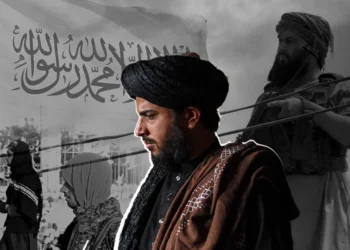
The summit demonstrated that the members’ common position is largely negative rather than positive. The Central Asian states, Russia, China, and India are all concerned about terrorism originating from Afghan territory, drug trafficking, and the possible spread of instability. However, deep disagreements exist over how to engage with the caretaker government in Kabul. While actors such as Moscow, Beijing, and Tashkent seek pragmatic diplomacy and the opening of channels of communication with Kabul, New Delhi has adopted an approach based on extreme caution, the absence of formal recognition, insistence on the fundamental rights of the Afghan people, and a genuine commitment to combating terrorism. Nevertheless, the Bishkek summit made it clear that none of the countries in the region favors the complete isolation of an insecure Afghanistan.
In the area of security and terrorism, the remarks of Narendra Modi, India’s prime minister, represented the clearest and most serious position expressed at the summit. Emphasizing that lasting security and peace in Eurasia are closely linked to the situation in Afghanistan, he called for the dismantling of the root and branch of the terrorist ecosystem, including terrorist financing, recruitment networks, radicalization, and safe havens. Without directly naming Pakistan, Modi issued an unmistakable warning to countries that use terrorism as an instrument of foreign policy and provide shelter to terrorists. His remarks reflected the growing diplomatic pressure on Islamabad—a country that has repeatedly come under international scrutiny because of accusations of a lack of sincerity in genuinely combating extremist groups, contradictory policies concerning border security, the repeated closure of border crossings, and allegations of supporting proxy forces. India’s insistence on rejecting double standards placed Pakistan, represented by Prime Minister Shehbaz Sharif, in a particularly defensive position.
Regarding trade and regional connectivity, India presented a structured approach at the summit. New Delhi argued that the development of transit corridors, the modernization of logistics networks, and the digitalization of customs procedures can have real meaning only when the territorial integrity and national sovereignty of states are respected. At the same time, Islamabad’s obstruction of overland transit and its political restrictions on Indian trade with Central Asia through Pakistani territory have acted as major obstacles.
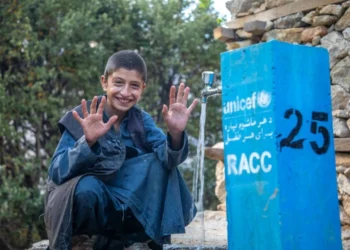
In terms of opportunities, India’s role in assisting the Afghan people and utilizing the country’s human potential appeared far more prominent and tangible. New Delhi based its strategy on soft diplomacy by continuing humanitarian assistance, including food supplies, medicine, medical equipment, and scholarships—particularly for girls deprived of education. Meanwhile, the region’s economic potential has been damaged by political tensions between Kabul and Islamabad and by Pakistan’s closure of border crossings. Pakistan’s temporary and security-driven policies have intensified livelihood crises, while Islamabad has also refrained from extending the visas of hundreds of students.
In this context, the final declaration of the Bishkek summit also sought to establish a common framework by emphasizing the need for an inclusive government in Afghanistan, non-discriminatory action against terrorism, the expansion of trade and transit relations, and respect for human rights. However, because of diplomatic compromises, the declaration failed to introduce strong enforcement mechanisms for holding states that support terrorism accountable or for removing transit barriers.
Moreover, an examination of the political dimensions of the Bishkek summit shows that the Shanghai Cooperation Organization continues to face a gap between its institutional capacity and the political will of its members. On the one hand, the organization seeks to present itself as a framework for confronting shared security threats; on the other, differences in the interests of its members limit its ability to adopt binding decisions. Competition between India and Pakistan, differing views between Russia and China regarding security and economic priorities, and Central Asian concerns about the spread of extremism have transformed Afghanistan into a multilayered and complex issue—one that cannot be resolved solely through a security-based approach or political pressure.
Furthermore, Afghanistan’s economic situation and its heavy dependence on cross-border trade and foreign assistance underscore the need for stable regional mechanisms. The development of railway lines, the strengthening of commercial border crossings, the creation of alternative routes, and the facilitation of banking transactions could help pull Afghanistan out of economic isolation. Achieving this objective, however, requires geopolitical competition not to override humanitarian and economic interests. In this regard, cooperation among India, Iran, the Central Asian states, Russia, and China could create new opportunities for connecting Afghanistan to regional markets, provided that the security of transit routes, commercial transparency, and the neutrality of infrastructure are guaranteed.
Ultimately, the significance of the Bishkek summit lies not only in the content of its final declaration but also in the way it exposed the boundaries between cooperation and rivalry among the organization’s members. Afghanistan’s future will depend on the ability of these countries to transform general positions into coordinated, practical, and measurable actions.
The summit also demonstrated, in light of broader global developments, that the international approach is moving toward a form of urgent realism. The leaders’ emphasis on prioritizing diplomacy over battlefield confrontation sent a clear message to actors that have sacrificed security for instrumental political relationships. For the Shanghai Cooperation Organization to become an effective institution, it must exert genuine pressure on states that support terrorism, open transit routes without discrimination, and provide coordinated support for human development in Afghanistan. In this connection, India’s pragmatic approach, especially educational initiatives and humanitarian assistance to Afghan people, shows a ray of hope.