
• 8AM.MEDIA
  • ویب‌سایت فارسی
  • پښتو ویب‌پاڼه
  • اۉزبېکچه ویب‌سایت
  • Podcast
Thursday, September 24, 2026
Hasht-e Subh
  • Home
  • News
    • Afghanistan News
    • World News
  • Opinion
    • Editorial
    • Analysis
  • Reports
    • Daily Reports
    • Investigative Reports
  • Society
    • The story of people
  • Women’s Word
  • Columns
    • Three Years After Afghanistan’s Fall: The Taliban’s Resurgence
    • Towards Equality
    • The Resurgence of the Taliban: Two Years Since Afghanistan’s Fall
    • Hebatullah Report Special Edition
    • Resistance for Education Special Edition
    • Special Column on Taliban’s Education Curriculum
    • Nawroz
  • Interviews
  • Contact Us
    • About Us
    • 8AM MEDIA Annual Awards
    • Submit an Article to Hasht-e-Subh
  • 8am.mediaBack
Subscribe
No Result
View All Result
  • Home
  • News
    • Afghanistan News
    • World News
  • Opinion
    • Editorial
    • Analysis
  • Reports
    • Daily Reports
    • Investigative Reports
  • Society
    • The story of people
  • Women’s Word
  • Columns
    • Three Years After Afghanistan’s Fall: The Taliban’s Resurgence
    • Towards Equality
    • The Resurgence of the Taliban: Two Years Since Afghanistan’s Fall
    • Hebatullah Report Special Edition
    • Resistance for Education Special Edition
    • Special Column on Taliban’s Education Curriculum
    • Nawroz
  • Interviews
  • Contact Us
    • About Us
    • 8AM MEDIA Annual Awards
    • Submit an Article to Hasht-e-Subh
  • 8am.mediaBack
No Result
View All Result
Hasht-e Subh
No Result
View All Result

Afghanistan, the Taliban, and the Battle of Narratives

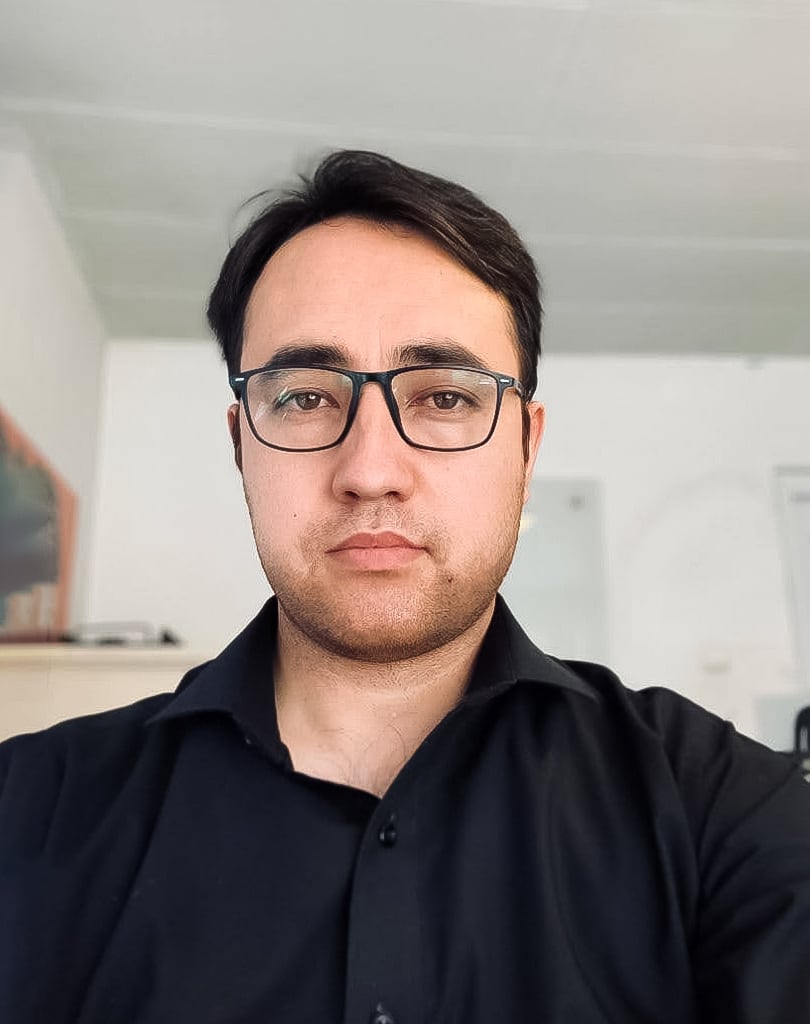
Mohammad Farhaad Mohammad Farhaad
3 November 2024 - Solar Hijri Date: 1403/08/13 [t_time:1730622849]
Hasht-e Subh Daily (8am Media) Editorial symbol.

War, politics, economy, and culture are each driven by narratives that justify and sustain them, a concept as ancient as civilization itself. At times, these narratives link to creation myths; other times, they align with social, political, or cultural frameworks. In today’s world, narrative-building has taken on even greater importance, playing a critical role in political and social transformations. This is fueled by rapid population growth, the increasing complexity of life, and the unprecedented entangling of diverse interests—all of which call for framing reality in ways that serve those interests.

Narratives can be divided into metanarratives, subnarratives, and intermediary forms. Metanarratives generally address the concerns, aspirations, and ideals of large human groups that extend beyond ethnic, regional, or geographical boundaries. Subnarratives, on the other hand, focus on the specific conditions and interests of an ethnic, political, or social group within a particular region, reflecting their existential or socio-political needs. In conflicts between nations or groups within a country, each side constructs a unifying narrative to legitimize its efforts in securing the interests of its members.

In Afghanistan, since the early 20th century and with the introduction of modern ideologies, various narratives emerged. Some were inspired by grand transnational themes, while others were local or indigenous. The most recent and intense clash of narratives occurred during the republic era, with the Taliban and other fundamentalist groups promoting their narrative to legitimize their ideology and discredit the republic, while republican forces rallied around a vision of progressive national development, despite internal differences.

Throughout the Taliban’s three-decade existence, their narrative has centered on war and violence—sometimes framed as a fight against evil and corruption, referring to other armed groups, and at other times as a battle against occupation and foreign presence. The Taliban and their supporters claimed that Afghanistan’s religious and traditional values were under threat, that society was drifting from religion, and that foreign cultures were taking hold. This narrative often exaggerated the bleakness of the situation, going so far as to downplay or deny the republic’s achievements in education, media freedom, political participation, civil society, peaceful competition for power, social legislation, and extensive infrastructure development. According to the Taliban’s portrayal, the situation was so dire that overthrowing the system was necessary, regardless of the heavy cost in lives and suffering.

The republic’s narrative, by contrast, argued that Afghanistan had lagged in civilization and progress. To address this, they advocated for adopting modern societal advancements and promoting broad citizen participation to resolve conflicts. Achieving this participation required parliamentary representation, provincial councils, support for political parties, and the removal of gender, ethnic, linguistic, and regional discrimination. The republican narrative stressed inclusive, sustainable development by global standards, aiming to lead Afghanistan beyond stagnation and toward a modern civilization. Specific roles were designated for women and social and religious minorities, with efforts to include them in ministries, government departments, and various state entities.

The Taliban’s ongoing violence, coupled with corruption and inefficiency within parts of the republic, and shifts in the strategies of influential foreign powers, gradually eroded the appeal of the republican narrative, weakening public motivation to defend it. As the republic’s vision lost ground, the Taliban’s narrative gained traction, fueled by a perception—promoted by some intelligence agencies—that the Taliban had changed and that Afghans might hope for a new system with their involvement, bringing an end to relentless conflict.

Since the Taliban’s takeover, their narrative—and that of their supporters—emphasizes that Afghanistan has achieved peace and security, that fragmented power centers have been unified, and that the country is free from conflict. This narrative calls for allegiance to Taliban rule and acceptance of their authority. However, an opposing narrative, voiced by activists and groups around the world, argues that this centralization of power has come at the expense of other groups, with stark violations of women’s rights and discrimination based on religion, ethnicity, and region. This, they contend, cannot equate to the end of conflict.

Over the past century, Afghanistan has seen several periods of consolidated power through the suppression of various groups, each time interpreted as nationwide security—only for conflict to reemerge, often more violently. Although the opposition to the Taliban is based on concrete data and ground realities, its impact on shifting the dynamics has so far been limited, due in large part to the disunity of its proponents and misalignment of international strategies. Its influence has mostly delayed the international recognition of Taliban rule and blocked their pursuit of regional and global legitimacy. This counter-narrative could gain traction if it emphasizes human rights, democracy, broad-based participation, eliminating gender-based discrimination, and support for pluralism and diversity. In contrast, the Taliban’s narrative faces substantial obstacles to widespread acceptance, as it justifies oppression, discrimination, and authoritarianism, paving the way for another cycle of bloody conflict.

You can read the Persian version of this editorial here:
افغانستان، طالبان و جنگ روایت‌ها | روزنامه ۸صبح 

ShareTweetSendSendShare

Related Posts

A composite editorial image depicts a Taliban fighter against the backdrop of Iranian and American symbols, reflecting the deepening geopolitical rivalry over Afghanistan's role in regional power dynamics. (Photo Credit: Social Media)
Analysis

Afghanistan: A New Battlefield as Iran and America Redraw the Taliban’s Role in Regional Power

23 September 2026 [t_time:1790168262]
A border facility in a mountainous area of Paktia, with the Pakistani flag flying in the background (Photo: Exclusive)
Afghanistan News

Taliban and Pakistani Forces Clash in Paktia, Sources Say

23 September 2026 [t_time:1790163223]
Sheikh Mohammad Hamidi – the arrestee (Photo: Exclusive)
Afghanistan News

Taliban Arrest Shia Cleric and Raid His Home in Ghor

23 September 2026 [t_time:1790159283]

Latest

Loading latest news...

Popular stories

  • Hamza bin Laden - the son of Osama bin Laden (Photo: Social Media)

    Al-Qaeda Releases Hamza bin Laden Message on 9/11 Anniversary

    Share
    Share Tweet
  • UN Report Reveals Shifts in Family Attitudes and Rise in Domestic Violence in Afghanistan

    Share
    Share Tweet
  • Pakistani Army Says Five Killed Over Alleged Links to Terrorism

    Share
    Share Tweet
  • Asian University for Women: Protesting Students Face Expulsion

    Share
    Share Tweet
  • U.S. Defense Secretary Calls Washington Post Worse Than Iranian State Media

    Share
    Share Tweet

Podcast

Insights
Insights

Join Lynne O’Donnell for 8AM’s podcast series, Insights.
Lynne talks with generals, diplomats, soldiers, journalists, politicians, activists, people who have front row seats for conflicts around the world, and citizens with a story to tell, happy or sad. For this first series, Afghanistan is the focus. Lynne and her guests talk about the collapse of the republic in August, 2021, and the impact since — for the people of Afghanistan, for the security of the region, for the safety of the world. It’s important, interesting and insightful.

Insights/22: Controlling the Narrative with Mina Sharif
byinsights8am

Controlling the Narrative

Lynne O’Donnell talks with Mina Sharif, author, activist, women’s rights campaigner, educator and mentor. They discuss who controls the narrative and who speaks for Afghanistan’s people when the Taliban appear to have seized control not only of the country but of the message, too.

Have a listen

Insights/22: Controlling the Narrative with Mina Sharif
Episode play icon
Insights/22: Controlling the Narrative with Mina Sharif
Episode Description
Episode play icon
Insights/21: Media Meltdown with Zahra Joya
Episode Description
Episode play icon
Insights/20: Terror Inc with Scott Richards
Episode Description
Episode play icon
Insights/19: Busting Stereotypes with Bushra Gohar
Episode Description
Episode play icon
Insights/18: Media Matters with Waliullah Rahmani
Episode Description
Episode play icon
Insights/17: What Goes Around Comes Around with Sima Samar
Episode Description
Search Results placeholder
Hasht-e Subh

8AM Media, also known as Hasht-e-Subh Daily, stands as Afghanistan's premier independent and non-profit newspaper, resonating as a beacon of journalistic integrity since its establishment in June 2007 by esteemed Afghan journalists and human rights advocates. With a steadfast commitment to citizen journalism and civic education, Hasht-e-Subh Daily has earned its place as the most esteemed publication in the nation.

Publisher: Sanjar Sohail
Email: [email protected]
Executive Director: Parwiz Kawa
Email: [email protected]

Read More

UN: 205 Earthquake-Resistant Buildings Constructed in Nangarhar with South Korean Support

The Girl Who Dreamed for Others

Afghanistan: A New Battlefield as Iran and America Redraw the Taliban’s Role in Regional Power

Earning a Living in Fear and Humiliation: Taliban Morality Police Drive Working Women Deeper Into Isolation

Afghan Migrant Women Describe the Difficulties of Life in Iran

Editor’s Choice

Every Saturday morning, 8AM MEDIA English Services Department will guide you through the week’s biggest stories from Afghanistan and the international community.

Subscribe

© 2026 - ©Hasht-e Subh Daily

No Result
View All Result
8am.Media
پښتو ویب‌پاڼه
ویب‌سایت فارسی
اۉزبېکچه ویب‌سایت
  • Home
  • News
    • Afghanistan News
    • World News
  • Opinion
    • Editorial
    • Analysis
  • Reports
    • Daily Reports
    • Investigative Reports
  • Society
    • The story of people
  • Women’s Word
  • Columns
    • Three Years After Afghanistan’s Fall: The Taliban’s Resurgence
    • Towards Equality
    • The Resurgence of the Taliban: Two Years Since Afghanistan’s Fall
    • Hebatullah Report Special Edition
    • Resistance for Education Special Edition
    • Special Column on Taliban’s Education Curriculum
    • Nawroz
  • Interviews
  • Contact Us
    • About Us
    • 8AM MEDIA Annual Awards
    • Submit an Article to Hasht-e-Subh
  • 8am.media

© 2026 - ©Hasht-e Subh Daily