Following the Taliban’s extensive restrictions on photography and filming, tensions between the group’s two main factions have heightened, visibly playing out across media and social networks. In response to the photography ban on living beings, virtual teams associated with the Haqqani network have circulated images and videos of Sirajuddin Haqqani, whom they call the “commander” of suicide bombers. In contrast, supporters of Hibatullah Akhundzada, the Taliban Supreme Leader, advocate for eliminating photography and enforcing a total filming ban in Afghanistan. However, most Afghans believe both Taliban factions share responsibility for civilian deaths and human rights abuses, particularly against women. They argue that dividing the Taliban into “good and bad” factions only reinforces the group’s gender-apartheid rule rather than fostering anti-Taliban positions. They stress that Sirajuddin Haqqani, responsible for hundreds of civilian and military deaths, should not be glorified amid the group’s internal leadership rivalry. Many believe Haqqani is aiming to seize control of Taliban leadership.
Since the release of the “Law for the Propagation of Virtue and Prevention of Vice,” competition between the Supreme Leader and the powerful Interior Minister has become particularly visible on social media. Hibatullah is using state resources to curb photography and video publication, shifting all media content from visual to audio. Consequently, affiliates of Hibatullah have gradually expanded enforcement of the ban on photography and filming.
Recently, the Taliban Supreme Leader summoned his cabinet members to Kandahar, the group’s headquarters. Media reports indicate that the Taliban cabinet members arrived in Kandahar on Monday, November 4, 2024. The meeting reportedly focused on stricter implementation of the “Law for the Propagation of Virtue and Prevention of Vice.” Reports also indicate that Hibatullah instructed Taliban members not to take photos or videos during the meeting.
Meanwhile, Sirajuddin Haqqani, the Taliban Minister of Interior, continues to share images and videos from his meetings with members of the Taliban’s suicide bomber network, their families, and other associates. A brief review of social media pages linked to the “godfather of suicide bombers” shows Haqqani has posted videos of past visits to Haqqani network suicide bomber training centers, defying the recent bans on photography and filming.
One video on X (formerly Twitter) from the “Sirajuddin Haqqani Minwal” or “Lovers of Sirajuddin Haqqani” account shows a 2009 visit by Haqqani to a suicide bomber training center, where he aimed to inspire recruits and “free them from despair and confusion.” The post describes Haqqani’s speeches and meetings with these “golden” suicide bombers as “historical steps and speeches that should be evident and part of golden history’s content.”
Supporters of Haqqani online continue to praise him as the “commander” of suicide bombers. Suicide attacks ordered by Haqqani have resulted in hundreds of Afghan civilian and foreign military casualties. The Haqqani network has claimed responsibility for some of the most notorious suicide attacks over the past 20 years, including attacks targeting children, women, and patients in medical facilities.
After the Taliban’s new law classified women’s faces and voices as “Awrah” (to be concealed), the Haqqani network posted a video showing Sirajuddin Haqqani shaking hands with an adult rural woman. The network also released a documentary about Sangeen Zadran, known as “Mullah Fateh,” a senior commander killed in 2013 in North Waziristan, Pakistan. Many social media users and experts interpret these releases as part of an ongoing, covert power struggle between Haqqani and Hibatullah Akhundzada.
Haqqani’s Interview with the New York Times
In an October 26, 2024 interview with the New York Times, Sirajuddin Haqqani, the Taliban Minister of Interior, was described as “the only dissatisfied voice” within the Taliban. This interview has circulated widely via Haqqani’s online supporters on X. The Haqqani network’s resistance to the restrictions issued by Hibatullah Akhundzada reflects divisions in the Taliban’s decision-making processes. Specifically, the Haqqani network does not believe the Kandahari Taliban, led by Hibatullah and his allies, should command full obedience.
Some politicians and social media users have condemned the New York Times interview with Haqqani, viewing it as an attempt to whitewash the “crimes committed” by this network in Afghanistan. They argue that a leader responsible for so many civilian and soldier deaths should not be glorified by media outlets advocating democracy and freedom of expression. Others, however, see the interview as a clear indication of Haqqani’s ambition to assume Taliban leadership.
Journalist Ferdows Kawish, in an article titled “Kandahar-Paktia, Leadership Conflict,” analyzed Haqqani’s New York Times interview, suggesting that Haqqani’s pursuit of foreign relations points to a Paktia faction within the Taliban positioning itself for future leadership. Kawish posted on Facebook, “Sirajuddin Haqqani, head of the Haqqani suicide bomber network and Taliban Minister of Interior, appearing for an interview with the New York Times and clearly distinguishing his stance from the Supreme Leader’s, can be seen as a subtle challenge to Kandahari dominance. The caliph is now setting himself apart from the ‘Supreme Leader.’”
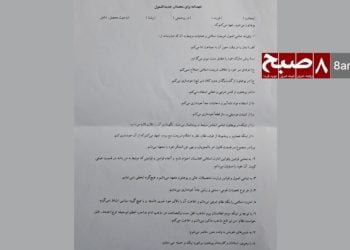
Under the “Law for the Propagation of Virtue and Prevention of Vice,” the ban on photographing living beings has taken effect across more than ten provinces, five universities, several ministries, and dozens of high-ranking Taliban officials. Hibatullah has specifically prohibited Taliban officials in Kandahar from posting photos or videos of themselves on social media. Article 17 of this law orders a ban on photographing and filming “living beings,” yet the Haqqani network continues to promote its activities online in defiance of this rule.
The Haqqani network’s online supporters have quoted Sirajuddin Haqqani as saying in Pashto that he felt pleased when he learned his name appeared on the U.S. blacklist, interpreting it as a validation of his jihad against America.
In a March 2022 speech, Sirajuddin Haqqani announced that only 1,050 Haqqani network members had carried out suicide attacks over the past 15 years and that thousands more in the group were prepared to do the same.
Currently, Sirajuddin Haqqani remains a high-priority target for the U.S., with the FBI offering a $10 million reward for information leading to his capture, an increase from the original $5 million. The FBI’s website lists Haqqani as an “international terrorist.”
Many Afghan citizens caution that categorizing the Taliban into “good and bad” factions is a dangerous misstep that has, in the past, led to Afghanistan’s downfall under Taliban rule. They insist that all Taliban members share a commitment to an anti-women ideology and authoritarian values. They argue that as long as the Taliban exists in the country, the fight and resistance must continue, as they see no path to peace, justice, equality, and freedom under Taliban rule.
You can read the Persian version of this daily report here:
پنهان شدن هبتالله و نمایان شدن حقانی؛ پدرخوانده انتحاریها به دنبال چیست؟ | روزنامه ۸صبح