The hunting of Afghanistan’s rare birds by Arab hunters has sparked widespread concerns over the destruction of wildlife and the extinction of endangered species. A group of Arabs has been spotted in recent days in the provinces of Kandahar and Zabul. These Arabic-speaking hunters have posted videos of their trip to Afghanistan on their social media pages, including Snapchat, and have also displayed images of the birds they have hunted. Their travel and hunting are being carried out with official permission and at the invitation of the Taliban. This comes at a time when the Taliban seek participation in the United Nations’ annual Conference of the Parties (COP) summit, yet they have taken no meaningful steps to protect the environment and wildlife in the country, while the brutal hunting of rare birds is also taking place at their invitation.
Several Arabic-speaking hunters, during their recent trip to Afghanistan, have published photos and videos of their journey through the southern regions of the country. They have displayed the birds they have hunted and posted photos of several species of birds on their Snapchat accounts. They have also shared footage of parts of Herat and their travel toward border areas, and have even released photos taken with the birds inside an airplane.
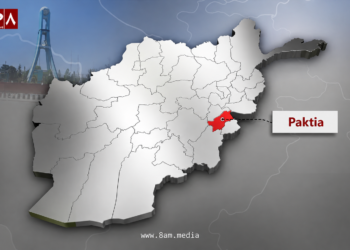
Meanwhile, local sources in southern Afghanistan say that a group of Arab hunters, carrying an official letter from the Taliban, have been hunting wild birds in recent days across the deserts and mountains of Kandahar and Zabul provinces. According to the sources, the number of these hunters reaches ten, and they have been seen with several vehicles in the districts of Daman, Arghestan, and Maiwand in Kandahar, as well as the Shahr-e Safa district in Zabul. The sources confirm that these Arab hunters possessed hunting permits issued by the National Environmental Protection Agency and an official tourism document from the Taliban’s Ministry of Information and Culture.
Sources claim that these hunters take only the livers of the birds they kill, leaving the rest of the meat in the wild. In one of the images this group of hunters posted on social media, it can be seen that they have hunted several birds and collected their livers in a separate container.
In the year 2022, the Taliban’s Ministry of Information and Culture announced that it had signed contracts worth 42 million dollars with foreign tourists for bird hunting. Hayat Mujahir Farahi, the former Deputy Minister for Publications at the Taliban’s Ministry of Information and Culture, stated at the time: “Contracts worth nearly 42 million dollars have been signed, and all legal measures have been followed; hunting every type of bird is not allowed.” The Taliban-controlled Bakhtar News Agency also reported at that time that these multi-million-dollar contracts with foreign tourists, especially Arabs, provided the opportunity for the legal hunting of certain birds.
According to reports, senior Taliban officials have officially granted foreign tourists, most of them sheikhs and members of the royal families of Qatar, permission to hunt rare birds in Afghanistan. It was announced at the time that under these contracts, hunters were allowed to kill only a specific rare bird known as the houbara or “tuq-dar,” a species that migrates annually from Central Asia to western and southern Asia in search of water, climate, and breeding grounds. It is said that the meat of this bird is considered valuable by Arab sheikhs as a remedy for enhancing sexual potency.
Birds of prey such as falcons, hawks, and geese are also among the species favored by these hunters. Every year, Arab hunters travel to the provinces of Farah, Herat, Nimruz, and Helmand to illegally hunt rare birds.
Meanwhile, Kazim Homayoun, an environmental expert, tells the Hasht-e Subh Daily that Arab hunters also used to come during the previous government, without permits and at the invitation of some local officials, to Herat, Kandahar, Helmand, Zabul, Nimruz, Farah, as well as Badakhshan and Takhar. He emphasizes that the houbara, also known as “dagh-dagh,” which is their hunting target, is listed as “critically endangered” on the International Union for Conservation of Nature (IUCN) Red List, and hunting it is globally prohibited or extremely restricted. According to Homayoun, Arabs hunt the houbara using trained birds of prey such as the peregrine falcon, and this activity for them is in fact a traditional pastime and a symbol of social status. He adds that the group of hunters who entered Afghanistan this time hunted with permission from the Taliban-controlled National Environmental Protection Agency, a permit reportedly connected to multi-million-dollar financial contracts.
The environmental expert adds that Afghanistan is a member of the Convention on the Conservation of Migratory Species (CMS) and the Convention on International Trade in Endangered Species (CITES), and the houbara is under full protection in Appendix I of the CITES Convention; therefore, its hunting and trade are prohibited. Homayoun warns that if international bodies such as CMS or IUCN become aware of these activities, further sanctions and increased pressure on Taliban-controlled institutions are likely. He notes that beliefs surrounding the medicinal or sexual use of houbara meat exist, but there is insufficient evidence to support this, and the primary motivation of Arabs is hunting with falcons. According to IUCN reports, the global population of the houbara has declined by 30 to 50 percent over the past two decades.
Homayoun states that the houbara is a migratory bird that travels in the spring from northern Asia (Mongolia and Kazakhstan) to southern Afghanistan, particularly Kandahar, Zabul, and Helmand, and returns north or to warmer regions in autumn and winter. He adds that Arabs usually arrive in these same seasons with private aircraft, often without full permits, and using luxury vehicles and advanced equipment, they hunt thousands of these birds, an action that harms the desert ecosystem and increases the smuggling of rare falcons.
This comes as Afghanistan joined the Convention on International Trade in Endangered Species (CITES) in 1986. The purpose of this convention is to prevent the hunting, trading, and trafficking of endangered species. Species protected under this convention include the houbara, falcon, hawk, Asiatic cheetah, snow leopard, wolf, and dozens of migratory birds.
Afghanistan is also an official member of the Convention on the Conservation of Migratory Species (CMS/Bonn Convention), which emphasizes the protection of nearly 30 migratory bird species that pass through Afghanistan’s territory. Additionally, Afghanistan has joined the Convention on Biological Diversity (CBD/Rio Convention), which obligates the country to prepare a “National Biodiversity Report,” establish protected areas, and prevent species extinction.
The Taliban-controlled National Environmental Protection Agency (NEPA), expressing deep concern, has announced that “although Afghanistan is one of the countries most vulnerable to climate change, unfortunately, it has not received an official invitation” to participate in COP30. This comes despite the Taliban having sent a delegation to COP29 last year, not as a participant in the negotiations, but as a “guest” of the host country, Azerbaijan.
The United Nations Climate Change Conference (COP30) is scheduled from 10 to 21 November 2025 in the city of Belém, Brazil, where participants will discuss actions such as limiting global temperature rise to 1.5 degrees Celsius, helping vulnerable communities adapt to climate change, and reaching net-zero emissions by 2050. Alongside them, private-sector leaders, youth, climate scientists, and civil society organizations will share their perspectives to strengthen global, collective, and inclusive climate action.
You can read the Persian version of this report here:
هجوم شکارچیان عرب بر حیاتوحش افغانستان؛ وقتی جگر پرندهگان کمیاب بهای دعوت طالبان میشود