
In recent weeks, the activity of military fronts opposed to the Taliban has entered a new phase. The Afghanistan Freedom Front and the Sepahiyan-e Mihan Front (“Soldiers of the Homeland”) have carried out operations against Taliban forces in various parts of the country, particularly in the northeastern provinces. Badakhshan province, in particular, has become more of a focal point for these movements than other regions, and it appears that the Afghanistan Freedom Front and the Sepahiyan-e Mihan Front have a greater presence and level of activity there. Although these operations have not yet reached a level capable of shifting the military balance against the Taliban, they have once again revived a fundamental question in Afghanistan’s political sphere: is armed resistance against the Taliban politically, morally, and legally defensible? This is not a new question. Since the first day of the Taliban’s return to power, opponents of the group have disagreed over how to confront it. One camp has believed that the only path is civil struggle, civil disobedience, public pressure, and mobilizing the international community. In contrast, another camp has argued that the Taliban fundamentally does not believe in any peaceful means and will only be prepared to retreat when it faces the real cost of its pursuit of power. Now, after nearly five years of experience under Taliban rule, perhaps these two viewpoints can be evaluated not based on aspirations, but on the basis of the objective realities of Afghanistan.
In discussing armed resistance, a common misunderstanding must first be set aside. Defending the legitimacy of armed resistance is not the same as defending war, just as defending the right to legitimate self-defense does not mean glorifying violence. War, in any form, is destructive. It takes human lives, ruins economies, drives migration, and leaves deep wounds on the body of society. No rational person would prefer war to peace. But the essential question is whether peace is always an available choice. In many societies, the answer is yes. If a government holds elections, allows political parties to operate, permits free media to criticize those in power, grants citizens the right to protest, and maintains independent courts, then resorting to violence would be not only unnecessary but unjustifiable, because peaceful means of reform exist in such a society. But the question is: if all these avenues are closed, if political power leaves no door open for change and responds to every dissenting voice with repression, can people still be expected to confine themselves to civil struggle alone? This is precisely the point at which Afghanistan finds itself today.
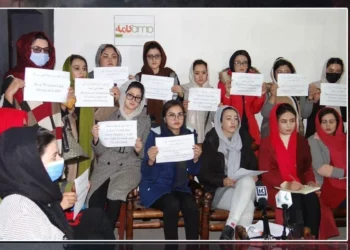
Since regaining control of Afghanistan, the Taliban have destroyed almost every sphere of civic action. The constitution was abolished, elections were eliminated, political parties were effectively dissolved, independent media came under sweeping pressure, civil society institutions were shut down, and street protests were met with the arrest, torture, and forced disappearance of demonstrators. Afghan women were the first group to try to use entirely peaceful methods to defend their rights. They took to the streets unarmed, without violence, carrying nothing but slogans and placards, to defend their right to education, work, and presence in society. The Taliban’s response, however, was not dialogue. It was arrest, beatings, torture, threats, and the silencing of protesters’ voices. This experience was not limited to women alone. Journalists, university professors, civil society activists, writers, critical clerics, and even some former Taliban members who held differing views faced pressure, imprisonment, or elimination. Over the past nearly five years, the Taliban have not only shown no sign of accepting political pluralism, but have tightened their monopoly on power with each passing day.
Under such conditions, advocating for purely civil struggle becomes less a practical strategy and more a moral aspiration. Ethics can guide politics only when the opposing side also accepts at least a minimum of ethical and legal constraints. But if a regime considers itself bound by no law, no social contract, and no principle of accountability, how can civil means force it to retreat? This question cannot be answered through sentiment alone; it must be examined through the lens of political philosophy.
Since the seventeenth century, one of the most fundamental debates in political philosophy has concerned the relationship between the legitimacy of government and the people’s right to resistance. John Locke, one of the foremost theorists of political liberalism, held that government is legitimate only when it protects the natural rights of individuals, namely the rights to life, liberty, and property. In his view, political power is a trust that people place in government, not an absolute, divine right. Therefore, if political power, instead of protecting people’s rights, becomes an instrument for violating those rights, the people have not only the right but the duty to resist it. This idea later influenced many of the world’s revolutions and liberation movements, from the American Revolution to numerous anti-colonial movements in Asia and Africa. The important point is that, within this intellectual tradition, armed resistance is not the first option; it is the last. That is, it arises only when every other avenue has been closed.
If we apply this standard to Afghanistan today, the fundamental question becomes: is there still a path to peaceful change? Can the people of Afghanistan vote the Taliban out? No, because there are no elections. Can they form political parties and challenge power through political competition? No, because the Taliban do not recognize any independent party. Can they mobilize public opinion through free media? No, because the media is under the strictest censorship. Can they change Taliban policies through street protests? The experience of the past nearly five years has shown that the answer is no. Is there an independent court where citizens can file complaints against violations of their rights? No, because the judiciary, too, is part of the Taliban’s ideological structure and ultimately follows the directives of Mullah Hibatullah Akhundzada. If the answer to all these questions is no, then the most essential preconditions for civil struggle have effectively disappeared.
At this point, the argument is usually raised that even if civil struggle produces no immediate result, it is still preferable to war. This claim is respectable on a moral level, but it has a fundamental problem: it assumes that both options, civil struggle and armed resistance, are equally available choices. This is not the case. Civil struggle is effective only when civil society has at least some room to breathe. The Indian struggle against British colonialism, the civil rights movement in the United States, and the fight against apartheid in South Africa all took place under conditions in which the media, public opinion, legal institutions, or domestic and international pressure could exert influence. The Taliban, however, are not accountable to domestic public opinion, do not derive their legitimacy from elections, and have not, to date, shown that diplomatic pressure can fundamentally change their behavior.
The reality is that the Taliban define the language of politics through the language of power. During their own twenty-year war against the republic, the group never resorted to civil methods. The Taliban challenged the legitimacy of the previous system not through elections but through war, ultimately returning to Kabul by relying on military force. Now that same group brands any military resistance against it as illegitimate and labels armed opponents as “rebels” or “terrorists.” This contradiction shows, more than anything else, that the Taliban define legitimacy not based on fixed legal principles but according to their own political interests.
Therefore, the debate in Afghanistan today is not a choice between war and peace, because a peace built on the complete exclusion of society, a monopoly on power, and the suppression of all dissenting voices resembles imposed silence more than it does lasting peace. The central question is this: when a regime closes off every avenue for peaceful change, are people still obligated to merely watch the destruction of their freedoms, or do they have the right to resort to the last means of defense to reclaim their most basic human rights? The answer to this question is not merely a political debate; it is one of the most fundamental discussions in the philosophy of freedom and the legitimacy of power. In the second part of this article, by examining the experience of the past nearly five years, the policies of the international community, international law, and the concept of resistance in political thought, we will answer the question of why, in Afghanistan today, defending the legitimacy of armed resistance is less an endorsement of war than a defense of the people’s right to be free from tyranny.
You can read the Persian version of this analysis article here:
بخش نخست – چرا باید از مقاومت مسلحانه در برابر طالبان دفاع کرد؟