Several residents of Balkh say that following the ban on girls’ education in schools and universities, home-based religious schools in the city of Mazar-e-Sharif have increased at an unprecedented rate. According to them, these schools, while providing a brief opportunity to escape the isolation of the home, have also engaged in teaching extremist subjects, encouraging early marriage, restricting women’s social presence, and even labeling active women, with clear signs of growing extremism among girls being observed.
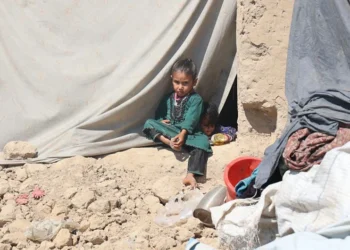
These residents of Balkh say that while girls have been barred from attending schools and universities, neighborhoods, districts, and alleys across the city of Mazar-e-Sharif are witnessing an unprecedented rise in home-based religious schools. According to them, these schools have now become a refuge for girls who are unable to study in formal educational institutions due to Taliban restrictions.
Some of the girls who attend these schools to learn religious studies say that the absence of schools and universities has led to psychological distress and depression, and turning to these schools is an escape from the confines of their homes.
However, some of them are also concerned about the rise of religious extremism among women, saying that until now, women had remained distant from falling into extremism, but with the expansion of home-based religious schools, the risk has increased significantly.
Although these girls say that home-based religious schools provide an opportunity to leave their homes for one or two hours a day, they add that extremist and radical ideas are also being taught to both young and older girls in these institutions.
Munira (pseudonym), a girl who was unable to continue school after the ninth grade, says that she studies Quranic recitation, but does not pay attention to other topics presented by the religious instructor regarding women. She adds that in these schools, subjects and books are sometimes taught that encourage women toward early marriage, avoiding public spaces, and observing “modesty and hijab.” According to her, from the perspective of the instructors in these schools, women who struggle for employment, university education, and women’s rights are sometimes labeled as “prostitutes” and “agents” of Jews and Christians.
Sajida, another girl who had aspired to attend university and study computer science, now attends one of these home-based religious schools. She says that she goes there only to see her friends.
Sajida attends the school from 8:00 a.m. to 10:00 a.m., and afterward, as she puts it, she is once again confined within the four walls of her home.
However, regarding the teaching of some extremist subjects in these schools, she says that women becoming radical depends on themselves, as everyone knows that women have the right to attend school and university and to have jobs.
Meanwhile, Farida, a female teacher, says that although home-based religious schools can be beneficial for women’s religious education, teaching subjects that systematically instill extremism in people’s minds will inevitably have consequences. She adds that she has seen dozens of girls among her relatives who, after six months to one year of attending such religious schools, experienced changes in their thoughts and behavior and had become somewhat radicalized.
At the same time, an employee of the Balkh Provincial Directorate of Education says that Taliban officials in the institution are unofficially pleased with the existence of these schools, as these centers keep girls occupied and gradually erase schools and universities from their minds. According to him, the Directorate of Education cannot tolerate even a single private girls’ school, yet remains silent in the face of home-based religious schools, almost all of which lack operating licenses.
This comes as more than four years have passed since schools and universities were closed to women and girls, with no clear prospect for their reopening.
You can read the Persian version of this report here:
دختران میان انزوا و ایدئولوژی؛ رشد بیسابقه مدرسههای دینی خانهگی در بلخ