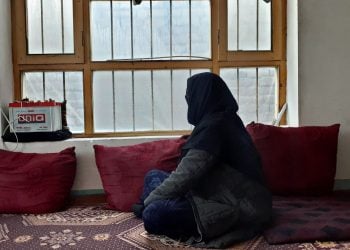

Several women in Kabul say that after the closure of public bathhouses designated for women and the lack of access to sufficient water, they have been forced to go to relatives’ homes to maintain personal hygiene for themselves and their families. These women say that this has created numerous challenges for them. They view the Taliban’s closure of women-only bath houses as a clear symbol of extremism and a deliberate attempt to impose restrictions on women. According to them, shutting down public spaces for women amounts to stripping them of their civil rights.
In interviews with the Hasht-e Subh Daily, some of these women state that women in Afghanistan, like men, have the right to use public facilities such as bathhouses. However, the Taliban have severely restricted their social and professional lives by exploiting religion, customs, and Sharia as tools of control. According to these women, public bathhouses do not contradict religious teachings; in fact, Islam emphasizes hygiene and considers “cleanliness as part of faith.”
Latifa, a resident of Kabul’s District 13, says that before the Taliban shut down public bathhouses for women, she could maintain her hygiene at a low cost. Now, however, she has no choice but to go to her relatives’ homes to bathe. She adds that there is no water access in her neighborhood, and each liter of water costs 20 Afghanis—a situation that has made their lives extremely difficult.
Latifa says: “My husband is a cart-puller and transports people’s goods. We can barely afford rent and drinking water. Once a week, I go to my sister’s house to bathe, but I feel embarrassed by these visits. I wish the bathhouses would reopen, or we could at least get access to water.”
Sabira and Safia, residents of Kabul’s District 5, also criticize the closure of women’s public bathhouses. According to the two sisters, they do not have access to water and therefore have to go to their aunt’s house to bathe.
Sabira says: “Our well dried up a year ago, and my father cannot afford to dig a new one. Now, with great difficulty, we go to our aunt’s house.”
Safia adds: “Since the Taliban came, all the conveniences of life have been taken from us. Before, we could go to the bathhouse whenever we wanted—especially on days when there was a wedding or a special occasion.”
The situation is even more difficult for Sediqa, a girl whose relatives do not live in Kabul. She says they have to walk for hours to obtain water and still struggle to meet their basic needs.
Sediqa says, “There is a water well far from our house, built by a philanthropist. We live in Kabul, yet we have to get permission from the Taliban to use a well.”
Fariba stresses the urgent need to reopen women’s bathhouses. In her view, women in Afghanistan are now deprived of the most basic necessities of life simply because of their gender. She adds: “I know many families who haven’t bathed in two or three weeks. There are so few resources. This situation is unbearable for me.”
Before the closures, many women used these bathhouses by paying 50 to 60 Afghanis to maintain personal hygiene, clean their children, or even wash clothes.
In November 2022, the Taliban’s Ministry for the Propagation of Virtue and Prevention of Vice issued an order declaring women-only bathhouses “un-Islamic” and ordered their closure. The ministry claimed that the decision was made “at the request of the people”—a claim that has sparked widespread criticism and opposition from citizens, especially women.
According to the General Directorate of Craftsmen and Trade, there were a total of 1,136 public bathhouses across Afghanistan, about 20 percent of which were designated for women.
The ban on education for girls above the sixth grade, restrictions on women working in many governmental and non-governmental institutions and organizations, mandatory hijab enforcement, bans on travel without a male guardian, and prohibitions on entering parks, gyms, and women’s bathhouses are among the many restrictions the Taliban have imposed since their return to power in August 2021.
You can read the Persian version of this report here:
رنج بیآبی و حمام اجباری؛ پیامد بستهشدن حمامهای زنانه توسط طالبان