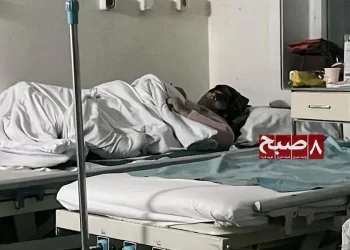
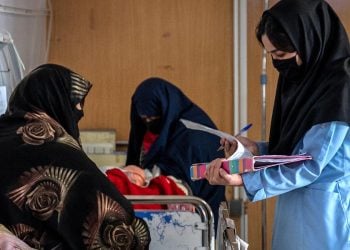
Several female graduates in medical fields have raised complaints about exploitation by certain hospitals. They say that being barred from the final government exam has created opportunities for some hospitals to take advantage of them. According to these women, despite having work experience, long hours, and heavy workloads, they are unable to earn adequate salaries. They add that hospitals exploit their situation, sometimes assigning them heavy tasks that put them under pressure. They emphasize that their career prospects are uncertain, while the country faces a shortage of female doctors and growing concerns about maternal and infant health.
Some female medical graduates, speaking to the Hasht-e Subh Daily, expressed concern over being excluded from government exams, saying that despite having sufficient experience, they are unable to find suitable employment. They said they can only secure jobs if they have connections or mediators, and even then, the salaries are very low while the workload is heavy.
Marjan Nawabi, a graduate in midwifery working at a private hospital in Kabul, said that many women, despite having work experience, are deprived of adequate salaries due to not having official documentation or not having passed the government exam, facing significant difficulties in finding employment.
She added: “I have about one and a half to two years of work experience, and almost all hospital responsibilities fall on me, yet my monthly salary is only 1,000 Afghanis.” According to her, many women work under similar conditions, and even when employed, they are assigned heavy tasks and long shifts, sometimes up to 24 hours, while their salaries range only between 1,000 and 7,000 Afghanis.
Marjan emphasized: “Many women work for one to three years without pay, while the workload for informal employees is sometimes even greater than for those officially employed with government documentation.”
Forouhar Naeemi, another graduate, said that currently, only those with connections or mediators can secure positions, and even then, their salaries and benefits are far lower than those of official employees. She noted that many women without official documentation, despite having work experience, are deprived of suitable job opportunities.
She added, “I also managed to get a position in a private hospital through a relative’s connections. I currently work in the emergency department and ICU and am involved in various tasks, yet despite all these responsibilities, my salary is very low. I earn about 7,000 Afghanis per month, while working nearly 30 nights a month with long hours.”
The young doctor emphasized, “I previously worked in the endoscopy department. There, I was usually the only one assisting the doctor and performed almost all the nursing tasks. Sometimes we had only one patient, sometimes several, but in all cases, the responsibility and workload were mine. Despite this, there was no change in my salary or benefits. The workload and responsibilities for someone with documentation and for someone like me, with only a certificate or without having passed the government exam, were the same, yet my salary was almost half of theirs.” According to her, working conditions for many female medical graduates are similar, and despite having experience and capability, they face serious employment challenges due to a lack of official documentation and not having passed the government exam.
Sharifa Saeedi (pseudonym), another woman who, like Marjan and Forouhar, lost her job due to a lack of formal documentation, said that despite attending work on time and performing duties like official employees, the hospital constantly threatened her with dismissal for not having a diploma. She added that under current conditions, she has to work to support her family, but hospitals exploit their situation. According to her, even some colleagues do not understand their circumstances and treat them unfairly.
Sharifa said, “Not having documentation is not our fault. At the hospital where I worked, initially we were not made official, and when we were, we were assigned various tasks, including distributing patient numbers in the doctor’s room, transporting patients, and even doing heavy work. Despite performing all these duties, they ultimately used the lack of documentation as an excuse to dismiss me.”
For more than four years, female medical graduates have been barred from participating in the final exam, leaving them in complete uncertainty. Although the United Nations has repeatedly called for lifting this restriction and for special attention and investment in female health staff, the Taliban have taken no action to remove these limitations, a situation that could deepen the country’s health system crisis.
These restrictions persist while Afghanistan remains among the countries with the highest maternal and infant mortality rates, a situation largely attributed to the shortage of female doctors.
Previously, the Taliban Ministry of Public Health also confirmed that some provinces are facing a lack of female doctor services.
On May 3, 2023, the Taliban announced that only men are allowed to participate in the “Specialization Completion” exam. A form released by the Ministry of Public Health under Taliban control indicated that female medical graduates are not permitted to take the “Exit” exam or continue studies in specialized fields.
You can read the Persian version of this report here:
محرومیت از امتحان دولتی؛ دختران دانشآموخته طبی از سوءاستفاده شفاخانهها شکایت دارند