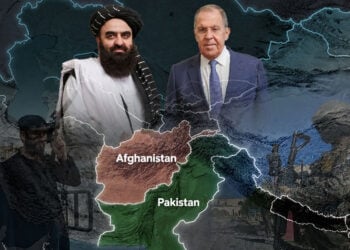

Over the past two years, with each occasional conflict between the Taliban and one of the neighboring countries, either Iran or Pakistan, the living conditions of Afghan refugees in that country have suffered the most. While these two countries are the main supporters of the Taliban and continuously lobby for this group, their favor to the Taliban has not been met as they expected. Therefore, these two neighbors have had conflicts with the Taliban group many times thus far. Some of these conflicts are verbal and diplomatic tensions, and some are border-armed conflicts.
The neighboring countries’ conflicts with the Taliban vary, but some of them are crucial. The main reason for conflict between Pakistan and the Taliban is the Tehreek-e-Taliban Pakistan (TTP) issue. This group, which has built a hub in Afghanistan under the rule of the Afghan Taliban and is supported by this group, has been launching extensive attacks against the Pakistani government in the last few months. Pakistan expected that with the domination of the Taliban over Afghanistan, this group would help Islamabad in the fight against the TTP, but the situation is reversed. The Taliban have been supporting TTP, which is another face of the Afghan Taliban instead of contributing to Islamabad. Now the Taliban, who have returned to power with the unwavering support of Pakistan and several other countries, do not consider themselves as debtors to these countries and instead try to exhibit their favor to the Chinese and Americans. They know that Iranians and Pakistanis cannot be a good alternative to Chinese investment companies and US dollar packages, thus responding to the kindness of Iran and Pakistan with unkindness.
One of the serious conflicts between the Taliban and Iran is rooted in the Hirmand River. Tehran accuses the Taliban of not giving Iran’s share of this river, but this side says that there is no water. Among other issues, drug trafficking from Afghanistan by the Taliban can stand as a prominent one.
The fact that the futile expectation of Pakistan and Iran from a terrorist group is not fulfilled and this group acts contrary to their estimations and international practice, indicates the characteristic of a terrorist group. This is the nature of groups like the Taliban. They have not fulfilled any promise so far and they will not fulfill it again. Announcing a general amnesty and then killing former soldiers and civilians can serve as a prominent example. Maintaining and expanding the connection with other terrorist groups instead of severing ties is another clear example. Additionally, the Taliban stands as a group that does not accept moral and legal responsibility for their actions. Considering these behaviors, it seems unrealistic if Tehran and Islamabad expect this group to remain faithful to its commitments towards them.
One of the strangest expectations of the two countries, Iran and Pakistan, is that the Afghan refugees living in these two countries will voluntarily return to Afghanistan with the encouragement and invitation of the Taliban. The two countries expect those people to voluntarily return to Afghanistan with the “invitation” and “encouragement” of the Taliban disregarding the fact that they have sold off their houses and lost their livelihoods and some of them went through the difficult routes of smuggling, to save themselves from the domination of this group and actually escaped from this group to survive. These expectations are ineffective. Some of the people of Afghanistan have migrated for economic reasons, and they cannot return to the country due to the unemployment of women in Afghanistan. The rest of the Afghans have abandoned their home and country in order to stay alive and save themselves from the Taliban’s persecution. These people do not consider the Taliban as their representative. In the most optimistic state, the Taliban group is a terrorist group of Afghan origin, but in reality, there are different nations and countries in this group. In fact, a number of members of other groups, such as al-Qaeda, have been recruited by the Taliban and hold important political positions. In this sense, the Taliban regime is a collection of several terrorist groups, not a single terrorist group. This terrorist group does not represent the people of Afghanistan, nor does the condition of neighborliness dictate that Pakistan and Iran send the people who escaped from the Taliban’s prison to the gallows again by crossing the border and forcing deportation.
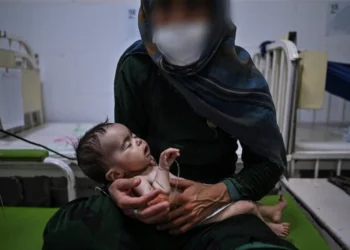
According to Pakistani media reports, the government of this country has decided to deport about 1,100,000 Afghan refugees. With the implementation of this plan, the lives of thousands of Afghan nationals will be taken by the Taliban in numerous ways and excuses. The deputy ambassador of Iran in Kabul has asked the deputy interior minister of the Taliban to encourage this group of Afghan refugees living in Iran to return to the country. Although the persuasion of the Taliban cannot return even a single refugee to the country, forced deportation from Iran and Pakistan is actually the cooperation of these countries with the Taliban regime against the opponents of this group. On the one hand, these countries are involved in a conflict with the Taliban, and on the other hand, they hand over opponents of this group, who have escaped from the Taliban. These games do not make the Taliban accountable and responsible, nor do they bring stability to the region. If the past concessions of these two countries failed to make the Taliban responsible for their behavior and encourage them to comply with the international procedure, then such concessions would not be useful either.
One of the most serious consequences of the Taliban’s return to power is the strengthening of terrorist groups and the expansion of their activities in the region. Since the Taliban took over Afghanistan, terrorism has reached the heart of Islamabad and Tehran. This boldness of the terrorists stems from the rule of the Taliban with the support of these neighboring countries. By supporting the Taliban group, Iran and Pakistan have emboldened these groups to intensify their attacks and activities. Now the same groups are targeting Tehran and Islamabad with the support of the Taliban. At that time, instead of thinking about the root of the problem, which is communicating with the Taliban and supporting this group, and solving that problem, these two countries took the lives of the refugees who fled from this great evil to bring them back.
The interactions of the neighboring countries with Afghanistan do not represent the relations of the nations until a legitimate and elected government is established in Kabul. The people of Afghanistan should be considered differently from the Taliban by these two countries. The Taliban regime, which itself is hostile to the people of Afghanistan, will not last long. It is convenient that the neighboring governments keep the relations between the people of these lands and the people of Afghanistan friendly in the current form. Now the opportunity has come for these two countries to think about their past policies towards Afghanistan and the Taliban, learn from it, and seek to reform it. Standing by the Taliban was a mistake from the beginning, and repeating this mistake will not yield positive results. The right thing is to stand on the right side; Standing by the people of Afghanistan, supporting and properly hosting the refugees, and not continuing the policy of paying ransom to the Taliban.