• 8AM.MEDIA
  • ویب‌سایت فارسی
  • پښتو ویب‌پاڼه
  • اۉزبېکچه ویب‌سایت
  • Podcast
Friday, October 16, 2026
Hasht-e Subh
  • Home
  • News
    • Afghanistan News
    • World News
  • Opinion
    • Editorial
    • Analysis
  • Reports
    • Daily Reports
    • Investigative Reports
  • Society
    • The story of people
  • Women’s Word
  • Columns
    • Three Years After Afghanistan’s Fall: The Taliban’s Resurgence
    • Towards Equality
    • The Resurgence of the Taliban: Two Years Since Afghanistan’s Fall
    • Hebatullah Report Special Edition
    • Resistance for Education Special Edition
    • Special Column on Taliban’s Education Curriculum
    • Nawroz
  • Interviews
  • Contact Us
    • About Us
    • 8AM MEDIA Annual Awards
    • Submit an Article to Hasht-e-Subh
  • 8am.mediaBack
Subscribe
No Result
View All Result
  • Home
  • News
    • Afghanistan News
    • World News
  • Opinion
    • Editorial
    • Analysis
  • Reports
    • Daily Reports
    • Investigative Reports
  • Society
    • The story of people
  • Women’s Word
  • Columns
    • Three Years After Afghanistan’s Fall: The Taliban’s Resurgence
    • Towards Equality
    • The Resurgence of the Taliban: Two Years Since Afghanistan’s Fall
    • Hebatullah Report Special Edition
    • Resistance for Education Special Edition
    • Special Column on Taliban’s Education Curriculum
    • Nawroz
  • Interviews
  • Contact Us
    • About Us
    • 8AM MEDIA Annual Awards
    • Submit an Article to Hasht-e-Subh
  • 8am.mediaBack
No Result
View All Result
Hasht-e Subh
No Result
View All Result

Deaf Children in Kabul: Denied Education and Social Participation

Illya Illya
12 January 2026 - Solar Hijri Date: 1404/10/22 [t_time:1768226651]
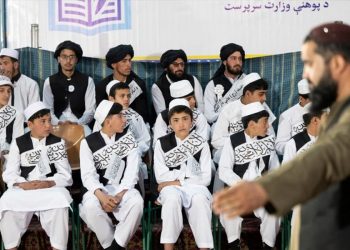
Deaf children sit in a classroom in Kabul, highlighting the challenges they face in accessing inclusive and specialized education. (Photo Credit: Social Media)

Social Media

Families in Kabul who are raising deaf children speak with growing worry about the severe shortage of specialized educational centers in the city. They say this lack of facilities has denied their children the right to equal education and has stripped them of academic and social opportunities. Many explain that government centers under Taliban control, as well as private institutions, sit far from their neighborhoods or fail to meet basic standards. The few private centers that do operate in Kabul, they add, demand fees so high that most families simply cannot afford them.

In conversations with the Hasht-e Subh Daily, these families stress that the absence of proper schools and standard educational centers has placed their children’s academic and social futures in real danger. They say neglect by institutions under Taliban control has pushed deaf children further to the margins of society and narrowed their chances for growth and social participation. The families warn that denying deaf children access to education causes more than personal harm, as it deepens social and cultural inequality across the community. They believe institutions under Taliban rule must invest seriously in deaf education and create schools that are both standard and accessible.

Sharifa, a mother of two children with hearing impairments, says no specialized educational center exists near her home. She explains that this absence has put her children’s futures at serious risk and has taken away their chance to grow, learn, and take part in society. Sharifa calls for free educational centers and meaningful support for deaf children.

She says, “My sons are 10 years old and very intelligent. They notice everything around them. Their father taught them how to pray using gestures, but they cannot read or write because there is no center where they can be sent. People in society humiliate us and ask what sin we committed to have not one, but two deaf children. Their words hurt us deeply.”

Ahmad, the father of a deaf child in Kabul, says the lack of specialized educational centers has placed his family under constant strain. He explains that his child not only misses out on proper education but also feels isolated because no suitable facilities exist.

Ahmad urges Taliban institutions to guarantee equal education for deaf children by providing trained teachers, sign language instruction, assistive technologies, and a safe learning environment.

He adds, “I have one deaf child. When my other children go to school, he feels deep sadness. In both private and public schools, other children do not accept him, and we have no specialized center to turn to. The absence of standard centers is a real disaster. These children, like all others, have the right to education and should not be ignored.”

Mujib, another family member of a deaf child in Kabul, also voices frustration over the lack of specialized educational centers. He says the few private centers that exist charge extremely high fees, placing them far beyond the reach of poor families.

He explains, “My aunt’s daughter is 17 years old and very intelligent, but she has never received an education. First, there is no proper standard center where families can send their children. Finding even one center is extremely difficult. Second, my aunt’s financial situation does not allow her to send her daughter to a center because private centers charge very high fees.” He adds that when his aunt’s financial situation was better in earlier years, she tried to seek treatment for her child, but none of those efforts brought positive results.

At the same time, some educational centers in Kabul say they offer specialized services for deaf children that can help them learn and eventually integrate into society. These centers acknowledge that they charge high fees and explain that costs vary depending on the services provided and the child’s needs. Officials say deaf children require specialized training before they can enter regular schools.

Nargis Talash, an employee at one such center, says she currently teaches about 20 children with hearing problems. She explains that after treatments such as cochlear implants, hearing aids, and speech therapy, some children can continue their education like other students. She adds that the success of both treatment and learning depends on the level of hearing ability.

She says, “Children with hearing problems come to our center, and through cochlear implantation, some regain part of their hearing. The results vary depending on how severe the hearing loss is. For children with severe or profound hearing loss, hearing aids do not work, and even cochlear implants offer only about a 50 percent chance of success. We also provide speech therapy and other specialized training. When a child’s speech improves, they can study alongside other children.”

Karishma Amiri, another staff member at a treatment center for deaf children, says the center receives many children every day, and that treatment has helped many of them. She notes that the minimum cost of treatment is 20,000 afghanis.

She explains, “Our hospital has been operating for nearly two years. Costs depend on the type of treatment. We charge higher fees for cochlear implantation because the process takes a long time. The minimum fee starts at 20,000 afghanis and can increase beyond that.”

Families in Kabul raise these concerns while remembering earlier promises by the Taliban to expand educational facilities and job opportunities for deaf and blind people.

The Taliban also signed a memorandum of understanding to support the education of deaf graduates. Under this agreement, deaf and blind graduates were supposed to take a special university entrance exam. The memorandum included plans to hire specialized instructors for blind students at universities, activate Braille printing facilities, build dormitories, and provide special transportation. None of these commitments has been carried out so far.

Statistics published on the website of the Technical and Vocational Education Authority under Taliban control show that more than 2,500 deaf students across the country are currently enrolled in vocational training programs at centers run by this authority. According to the Taliban, the authority operates 31 special training centers nationwide where people with hearing and visual disabilities receive education.

You can read the Persian version of this report here:
کودکان ناشنوا در کابل؛ محروم از آموزش و مشارکت اجتماعی

ShareTweetSendSendShare

Related Posts

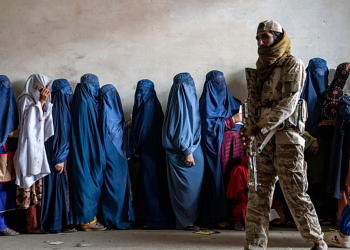
Women in burqas stand near a Talib as restrictions on women’s social participation continue under Taliban rule. (Photo credit: AP)
Afghanistan News

Five Years After the Fall, AFF: Excluding Women from Social Life Is Taliban Policy

15 August 2026 [t_time:1786805105]
Students attend a public school ceremony under a banner of the Taliban-run caretaker Ministry of Education in Afghanistan. (Photo Credit: AFP)
Daily Reports

Families Warn of Alarming Collapse in Public School Education Quality in Afghanistan

28 June 2026 [t_time:1782658028]
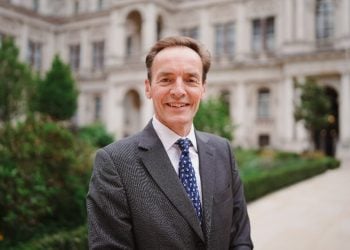
Richard Lindsay, the UK's Special Representative for Afghanistan, expressed his happiness about his daughter's education on International Day of the Girl, highlighting the contrast with the situation in Afghanistan where girls above sixth grade are banned from attending school. (Photo Credit: GOV.UK)
Afghanistan News

Richard Lindsay: Taliban Must Respect the Rights of All People of Afghanistan

31 March 2026 [t_time:1774984424]

Latest

Loading latest news...

Popular stories

  • An aerial view shows collapsed buildings and widespread damage following an earthquake in Panama (Photo: Reuters)

    More Than 200 Aftershocks Recorded in Panama Since Friday’s Earthquake

    Share
    Share Tweet
  • Trump Again Says War with Iran Will End “Very Soon”

    Share
    Share Tweet
  • Axios: Trump Expects Ukraine Not to Attack Russian Oil Refineries

    Share
    Share Tweet
  • UN Report Reveals Shifts in Family Attitudes and Rise in Domestic Violence in Afghanistan

    Share
    Share Tweet
  • The Politics We Inherited: Rethinking Afghanistan’s Political Culture

    Share
    Share Tweet

Podcast

Insights
Insights

Join Lynne O’Donnell for 8AM’s podcast series, Insights.
Lynne talks with generals, diplomats, soldiers, journalists, politicians, activists, people who have front row seats for conflicts around the world, and citizens with a story to tell, happy or sad. For this first series, Afghanistan is the focus. Lynne and her guests talk about the collapse of the republic in August, 2021, and the impact since — for the people of Afghanistan, for the security of the region, for the safety of the world. It’s important, interesting and insightful.

Insights/22: Controlling the Narrative with Mina Sharif
byinsights8am

Controlling the Narrative

Lynne O’Donnell talks with Mina Sharif, author, activist, women’s rights campaigner, educator and mentor. They discuss who controls the narrative and who speaks for Afghanistan’s people when the Taliban appear to have seized control not only of the country but of the message, too.

Have a listen

Insights/22: Controlling the Narrative with Mina Sharif
Episode play icon
Insights/22: Controlling the Narrative with Mina Sharif
Episode Description
Episode play icon
Insights/21: Media Meltdown with Zahra Joya
Episode Description
Episode play icon
Insights/20: Terror Inc with Scott Richards
Episode Description
Episode play icon
Insights/19: Busting Stereotypes with Bushra Gohar
Episode Description
Episode play icon
Insights/18: Media Matters with Waliullah Rahmani
Episode Description
Episode play icon
Insights/17: What Goes Around Comes Around with Sima Samar
Episode Description
Search Results placeholder
Hasht-e Subh

8AM Media, also known as Hasht-e-Subh Daily, stands as Afghanistan's premier independent and non-profit newspaper, resonating as a beacon of journalistic integrity since its establishment in June 2007 by esteemed Afghan journalists and human rights advocates. With a steadfast commitment to citizen journalism and civic education, Hasht-e-Subh Daily has earned its place as the most esteemed publication in the nation.

Publisher: Sanjar Sohail
Email: [email protected]
Executive Director: Parwiz Kawa
Email: [email protected]

Read More

UNAMA Report: Taliban Intensify Crackdown on Women as Arbitrary Detentions Continue

Taliban Accuse UNAMA of Portraying Them Negatively

UNICEF: Over Four Million Children in Afghanistan to Need Malnutrition Treatment in 2027

FAO: Returning Migrants and Rising Prices of Essential Goods Worsen Afghanistan’s Humanitarian Crisis

UNICEF: Access to Safe Water in Afghanistan’s Schools Helps Protect Children’s Health

Editor’s Choice

Every Saturday morning, 8AM MEDIA English Services Department will guide you through the week’s biggest stories from Afghanistan and the international community.

Subscribe

© 2026 - ©Hasht-e Subh Daily

No Result
View All Result
8am.Media
پښتو ویب‌پاڼه
ویب‌سایت فارسی
اۉزبېکچه ویب‌سایت
  • Home
  • News
    • Afghanistan News
    • World News
  • Opinion
    • Editorial
    • Analysis
  • Reports
    • Daily Reports
    • Investigative Reports
  • Society
    • The story of people
  • Women’s Word
  • Columns
    • Three Years After Afghanistan’s Fall: The Taliban’s Resurgence
    • Towards Equality
    • The Resurgence of the Taliban: Two Years Since Afghanistan’s Fall
    • Hebatullah Report Special Edition
    • Resistance for Education Special Edition
    • Special Column on Taliban’s Education Curriculum
    • Nawroz
  • Interviews
  • Contact Us
    • About Us
    • 8AM MEDIA Annual Awards
    • Submit an Article to Hasht-e-Subh
  • 8am.media

© 2026 - ©Hasht-e Subh Daily