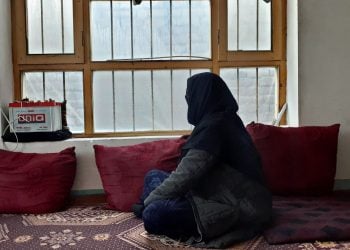

Several families of former Afghan government military personnel report that, despite the Taliban’s announcement of a general amnesty, they face surveillance, interrogation, and threats from the group due to their familial ties to former security forces. They state that Taliban members have repeatedly visited their homes, demanding information about the whereabouts of their military relatives and, in cases of non-cooperation, have subjected them to detention and mistreatment. According to these families, they have been forced to relocate multiple times to protect their lives, a challenge exacerbated by the current economic hardships.
Some families, interviewed by the Hasht-e Subh Daily, emphasize that while the Taliban publicly speak of a general amnesty, they show no commitment to this promise in practice. These families have called on international organizations and human rights groups to address their situation and pressure the Taliban to genuinely implement the amnesty decree. They believe that if this situation persists, not only will many citizens’ lives remain at risk, but their children’s futures will also be shaped in an environment filled with fear, threats, and insecurity.
The families report living in constant anxiety, spending nights in fear and days dreading potential arrests or raids on their homes—a situation they describe as both abnormal and inhumane.
Sakina (pseudonym), the wife of a former military officer, says her husband decided to flee Afghanistan after their children reported that Taliban members visited their school, questioning students about their fathers’ occupations and whether they had served in the military. She adds that her husband struggled to obtain a passport.
Sakina says: “One day, my children came home from school and said, ‘Mother, the Taliban came to our school and asked us about our father’s job and whether anyone in our family worked in the former army.’ After that, my husband decided to get a passport. He was very worried because if he went through biometrics, all his details would be recorded. Fortunately, a friend with connections helped him get a passport, and he fled to Iran. But now, I’m left here with three children, living in worry and uncertainty.”
Sakina, who has fallen into depression since her husband’s departure, says she now lives in constant fear and anxiety.
Mir Afghan, another family member of former military personnel, says his two sons, who served in the previous government’s security institutions, were detained by the Taliban about three months ago. He reports that during the detention, the Taliban demanded that he hand over his sons along with their weapons. He adds that, due to fear of further arrests and ongoing Taliban threats, he is forced to change his residence monthly to stay safe.
Mir Afghan explains: “One day, I was at home when the Taliban knocked on the door and took me away. They beat me severely and told me to hand over my sons and their weapons. I told them my sons left after the government’s collapse and haven’t returned home; I have no news of them. After a lot of beating, they let me go. Now, I change my residence every month to avoid being detained again.”
Sajida Noorzai (pseudonym), the widow of a military officer killed during the wars before the previous government’s fall, says she works to support herself despite Taliban threats. She explains that after the Taliban’s takeover, she fled to Iran with her two daughters but found no safety there. She adds: “Iranian employers told me, ‘You’ve come from a war-torn country, and your husband fought the Taliban; he’s an infidel, and we won’t give you work.’”
Having previously experienced detention and torture by the Taliban, Sajida returned to Herat after losing hope in Iran. She now lives with her two sick daughters under the constant threat of the Taliban. She says no senior security officials or organizations supporting former military personnel have addressed her plight.
Following the Taliban’s takeover of Afghanistan and the start of house-to-house searches in Kabul, many former military personnel and their families were forced to flee the country to avoid identification by the Taliban, with some seeking refuge in Iran.
Siyamoy, a former female officer of the Afghan government now living as a refugee in Iran, says she lives in hiding from other Afghan migrants and feels unsafe. She adds, “Unfortunately, even in this second country, we feel insecure because we’re still close to Afghanistan. If the Taliban find our address, our lives will be in danger. I’m afraid that if the Taliban finds out or gets our address, they could torture or imprison us. On top of that, we’re worried about every single family member. The Taliban show no mercy, even to the families of military personnel, and in some cases, they kill them.”
These concerns come as the Hasht-e Subh Daily obtained information last week indicating that the Taliban executed four former military personnel who had recently returned from Iran to Jowzjan province in a single day. Additionally, an audio recording from a Taliban fighter, obtained by the newspaper, confirms that these military personnel were killed by the group.
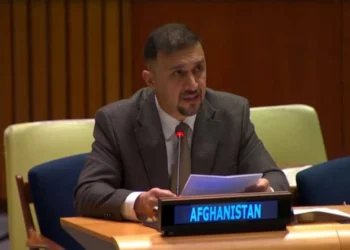
Meanwhile, Naseer Ahmad Faiq, acting head of Afghanistan’s permanent mission to the United Nations, posted on his X account about the killing of these four former military personnel, emphasizing that the Taliban have not adhered to their claimed general amnesty and continue to carry out revenge killings and extrajudicial executions.
The United Nations Assistance Mission in Afghanistan (UNAMA) previously reported documenting at least six cases of killings and 23 cases of arbitrary detentions of former Afghan military personnel between January 1 and March 31 of this year.
The New York Times also reported that, in the first six months of their rule in Afghanistan, the Taliban killed or disappeared nearly 500 former government employees, most of whom were military personnel.
You can read the Persian version of this report here:
انتقام بیپایان؛ بازجویی طالبان از خانوادهها و کودکان نظامیان پیشین