In the history of nations, language is never merely a tool for communication. Language is collective memory, historical narrative, and intellectual framework; it is woven into the very identity of a society. Nations use their languages to remember the past, preserve their cultures, and build their futures. Whenever a language is pushed to the margins, it is not only words that disappear; a portion of the memory, history, and identity of the people who lived through that language is also damaged. For this reason, in many countries, the language question is not merely a literary or educational matter; it is a political, cultural, and deeply identity-driven one.
Afghanistan is a multilingual and multicultural country. Throughout history, various languages have been present in this land, each contributing to the formation of its culture and identity. Among them, Persian has been one of the most historically significant languages of Afghanistan, a language that for centuries played a central role in literature, education, culture, administration, and the production of knowledge, with a great portion of this land’s cultural heritage written and recorded in it.
From Balkh and Herat to Kabul and Badakhshan, Persian was not merely the language of daily conversation but also the language of poetry, philosophy, mysticism, history, and thought. Names such as Mawlana Jalaluddin Balkhi, Sanai Ghaznavi, Nasir Khusraw Balkhi, Abdurrahman Jami, and Bidel Dehlavi, among dozens of other figures, are part of a shared heritage that is inconceivable without the Persian language. For centuries, this language has served as the foundation for cultural and intellectual production across the region, and millions of people have understood the world and communicated with one another through it.
Nevertheless, in recent years, serious concerns have been raised about the marginalization of Persian in Afghanistan. Changes to certain official terminology, the gradual removal of common Persian words from administrative correspondence, attempts at forced substitution of certain terms, and the erosion of Persian’s presence within formal structures have given rise to concern that language has become an arena of political competition and an instrument of the exercise of power.
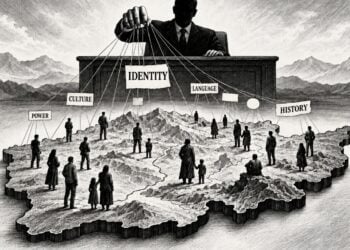
The core problem, however, is not simply the changing of a few words or terms. The issue becomes serious when language is transformed from a communicative tool into an instrument for defining first- and second-class citizenship. Under such conditions, language is no longer merely language; it becomes a symbol of power, monopoly, and exclusion.
One of the serious concerns regarding language policy in Afghanistan is the attempt to construct a kind of identity hierarchy among citizens, a situation in which certain languages and identities are defined as being closer to the center of power while others are pushed to the periphery. The consequence of such an approach is the emergence of a sense of inequality among citizens, a sense that gradually fosters the impression that some are the “true owners” of the country while others are merely second-class inhabitants.
This outlook is not only at odds with the concept of modern citizenship but also inconsistent with the historical reality of Afghanistan. Afghanistan has, from the outset, been a land of ethnic, linguistic, and cultural diversity. No single ethnicity, language, or group has been the sole architect of this country, and no single identity can claim exclusive ownership of it.
The greater danger emerges when language is transformed from a communicative tool into an instrument for measuring political loyalty and national identity. Under such conditions, a citizen is judged not based on ability, knowledge, and social responsibility but based on their mother tongue. This is precisely the point at which social divisions deepen. No country has ever achieved stability by dividing its citizens into the “original” and the “secondary,” the “insider” and the “outsider.”
The historical experience of many countries demonstrates that language policies rooted in exclusion and denial not only fail to contribute to national unity but actually deepen social divisions. Whenever a group feels that its language, culture, or identity is being ignored, its sense of belonging to the political structure is also damaged. For this reason, successful countries typically embrace linguistic diversity as an asset, not a threat.
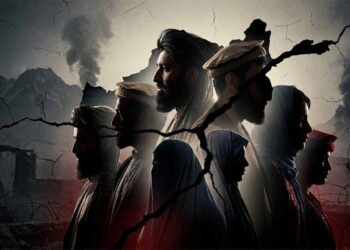
Afghanistan is no exception to this rule. This country was not formed based on a single language and a single ethnicity but on the foundation of historical and cultural diversity. Efforts to elevate one identity while diminishing others ultimately erode social cohesion.
One of the significant consequences of marginalizing Persian is its impact on the educational system. Language is not merely a tool for education; education itself acquires meaning through language. When a language is pushed out of decision-making centers, knowledge production, and educational institutions, its scientific and cultural capacity is gradually constrained as well. Students who feel that their mother tongue or cultural language is valued less will progressively feel distanced from the educational structure.
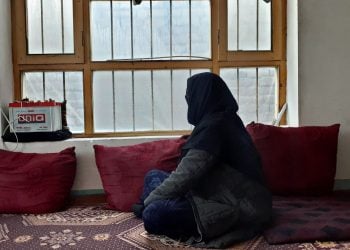
For a society like Afghanistan, which is already grappling with a deep educational crisis, this issue can have even broader consequences. In a country where millions of girls have been deprived of education, and the educational system is contending with numerous restrictions, the creation of linguistic divisions can further complicate an already existing crisis.
But the question of language in Afghanistan is not only a question of education. Language is also an instrument of knowledge production. A large portion of Afghanistan’s academic works, scientific research, cultural productions, and media activities have been conducted in Persian. The elimination or restriction of this language would, in practice, mean the curtailment of a portion of the country’s scientific and cultural capacity.
Persian is not merely the language of daily conversation; it is the language of universities, books, newspapers, poetry, art, and a great portion of Afghanistan’s written memory. Thousands of volumes of books, historical documents, and literary works in this land have been written in this language. Eliminating or diminishing this language is not merely restricting a communicative tool; it is the erasure of part of the country’s historical memory.
Moreover, the question of language in Afghanistan is also tied to social justice. When citizens feel that their language is given less recognition within the country’s official structures, the impression arises that they themselves are also less recognized. Such a feeling gradually erodes social trust and widens the distance between the people and the structures of power.
In recent years, many citizens of Afghanistan have developed the sense that efforts are underway to define a dominant identity and push other identities to the margins. If such a feeling spreads throughout society, the result will be nothing other than increased mistrust, social disintegration, and the weakening of national solidarity.
Perhaps this is why language policies in many countries around the world are pursued with great sensitivity. The experience of countries such as Switzerland, India, and Canada shows that political stability in multilingual societies is achieved not through exclusion but through the recognition of diversity. Successful governments endeavor to preserve all the major languages of their society as part of the national wealth, because they understand that languages are not rivals of one another but together form the cultural heritage of a nation.
The important question is: why, in conditions where Afghanistan faces deep economic crises, widespread poverty, unemployment, migration, the collapse of the educational system, and international isolation, has the question of language become such a political issue? Why, instead of focusing on resolving the fundamental problems of the people, is so much energy being expended on changing names, words, and linguistic symbols?
The answer may lie in the reality that controlling language is ultimately an attempt to control narrative. Every political power attempts to establish its own narrative of history, identity, and society. Language under such circumstances becomes a tool for redefining collective memory. But the experience of history has shown that no government has ever been able to permanently alter the cultural memory of a nation through political pressure.
Political powers can change names, alter signs, and coin new words, but they cannot sever the emotional and historical bond between a people and their language. Languages do not live by political decree, nor do they perish by political decree. The survival of a language lies in its connection to people, culture, literature, and everyday life.
Persian in Afghanistan is neither an imported language nor one belonging to a limited group. For centuries, it has been part of the social, cultural, and intellectual reality of this land. Millions of citizens speak it, write in it, recite poetry through it, think in it, and understand the world through its framework. For this reason, any attempt to marginalize it will, sooner or later, encounter the cultural resistance of society.
More importantly, the defense of Persian should not be construed as opposition to the other languages of the country. To defend Persian is to defend the principle of equality. Just as no language should be denigrated, no language should be marginalized. The development of one language must not come at the cost of eliminating another.
Afghanistan needs the rebuilding of national trust more than ever. This trust cannot be built by eliminating languages; it can only grow from genuinely accepting the country’s multilingual and multicultural reality. The Persian language, like the other languages of Afghanistan, is part of this reality, a reality that can neither be denied nor erased from the collective memory of the people.
Today, the debate is not merely about a few words or a few signs; it is about the nature of one’s vision of Afghanistan. Is Afghanistan the shared home of all its citizens, or is it a land in which some identities must be faded so that others may be elevated? The answer to this question not only determines the fate of a single language; it also shapes the future of national coexistence.
The elimination of Persian, if pursued as a deliberate policy, will ultimately harm not only the Persian language but Afghanistan itself. For nations do not grow stronger by erasing parts of their own memory. No society achieves unity by denying a portion of its history and culture.
Afghanistan can only move toward stability and development when all its citizens, regardless of language, ethnicity, and gender, see themselves reflected in the mirror of this country. A language that has been part of the soul of this land for centuries does not deserve to be eliminated or pushed to the margins. Silencing a language is ultimately an attempt to silence memory, and a nation that loses its memory will also lose its way into the future.
You can read the Persian version of this analysis here: