
Several residents of Badghis province report that this year, the Taliban have beaten many people for breaking “Shul Pista,” a local rule against collecting pistachios before they ripen. According to Badghis residents, the Taliban tortured them for breaking this rule before the official announcement by the group, even though it was the Taliban’s associates who initially broke the rule. Additionally, they state that after collecting the pistachios, the Taliban extorted them under the guise of religious taxes (Ushr) and forcibly took most of the products from the people.
Most residents of Badghis claim that although they adhered to the Taliban’s warnings not to collect pistachios, the group’s relatives rushed to the pistachio forests six hours before the public announcement and began collecting the produce.
Several residents of Badghis and Herat province, who were informed about the pistachio harvest six hours later, say they were harassed and beaten by the Taliban due to linguistic prejudices while on their way.
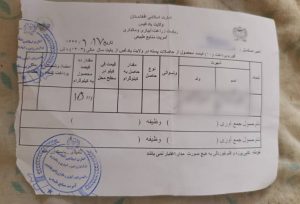
Residents of Badghis and Herat add that after collecting the pistachio harvest, the Taliban extorted them under the guise of Ushr (religious taxes) and subjected them to harassment.
Ahmad and nearly 30 of his relatives, who brought their collected pistachios to the market for sale, say the Taliban forcibly took 15,000 Afghanis from them under the guise of religious taxes from two Flancoach trucks.
This pistachio gatherer in Badghis says that despite fully paying the Taliban’s ten percent tax, the group’s fighters threatened and extorted an additional 25,000 Afghanis from him.
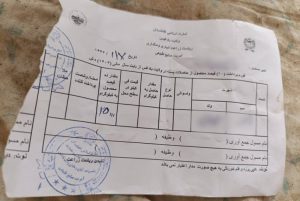
In an interview with the Hasht-e Subh Daily, Ahmad said: “When the ‘Shul Pista’ was broken, we started moving towards the pistachio forests at 11 PM. After a one-and-a-half-hour journey, we reached the area and began collecting pistachios. We picked what was on the trees until the next morning and then headed to the market to sell the pistachios. We were two Flancoach trucks, and the Taliban said to give 15,000 Afghanis from the two trucks as religious taxes. After paying, they gave us a receipt for the complete payment. However, when we sold the pistachios and returned, the Taliban stopped us at the same checkpoint, threatened us, and took another 25,000 Afghanis.”
Meanwhile, video footage obtained by the Hasht-e Subh Daily shows Taliban fighters beating Badghis residents for religious taxes.
In one of these videos, a Taliban commander is seen with several fighters tying a young man’s hands and brutally beating him in public for not having an “Ushr receipt.”
Residents of Badghis province say that the Taliban’s beatings and extortion of pistachio products have become routine, and no one dares to protest due to fear of the group. They say any criticism or reaction would result in death, so people prefer to endure their pain and sorrow in silence.
On the other hand, some residents claim they had no intention of collecting pistachios for another ten days, but when the Taliban’s relatives stormed the pistachio forests, they were forced to collect pistachios out of necessity.
Gul Ahmad (pseudonym), a resident of the pistachio forest area, told the Hasht-e Subh Daily: “On one hand, the Taliban threatened us not to break the Shul Pista, and on the other hand, we were distressed because the pistachios were unripe. At 2 PM, a Taliban member’s brother and several others entered the forest.”
This Badghis resident added: “When these [Taliban’s relatives] entered the pistachio forests, everyone noticed and said the Taliban’s kin had broken the rule, which caused everyone to rush into the forest and collect pistachios.”
Many Badghis residents say this year’s pistachio harvest saw a significant increase but was collected prematurely and has little market value.
Abdul Fattah, a resident of Badghis, says this year the pistachios were picked before they ripened, which has reduced their market price and dealt a severe blow to the people’s economy.
This Badghis resident adds: “This year, the pistachio harvest was very large, but it was wasted as it wasn’t allowed to ripen. If they had waited another ten days and not broken the Shul Pista rule, the pistachios would have ripened, and everyone would have benefited more [financially].”
Abdul Fattah emphasized: “The pistachios were unripe and empty inside, so their price is low. This year, one ser (approximately eight kilograms) of pistachios sold for 700 Afghanis, while last year it sold for 1,200 Afghanis. If the pistachios had ripened, both the sellers and the buyers would have profited, but unfortunately, this was not allowed.”
It is worth mentioning that the people of Badghis refer to the pistachio harvest as “Shul Pista.” Every year, after the pistachios ripen, residents from most areas of Badghis province and neighboring districts to Herat province collectively go to the pistachio forests to gather the harvest.
Badghis residents are complaining about the Taliban’s extortion and coercion of pistachio products, even though the group’s fighters collected pistachio forest products during the previous government’s rule as well.
You can read the Persian version of this daily report here:
از اخاذی زیر نام عشر تا لتوکوب مردم؛ در «شول پسته» بادغیس چه گذشت؟ | روزنامه ۸صبح