• 8AM.MEDIA
  • ویب‌سایت فارسی
  • پښتو ویب‌پاڼه
  • اۉزبېکچه ویب‌سایت
  • Podcast
Monday, October 5, 2026
Hasht-e Subh
  • Home
  • News
    • Afghanistan News
    • World News
  • Opinion
    • Editorial
    • Analysis
  • Reports
    • Daily Reports
    • Investigative Reports
  • Society
    • The story of people
  • Women’s Word
  • Columns
    • Three Years After Afghanistan’s Fall: The Taliban’s Resurgence
    • Towards Equality
    • The Resurgence of the Taliban: Two Years Since Afghanistan’s Fall
    • Hebatullah Report Special Edition
    • Resistance for Education Special Edition
    • Special Column on Taliban’s Education Curriculum
    • Nawroz
  • Interviews
  • Contact Us
    • About Us
    • 8AM MEDIA Annual Awards
    • Submit an Article to Hasht-e-Subh
  • 8am.mediaBack
Subscribe
No Result
View All Result
  • Home
  • News
    • Afghanistan News
    • World News
  • Opinion
    • Editorial
    • Analysis
  • Reports
    • Daily Reports
    • Investigative Reports
  • Society
    • The story of people
  • Women’s Word
  • Columns
    • Three Years After Afghanistan’s Fall: The Taliban’s Resurgence
    • Towards Equality
    • The Resurgence of the Taliban: Two Years Since Afghanistan’s Fall
    • Hebatullah Report Special Edition
    • Resistance for Education Special Edition
    • Special Column on Taliban’s Education Curriculum
    • Nawroz
  • Interviews
  • Contact Us
    • About Us
    • 8AM MEDIA Annual Awards
    • Submit an Article to Hasht-e-Subh
  • 8am.mediaBack
No Result
View All Result
Hasht-e Subh
No Result
View All Result

The Fall of Women’s Cafés: Poverty and Taliban Restrictions Close the Door on Afghanistan’s Café Culture

Translated by Farhad Farhaad | Originally reported in Persian by Adrina Behzad

Mohammad Farhaad Mohammad Farhaad
29 June 2026 - Solar Hijri Date: 1405/04/08 [t_time:1782740284]
A women's café in Kabul sits nearly empty, with cushioned seating areas once filled by customers now vacant amid declining business. (Photo credit: 8am.media)

8am.media

Several owners of cafés and restaurants designated for women complain about a decline in their business. They say that girls and women no longer visit cafés and restaurants as they used to. According to them, around 300 restaurants previously operated across Afghanistan with investment and management by women, but this number has now decreased to about 150 restaurants. According to these restaurant owners, the decline in customers has caused their income to fall short of covering even basic expenses such as rent, electricity, taxes, and other costs. They warn that if this situation continues, they will be forced to halt the operations of their cafés and restaurants. Meanwhile, several girls say that due to reduced economic capacity, loss of jobs and income, and fear of confrontation with Taliban forces, they prefer to visit cafés and restaurants less often.

Sahar (pseudonym), the owner of a café in Kabul city, expresses concern over the fading popularity of cafés. She says that with the increase in Taliban restrictions, the number of customers, especially girls and women who made up the majority of visitors to her café, has sharply declined.

This woman says, “Despite all the difficulties, customer traffic used to be good. We also have a special section for women, and on some days, it would get so crowded that we faced a shortage of space. But now hardly anyone comes to the café, and most customers, even if they come, order nothing more than a cup of tea. Every time a wave of arrests of girls by the Taliban begins, no girl comes to the café for several days. Boys also usually do not have much interest in sitting in cafés, and their presence is very limited.”

Sahar warns that the continuation of this situation could lead to the closure of her café, adding: “Most of our customers were girls, but now they no longer come; some because of economic difficulties and some out of fear of the Taliban. Meanwhile, the costs of rent, electricity, taxes, and other expenses still rest on our shoulders. If this situation continues, we will be forced to close the café.”

Roya (pseudonym), the owner of one of the restaurants designated for girls and women, also complains about a significant decline in her business. She says that the worsening economic situation of the people and the restrictions imposed by the Taliban on women have caused the greatest damage to the operation of restaurants and cafés.

This restaurant owner says: “The economic situation of the people has become severely dire, and many others can no longer go to restaurants and cafés. On the other hand, the restrictions that the Taliban have imposed on women have created serious challenges for the operation of this sector.”

Roya adds, “Most female restaurant owners are struggling with economic difficulties. High costs of rent, electricity, taxes, business licenses, and other expenses have made it difficult for many of them to continue operating. For this reason, a large number of restaurants in which women had invested have been forced to close.”

This restaurant owner says, “Previously, about 300 restaurants with investment and management by women operated across Afghanistan, but unfortunately, this number has now decreased to about 150 active restaurants.”

Rukhsar (pseudonym) says that previously she used to go to a café at least once a week, but now this is no longer possible for her. She says: “I used to be employed and had an income, which is why I went to a café once a week. But now I have neither the financial means nor the motivation. Fear of the Taliban has also made me no longer dare to go.”

This woman adds: “We used to go to cafés with my friends, talk for hours, take photographs, and forget our daily exhaustion. But now the atmosphere of fear and concern over confrontation with the Taliban’s forces for the Propagation of Virtue and Prevention of Vice has grown so much that we prefer to stay home. My friends also no longer go to cafés as they used to.”

Shahla (pseudonym), a girl who used to spend part of her free time in cafés, talking with her friends and sometimes reading books, says the decline in café customers has various reasons.

This woman says, “One of the most important reasons is the poor economic situation. Many people can no longer pay the costs of going to cafés. On the other hand, the existing restrictions and social conditions have caused people’s movement and gatherings to decrease considerably compared to the past.”

Shahla adds, “Psychological pressures and the depression resulting from the current circumstances have also had a profound impact on people’s morale. Many no longer have the motivation they once had to go out, have fun, celebrate, or even hold small gatherings. These factors have also caused cafés to face a significant decline in customers compared to the past.”

Meanwhile, Qadir (pseudonym), an economic affairs expert, says that going to cafés under the current circumstances has changed from a social need into a luxury expense, and is no longer a priority for families either economically or socially.

This expert says: “In the past, cafés were gathering places for young people to rest, find peace of mind, and relieve daily fatigue. Families, fiancés, and friends used to gather together in cafés during their free time, but now going to a café has become an unnecessary expense. On one hand, the decline in people’s purchasing power has caused this to no longer be a priority, and on the other hand, the existing restrictions have caused young people to no longer find the peace and space in cafés that they used to seek there. Families have also lost their previous motivation to be present in cafés, given the separation of sections for women and men.”

This economic affairs expert adds: “The decline in people’s purchasing power, rising electricity costs, heavy taxes, and high rents are among the most important factors that have caused the café business to face a slowdown. In addition to these factors, the general economic recession, the migration of a significant portion of the young and modern segment of society that had shaped café culture, as well as the restrictions, are among the main factors behind the fading popularity of cafés.”

This comes as, following the Taliban’s takeover of Afghanistan, women and girls have faced extensive restrictions. The Taliban have banned women from working in government offices and a large portion of private institutions, and have also closed the doors of schools, universities, and other educational centers to girls.

In addition, extensive restrictions on movement, presence in public places, and the type of dress are among the other challenges that women and girls in Afghanistan are grappling with.


You can read the Persian version of this report here:

سقوط کافه‌های زنان؛ فقر و محدودیت‌های طالبان مجال کافه‌نشینی را گرفته‌اند

ShareTweetSendSendShare

Related Posts

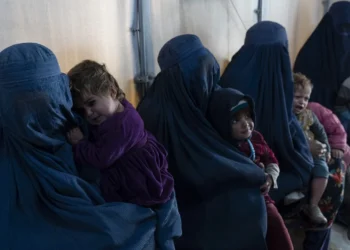
A group of women in burqas walk through Herat amid worsening economic hardships and concerns over meeting basic needs. (Photo credit: AFP)
Afghanistan News

Herat’s Impoverished Families: ‘We Can No Longer Meet Our Basic Needs’

3 October 2026 [t_time:1791049543]
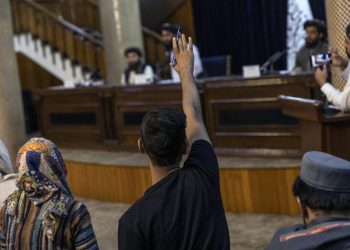
A journalist raises their hand to ask a question during a press conference with Taliban officials in Kabul, Afghanistan. (Photo Credit: Victor J. Blue/The New York Times)
Daily Reports

Access to Information Under Siege: Taliban Turn Media Into Propaganda Mouthpiece

1 October 2026 [t_time:1790857959]
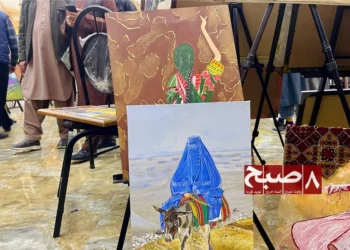
Paintings by young artists, including a woman in a blue burqa leading a donkey, are displayed on easels at an art exhibition in Afghanistan. (Photo credit: 8am.media)
Daily Reports

Painters and Calligraphers Squeezed by Restrictions and a Collapsing Market as Art Gasps for Air

30 September 2026 [t_time:1790772691]

Latest

Loading latest news...

Popular stories

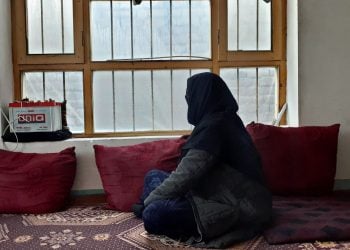
  • An Afghan woman gazes out of her home, reflecting the isolation and challenges faced by women in Afghanistan under Taliban rule. (Photo Credit: 8am.media)

    UN Report Reveals Shifts in Family Attitudes and Rise in Domestic Violence in Afghanistan

    Share
    Share Tweet
  • Taliban Shoot Young Man from Herat After Torturing Him with Hands Tied

    Share
    Share Tweet
  • Al-Qaeda Releases Hamza bin Laden Message on 9/11 Anniversary

    Share
    Share Tweet
  • Afghanistan Journalists Center: Taliban Have Detained Around 300 Journalists and Media Workers

    Share
    Share Tweet
  • The Silencing of Afghanistan

    Share
    Share Tweet

Podcast

Insights
Insights

Join Lynne O’Donnell for 8AM’s podcast series, Insights.
Lynne talks with generals, diplomats, soldiers, journalists, politicians, activists, people who have front row seats for conflicts around the world, and citizens with a story to tell, happy or sad. For this first series, Afghanistan is the focus. Lynne and her guests talk about the collapse of the republic in August, 2021, and the impact since — for the people of Afghanistan, for the security of the region, for the safety of the world. It’s important, interesting and insightful.

Insights/22: Controlling the Narrative with Mina Sharif
byinsights8am

Controlling the Narrative

Lynne O’Donnell talks with Mina Sharif, author, activist, women’s rights campaigner, educator and mentor. They discuss who controls the narrative and who speaks for Afghanistan’s people when the Taliban appear to have seized control not only of the country but of the message, too.

Have a listen

Insights/22: Controlling the Narrative with Mina Sharif
Episode play icon
Insights/22: Controlling the Narrative with Mina Sharif
Episode Description
Episode play icon
Insights/21: Media Meltdown with Zahra Joya
Episode Description
Episode play icon
Insights/20: Terror Inc with Scott Richards
Episode Description
Episode play icon
Insights/19: Busting Stereotypes with Bushra Gohar
Episode Description
Episode play icon
Insights/18: Media Matters with Waliullah Rahmani
Episode Description
Episode play icon
Insights/17: What Goes Around Comes Around with Sima Samar
Episode Description
Search Results placeholder
Hasht-e Subh

8AM Media, also known as Hasht-e-Subh Daily, stands as Afghanistan's premier independent and non-profit newspaper, resonating as a beacon of journalistic integrity since its establishment in June 2007 by esteemed Afghan journalists and human rights advocates. With a steadfast commitment to citizen journalism and civic education, Hasht-e-Subh Daily has earned its place as the most esteemed publication in the nation.

Publisher: Sanjar Sohail
Email: [email protected]
Executive Director: Parwiz Kawa
Email: [email protected]

Read More

World Habitat Day: UN Calls for Adequate Housing for All

UK Green Party Votes to Classify ‘Zionism’ as a Form of Racism

Everyone Fears AI, So Why Is No One Backing Off?

Shukria Tabassum Case: 11 Years On, Taliban Rub Salt Into a Bloody Wound

Taliban Begin Paving Farah-Farah Rud Road at a Cost of 982 Million Afghanis

Editor’s Choice

Every Saturday morning, 8AM MEDIA English Services Department will guide you through the week’s biggest stories from Afghanistan and the international community.

Subscribe

© 2026 - ©Hasht-e Subh Daily

No Result
View All Result
8am.Media
پښتو ویب‌پاڼه
ویب‌سایت فارسی
اۉزبېکچه ویب‌سایت
  • Home
  • News
    • Afghanistan News
    • World News
  • Opinion
    • Editorial
    • Analysis
  • Reports
    • Daily Reports
    • Investigative Reports
  • Society
    • The story of people
  • Women’s Word
  • Columns
    • Three Years After Afghanistan’s Fall: The Taliban’s Resurgence
    • Towards Equality
    • The Resurgence of the Taliban: Two Years Since Afghanistan’s Fall
    • Hebatullah Report Special Edition
    • Resistance for Education Special Edition
    • Special Column on Taliban’s Education Curriculum
    • Nawroz
  • Interviews
  • Contact Us
    • About Us
    • 8AM MEDIA Annual Awards
    • Submit an Article to Hasht-e-Subh
  • 8am.media

© 2026 - ©Hasht-e Subh Daily