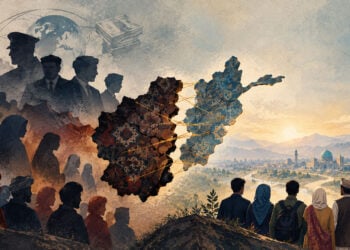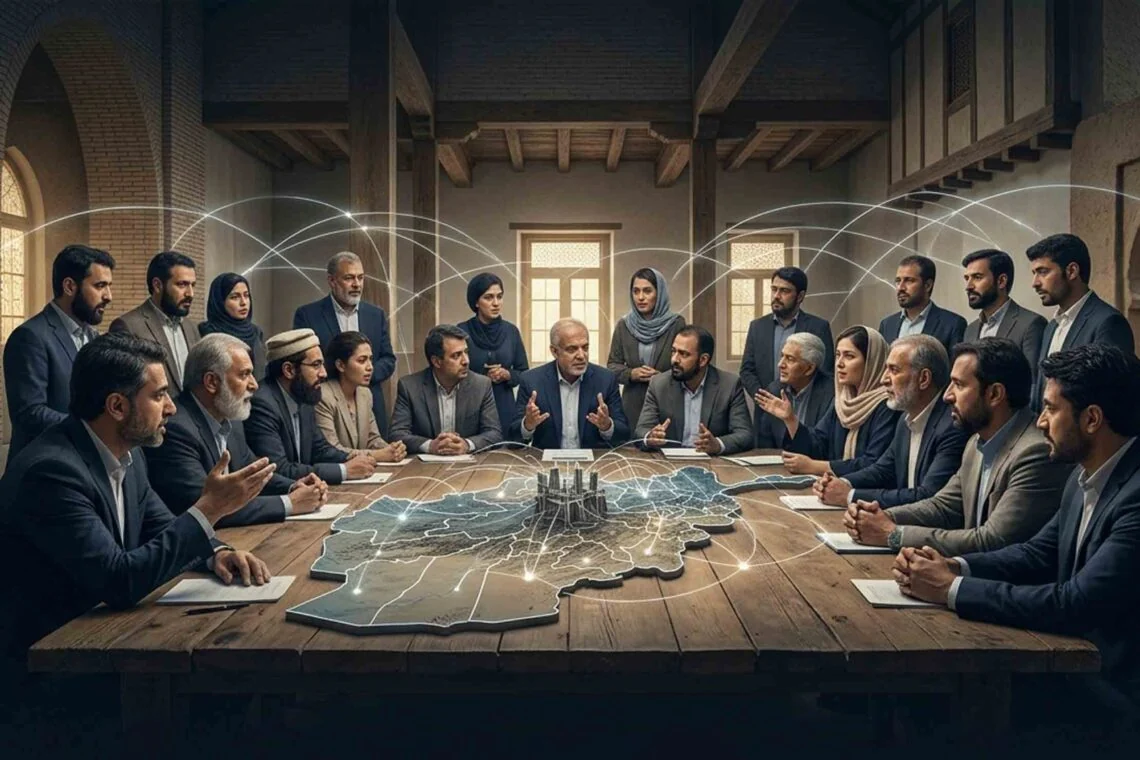
It appears that in the discourse on federalism in Afghanistan, one fundamental issue receives less attention: the two-way relationship between political structure and social action, and the role of political culture and collective wisdom in creating and sustaining democratic order. In sociology, “structure” and “action” are not two separate or unrelated categories. Political, economic, and social structures shape the opportunities and constraints of human action. In turn, social actions can also reproduce structures, change them, or lay the groundwork for the emergence of new ones. Therefore, one can neither ignore the role of structure nor assume that changing the structure alone will transform social relations and political culture.
Nevertheless, in a considerable part of the federalism discourse in Afghanistan, the main focus is on changing the form of the state and the geographical distribution of power, as though once the system becomes federal, the historical problems of society, authoritarian relations, discrimination, social distrust, and the weakness of a culture of participation will resolve themselves. From a sociological perspective, this view is a form of structural reductionism, because it reduces the complex problems of a society to its political structure.
To clarify the issue, one can point to the difference between Saudi Arabia and Britain. Both countries are monarchies, yet they differ fundamentally in political institutions, accountability mechanisms, limits on power, and political culture. This comparison shows that the title and formal shape of a political system, on their own, do not explain how it functions. Of course, the differences between the two countries cannot be attributed solely to political culture; history, institutions, economic relations, and the different paths of state formation also play a role in these differences.
The experience of the Islamic Republic of Afghanistan during the era of Hamid Karzai and Mohammad Ashraf Ghani is also a closer example for understanding this issue. In that period, the formal structure of the system rested on elections, the constitution, and some democratic mechanisms. However, the existence of these mechanisms alone failed to produce lasting and accountable democratic institutions. Personal and network-based power relations, ethnic considerations, political quotas, the weakness of program-oriented parties, and the persistence of certain authoritarian patterns affected the performance of formal institutions.
As a result, a gap emerged between the formal appearance of the system and the real manner in which power was exercised. Institutions that were supposed to act based on law, merit, accountability, and the public interest were, in many cases, influenced by political considerations and power networks. This experience showed that the existence of a constitution, elections, and formal institutions is not sufficient to guarantee democracy without the institutionalization of democratic rules in political behavior and social relations.
Of course, this does not mean ignoring the weaknesses of institutional design, the concentration of power, foreign interventions, war, and the economic conditions of that period. The point is that none of these factors alone can be considered the explanation for the system’s failure. The problem takes shape in the interaction among institutional structures, social relations, and political actors.
From here, we must return to the issue of federalism in Afghanistan. Under suitable conditions, federalism can help manage social diversity and reduce the concentration of power through the distribution of power, regional self-governance, and the creation of participation mechanisms. But these outcomes are not automatic. If local institutions are also handed over to personal networks, ethnic relations, monopolies of power, and ethnic rivalries, decentralization may, instead of democratizing power, simply create multiple centers of authoritarianism.
Therefore, the fundamental question is not only whether Afghanistan needs a centralized, semi-centralized, or federal system, but what social and institutional conditions make democratic functioning possible for each of these structures. Debate over structure is necessary, but it is not sufficient.
In my view, among the fundamental problems of Afghan society are the weakness of independent and accountable institutions, social distrust, the dominance of certain forms of ethnic identity politics over citizenship identity, and the difficulty of forming collective action around the public interest. In such conditions, political differences are easily reproduced within the framework of identity-based rivalries, and the possibility of dialogue, cooperation, and the formation of a collective will remains limited.
Here, collective wisdom does not simply mean the agreement of the majority or the mere coexistence of individuals. Rather, it means the capacity of a society for critical dialogue, acceptance of difference, rational assessment of the public interest, cooperation with others, and peaceful resolution of disputes. Moreover, civic action becomes meaningful when individuals, regardless of ethnic and religious affiliations, regard themselves as rights-holders, as responsible, and as partners in the political destiny of society.
Of course, political culture is also not a fixed and unchangeable phenomenon. One cannot expect people to create a democratic culture on their own in the absence of just institutions and real opportunities for participation. Citizens learn and reproduce this culture through participation, the experience of cooperation, making demands, seeking accountability, and defending one another’s rights. For this reason, structure and action stand in a reciprocal relationship: democratic institutions can strengthen democratic action, and democratic action can in turn lead to the consolidation and reform of institutions.
In the current circumstances of Afghanistan, of course, a more difficult question also arises: in a situation where the space for political and civic activity is restricted, how can the grounds for such action be preserved and strengthened? Answering this question requires examining the possibilities of critical education, civic activities, social dialogue, cooperation across ethnic lines, and the creation of networks of trust. This path is neither easy nor immediate, but without attention to it, any debate about the future structure also neglects an important part of Afghanistan’s social reality.
Our problem is not merely choosing a political structure. The problem is how to build a society with the capacity for democratic action, collective wisdom, and a culture of citizenship; a society in which disagreement does not turn into enmity, power does not evade accountability, and the public interest is not sacrificed to narrow group affiliations.
Therefore, rather than merely emphasizing a change in political structure, I emphasize the necessity of strengthening collective action and a culture of citizenship. This is not because structure is less important, but because structure without democratic action cannot, on its own, guarantee democracy.
A democratic structure without citizens and democratic action does not guarantee democracy; likewise, democratic action without suitable opportunities and institutions cannot be sustainably realized. Thus, the central issue is to understand and create a relationship in which democratic institutions and civic action strengthen one another.
You can read the Persian version of this analysis article here:
گفتمان فدرالیسم در افغانستان؛ از تغییر ساختار تا نقش کنش جمعی