Abstract
Alternative assessment in higher education, as a learner-centered approach, has attracted increasing attention in recent years because this method can provide the ground for deeper learning, critical thinking, active participation, and greater student responsibility. The present study was conducted to examine the views of English department lecturers on the application of alternative assessment in large classes at public universities in northern Afghanistan. Using a mixed-methods design and a descriptive survey method, the study examined the views of 30 lecturers from nine public universities. The findings show that 90 percent of respondents were familiar with various methods of alternative assessment, and 93.3 percent believed that these methods are more effective than traditional exams in measuring students’ deeper understanding. In addition, 93.3 percent of lecturers believed that alternative assessment turns students into more active and responsible learners. However, the large number of students, the time-consuming nature of evaluation, lecturers’ workload, the lack of clear assessment criteria, and university policies based on written final exams were reported as the most important obstacles to implementing these methods. Lecturers considered group projects and oral presentations to be among the most practical methods for large classes.
Keywords: alternative assessment, lecturers’ views, large classes, challenges.
Introduction
Assessment is one of the essential components of the teaching and learning process and plays an important role in measuring the extent to which educational goals are achieved, identifying learners’ abilities and needs, and improving the quality of teaching. Assessment is not limited to measuring educational outcomes only; it can also provide lecturers and students with information about the level of understanding, skills, and the ability to apply what has been learned. From this perspective, assessment is a process that both helps improve learning and provides the ground for reviewing teaching methods. In the educational literature, a distinction is usually made between traditional assessment and alternative assessment. Traditional assessment focuses more on the final product of learning and includes tools such as written exams, short quizzes, and standardized tests. In contrast, alternative assessment emphasizes the learning process, student participation, and the practical demonstration of abilities, and includes methods such as self-assessment, peer assessment or peer evaluation, portfolios, educational projects, and oral presentations.
Formative assessment and summative assessment are also distinct from each other. The fundamental difference between these two types of assessment relates more to their purpose and function than to the time of their implementation. Summative assessment is mainly used to report a student’s progress and achievement at the end of a course or a unit, whereas formative assessment is carried out with the aim of continuously monitoring learning and providing feedback for its improvement.
In Afghanistan’s universities, especially in the public universities of the north of the country, written exams and traditional tests are still among the common methods of assessing students. However, these methods cannot always provide a comprehensive picture of students’ abilities, particularly in classes where the number of students is high. Under such conditions, individual attention to students, the provision of effective feedback, and the assessment of practical skills face difficulties.
Previous studies in Afghanistan have also pointed to the limitations of formative assessment, excessive dependence on exams, weak educational feedback, and the difficulties of managing large classes. Nevertheless, according to the authors, limited research has been conducted on lecturers’ views regarding specific methods of alternative assessment, such as portfolios, self-assessment, peer assessment, educational projects, and oral presentations, at universities in northern Afghanistan. Therefore, the present study seeks to examine the views of English department lecturers on the application of alternative assessment in large classes, to identify the obstacles to its implementation, and to consider lecturers’ suggested solutions for improving these methods.
Research Background
Educational assessment can be understood as the process of collecting, analyzing, and interpreting information about learners’ knowledge, understanding, and abilities. This process helps lecturers determine the extent to which educational goals have been achieved, identify students’ strengths and weaknesses, and make decisions about continuing or modifying teaching methods (Huba & Freed, 2000; Gronlund, 1998; Susuwele-Banda, 2005). Alternative assessment is important in that it pays attention to the individual differences of students and provides more diverse opportunities for demonstrating what they have learned. Since students do not learn in the same ways, their abilities should not be measured solely through a single fixed method. This type of assessment can also strengthen practical skills such as decision-making and problem-solving. Previous studies have reported numerous benefits of alternative assessment. These benefits include improved academic performance, increased motivation, attention to the learning process, strengthened creative and critical thinking, and increased student participation. In addition, these methods enable students to play a more active role in the assessment process and to demonstrate their knowledge through meaningful activities. However, implementing alternative assessment is not without challenges. The time-consuming nature of evaluation, the difficulty of ensuring validity and reliability, the lack of sufficient training for lecturers, limited resources, and the large number of students are among its important obstacles.
Some studies have also shown that despite lecturers’ positive attitudes toward this approach, educational systems remain dependent on traditional exams, and this limits the practical use of alternative methods (Moqbel & Al-Kadi, 2020; Mussawy et al., 2021).
Overall, the research background shows that alternative assessment can contribute to deeper learning and greater student participation; however, its effectiveness depends on the suitability of the method for educational goals, classroom conditions, available resources, and institutional support. Therefore, these methods should not be considered inherently superior to traditional assessment in all circumstances; rather, they should be applied in accordance with the context and educational goals.
Research Methodology
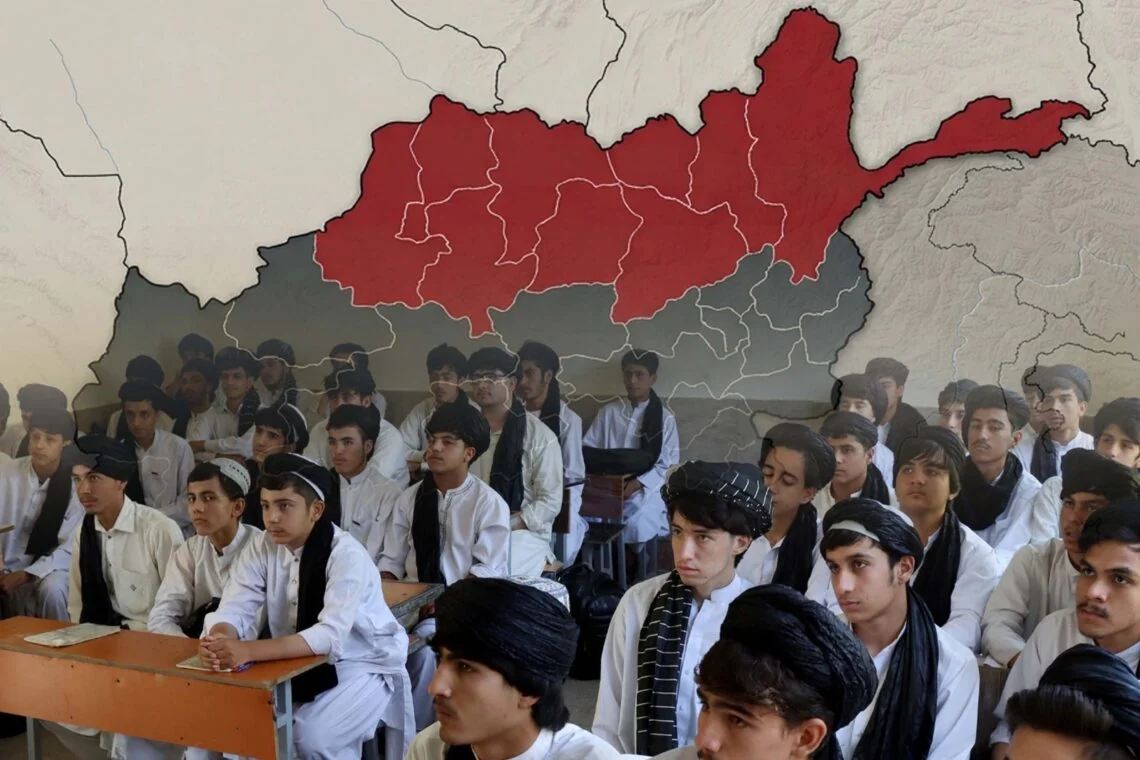
The present study is a descriptive survey and was conducted using a convergent parallel mixed-methods approach. In this approach, quantitative and qualitative data are collected and analyzed simultaneously, and at the interpretation stage their results are compared and integrated. The participants of the study were lecturers of English language and literature in the English departments of public universities in northern Afghanistan. Sampling was done using the convenience method, and 30 lecturers from nine universities, including the universities of Balkh, Kunduz, Takhar, Baghlan, Badakhshan, Faryab, Samangan, Sar-e Pul, and Jawzjan, participated in the study. The data collection tool was a structured questionnaire designed on the basis of a review of the research background, and it had six sections: demographic information, lecturers’ familiarity with and views on alternative assessment, the application of these methods in large classes, implementation challenges, preferred methods, and open-ended questions. The questionnaire included closed items with a Likert scale, multiple-choice questions, and three open-ended questions. The questionnaire was provided to lecturers through Google Forms, and data collection took place over one week. Before data collection, participants’ informed consent was obtained, and the confidentiality of responses was guaranteed. The quantitative data were analyzed using SPSS software by calculating frequencies and percentages. The qualitative data were examined using the “thematic analysis” method. In this process, responses were read several times, coded, and categorized into themes such as main obstacles, successful methods, and suggestions for improvement. Finally, the quantitative and qualitative findings were compared to identify convergences and to complete the interpretation of the results.
Research Findings
- Characteristics of Respondents
Thirty lecturers took part in this study, all of whom were men and taught English literature. In terms of teaching experience, 10 percent had less than two years, 53.3 percent had between two and five years, 20 percent had between six and ten years, and 16.7 percent had more than ten years. In terms of the number of students in the class, 33.3 percent of lecturers taught classes with 30 to 40 students, 43.3 percent taught classes with 41 to 50 students, 13.3 percent taught classes with 51 to 60 students, and 10 percent taught classes with more than 60 students. Therefore, the majority of respondents faced teaching conditions in relatively large classes.
- Lecturers’ Familiarity with and Attitudes toward Alternative Assessment
The findings show that 63.3 percent of lecturers agreed and 26.7 percent strongly agreed with the item on familiarity with different methods of alternative assessment, while 10 percent took a neutral position. Overall, 90 percent of respondents confirmed their familiarity with these methods. In response to the statement that alternative assessment is more effective than traditional exams in measuring students’ deeper understanding, 40 percent agreed, and 53.3 percent strongly agreed. Only 3.3 percent were neutral, and 3.3 percent disagreed. This result indicates lecturers’ widespread belief in the capacity of alternative assessment to measure deep learning. In addition, 53.3 percent of respondents agreed, and 40 percent strongly agreed that alternative assessment turns students into more active and responsible learners. Overall, 93.3 percent of lecturers supported this view. Regarding the preference for assessment methods, the research table shows that 50 percent of lecturers disagreed and 13.3 percent strongly disagreed with the statement “I prefer traditional exams to alternative assessment.” In contrast, 13.3 percent agreed, 13.3 percent strongly agreed, and 10 percent remained neutral. Therefore, based on the data in the table, 63.3 percent of lecturers showed a preference for alternative assessment over sole reliance on traditional exams. On the other hand, all respondents believed that alternative assessment provides more accurate feedback about students’ progress; 70 percent agreed with this statement and 30 percent strongly agreed.
- Feasibility of Alternative Methods in Large Classes
Regarding the feasibility of implementing group projects and oral presentations in large classes, 60 percent of lecturers agreed, and 16.7 percent strongly agreed. Of the respondents, 13.3 percent took a neutral position,n and 10 percent expressed disagreement. This finding shows that most lecturers consider these two methods practical and manageable in the conditions of large classes. In addition, 63.3 percent of lecturers agreed, ed and 30 percent strongly agreed with the statement that they had successfully used at least one alternative assessment method in a large class. Overall, 93.3 percent of respondents reported experience of using at least one alternative method. However, providing timely and individual feedback has remained difficult. Sixty percent of lecturers agreed, and 20 percent strongly agreed that providing such feedback in large classes is very difficult. Therefore, 80 percent of respondents considered this issue a serious challenge.
- Obstacles to Implementing Alternative Assessment
The quantitative findings reveal several fundamental obstacles:
Time required for evaluation: 43.3 percent of lecturers regarded it as a major challenge and 13.3 percent as a moderate challenge. Overall, 56.6 percent reported it as a moderate or major challenge.
University policies based on written final exams: 33.3 percent regarded this issue as a minor challenge, 20 percent as moderate, 10 percent as major, and 20 percent as very severe. Only 16.7 percent said that this issue was not a challenge for them.
Lack of clear assessment guidelines and criteria at the department level: 40 percent regarded it as a minor challenge, 10 percent as moderate, 26.7 percent as major, and 16.7 percent as very severe. Only 6.7 percent reported the lack of these criteria as not a challenge.
Large number of students: 50 percent of lecturers rated it as a major challenge and 10 percent as a very severe challenge. Including respondents who regarded it as a moderate challenge, 76.7 percent of lecturers considered the large number of students at least a moderate challenge.
These results show that the obstacles to implementing alternative assessment are not limited to the attitudes or individual abilities of lecturers; organizational conditions, classroom structure, and educational policies also play a role.
- Qualitative Findings
The analysis of lecturers’ descriptive responses revealed three main themes:
First, the main obstacles to implementing alternative assessment: The large number of students was the most frequently reported obstacle. Lecturers pointed out that when the number of students exceeds 50, evaluating portfolios, projects, and oral presentations becomes difficult and time-consuming. Heavy workload, limited time, the emphasis of university policies on written exams, the lack of specialized training, the absence of clear guidelines, the density of the curriculum, the lack of facilities, and students’ limited familiarity with alternative methods were also raised as other obstacles.
Second, successful or preferred methods: Group projects and oral presentations received more attention from lecturers than other methods. From the respondents’ perspective, these methods strengthen student participation and teamwork and make it possible to evaluate several students at the same time; as a result, lecturers’ workload is reduced. Project-based learning has also received attention because it strengthens creativity, critical thinking, and deep learning. Portfolios and peer assessment have also been used, although evaluating portfolios requires more time and effort.
Third, suggestions for improvement: Lecturers considered holding training workshops and professional development programs to be among the most important needs. They also called for greater flexibility in university policies, the development of ready-made assessment criteria and guidelines, a reduction in the number of students in classes, the hiring of teaching assistants, the strengthening of continuous assessment, and the improvement of digital facilities and educational technology.
Discussion and Interpretation of Findings
The results of the study show that, overall, English department lecturers at universities in northern Afghanistan have a positive attitude toward alternative assessment. Most of them believe that, compared with traditional exams, these methods make deeper measurement of learning possible and contribute to increasing students’ participation, responsibility, and independence. This finding is consistent with the results of studies by Nasri et al. (2010), Monib et al. (2020), Faizi et al. (2025), and Sari et al. (2024), studies that have emphasized the role of alternative assessment in improving meaningful learning, critical thinking, and student participation. Moreover, lecturers’ positive view of the role of alternative assessment in increasing student participation is in line with the findings of Superville (2023) and Suzieleez Syrene Abdul Rahim and Sulaiman (2006). These studies show that students’ participation in the assessment process can strengthen their sense of responsibility and their control over learning.
However, a positive attitude alone is not sufficient for the successful implementation of these methods. The findings of the present study show that the large number of students, time constraints, and lecturers’ workload are among the fundamental obstacles. This result is consistent with the studies by Kakar and Sarwari (2022) and Qaderi and Bahir (2024) on the difficulty of managing and assessing large classes. Likewise, the time-consuming nature of evaluation and feedback is in line with the findings of Sari et al. (2024), Ghaicha and Omarkaly (2018), and Neupane (2025).
Another important point of the study is the effect of university policies on the choice of assessment methods. Lecturers stated that the emphasis of university institutions on written final exams limits their freedom of action in using alternative methods. This finding is in line with the results of Mussawy et al. (2021) on the dependence of Afghanistan’s higher education system on traditional exams. Therefore, the expansion of alternative assessment requires not only individual changes in lecturers’ teaching methods but also institutional support and reform. Among the various methods, group projects and oral presentations were considered more practical by lecturers, because they allow several students to participate at the same time, enable teamwork, and reduce part of the evaluation burden. In contrast, although a portfolio can provide more extensive information about an individual student’s progress, it requires more time for review and individual feedback. This difference shows that the choice of assessment method should be made in light of the number of students, learning goals, and available resources.
Finally, lecturers’ suggestions on professional training, the development of clear criteria, the reform of university policies, the reduction of the number of students, and the provision of technological support show that the effective implementation of alternative assessment requires a systematic approach. In other words, lecturers’ positive attitudes can lead to practical change in assessment only when universities also provide the necessary conditions.
Conclusion
The present study examined the views of 30 English department lecturers on the application of alternative assessment in large classes at nine public universities in northern Afghanistan. The findings show that lecturers generally hold a positive attitude toward alternative assessment and consider it more effective than sole reliance on traditional exams in measuring deep understanding, strengthening critical thinking, increasing participation, and providing feedback. Nevertheless, the implementation of these methods faces obstacles such as the large number of students, lack of time, high workload, the absence of clear assessment criteria, and university policies based on written final exams. Lecturers regarded group projects and oral presentations as more practical methods in large classes because these activities increase student participation and make the management of assessment somewhat easier.
Accordingly, improving the application of alternative assessment requires training programs for lecturers, the development of clear criteria and guidelines, greater flexibility in university policies, the provision of teaching assistants and technological facilities, and attention to reducing the number of students in classes. However, the results of this study should be interpreted with its limitations in mind. The sample includes only 30 lecturers; sampling was done using the convenience method, and all participants were men who taught English literature. In addition, the data relied mainly on lecturers’ personal reports and perceptions, and no direct observation of assessment practice or measurement of students’ learning outcomes was carried out. Therefore, the findings cannot be generalized without caution to all lecturers at Afghanistan’s universities. Future studies could use larger and more diverse samples, examine students’ views as well, and assess the actual impact of alternative assessment methods on academic performance, critical thinking, and language learning.
References
- Brown, H. D. (2014). Principles of language learning and teaching (6th ed.). Pearson Education.
- Brualdi, A. C. (1996). Multiple intelligences: Gardner’s theory. Practical Assessment, Research, and Evaluation, 5(10). https://doi.org/10.7275/7442-8d7m
- Coombe, C., Folse, K., & Hubley, N. (2007). A practical guide to assessing English language learners. University of Michigan Press. https://doi.org/10.3998/mpub.170430
- Faizi, W., Mal, A., & Nayak, F. (2025). Evaluating the effectiveness of alternative assessment methods in higher education: A systematic literature review. Cognizance Journal of Multidisciplinary Studies, 5(9), 164–172. https://doi.org/10.47760/cognizance.2025.v05i09.011
- Ghaicha, A., & Omarkaly, E. (2018). Alternative assessment in the Moroccan EFL classrooms: Teachers’ conceptions and practices. Higher Education of Social Science, 14(1), 56–68. https://doi.org/10.3968/10161
- Golzar, J., Momenzadeh, S. E., & Miri, M. A. (2022). Afghan English teachers’ and students’ perceptions of formative assessment: A comparative analysis. Cogent Education, 9(1), 2107297. https://doi.org/10.1080/2331186X.2022.2107297
- Gronlund, N. E. (1998). Assessment of student achievement. Allyn & Bacon.
- Gülbahar, Y., & Büyüköztürk, Ş. (2008). The development of an alternative assessment tool: Computer-based portfolio. Educational Sciences: Theory & Practice, 8(2), 501–515.
- Huba, M. E., & Freed, J. E. (2000). Learner-centered assessment on college campuses: Shifting the focus from teaching to learning. Allyn & Bacon.
- Kakar, A. F., & Sarwari, K. (2022). Exploring teachers’ and students’ attitudes towards English language large classes at Herat University, Afghanistan. Journal of Foreign Language Teaching and Learning, 7(1), 1–23. https://doi.org/10.18196/ftl.v7i1.12281
- Kassa, H., Arficho, Z., Getachew, E., & Meressa, A. (2024). An investigation into English language teachers’ practices and challenges of alternative assessment: Selected teacher education colleges in focus. English Language, Literature & Culture, 9(3), 50–62. https://doi.org/10.11648/j.ellc.20240903.11
- Moqbel, M. S. S., & Al-Kadi, A. M. T. (2020). Alternative assessment in English departments at Yemeni universities: Attitudes and practices of faculty members. Humanities and Educational Sciences Journal, 5(12), 534–564. https://doi.org/10.55074/hesj.v5i12.182
- Monib, W. K., Karimi, A. Q., & Nijat, N. (2020). Effects of alternative assessment in EFL classroom: A systematic review. American International Journal of Education and Linguistics Research, 3(2), 7–18. https://doi.org/10.46545/aijelr.v3i2.152
- Mussawy, S. A. J., Rossman, G., & Haqiqat, S. A. Q. (2021). Students’ and faculty members’ perceptions and experiences of classroom assessment: A case study of a public university in Afghanistan. Higher Learning Research Communications, 11(2), 22–39. https://doi.org/10.18870/hlrc.v11i2.1244
- Nasri, N., Roslan, S. N., Sekuan, M. I., Abu Bakar, K., & Nor Puteh, S. (2010). Teachers’ perceptions of alternative assessment. Procedia – Social and Behavioral Sciences, 7, 37–42. https://doi.org/10.1016/j.sbspro.2010.10.006
- Neupane, R. N. (2025). Rethinking evaluation: Alternative assessment approaches used by EFL teachers at Tribhuvan University. Journal of NELTA Gandaki, 8(1–2), 57–72. https://doi.org/10.3126/jong.v8i1-2.85072
- Puhl, C. A. (1997). Develop, not judge: Continuous assessment in the ESL classroom. Forum, 35(2).
- Purnamasari, R., Anam, S., & Munir, A. (2024). Teachers’ perception of the use of alternative assessment in international primary school: Benefits and obstacles. TELL-US Journal, 10(3), 704–721. https://doi.org/10.22202/tus.2024.v10i3.8484
- Qaderi, N. A., & Bahir, F. (2024). Obstacles of teaching language in large classes in a public university of Afghanistan: A language instructor’s perspective. Journal of Natural Language and Linguistics, 2(1), 8–12. https://doi.org/10.54536/jnll.v2i1.2615
- Rudman, H. C. (1989). Testing and assessment in education. Allyn & Bacon.
- Sadler, D. R. (1989). Formative assessment and the design of instructional systems. Instructional Science, 18, 119–144. https://doi.org/10.1007/BF00117714
- Superville, L. (2023). Teachers’ perceptions of the utilization of alternative assessment in the virtual classroom in Trinidad and Tobago. Journal of Education, Society and Behavioural Science, 36(6), 37–52. https://doi.org/10.9734/jesbs/2023/v36i61228
- Susuwele-Banda, W. J. (2005). Classroom assessment in Malawi: Teachers’ perceptions and practices in mathematics (Doctoral dissertation). Virginia Polytechnic Institute and State University.
- Suzieleez Syrene Abdul Rahim, & Sulaiman, T. (2006). Classroom assessment: Paper-and-pencil vs. alternative. In Humanizing assessment: Compilation of presentation papers (pp. 49–52).
- Wiggins, G. (1990). The case for authentic assessment. Practical Assessment, Research, and Evaluation, 2. https://doi.org/10.7275/ffb1-mm19
- Wiggins, G. P. (1993). Assessing student performance: Exploring the purpose and limits of testing. Jossey-Bass.
You can read the Persian version of this article here:
دیدگاه استادان درباره ارزشیابی جایگزین در صنفهای پرجمعیت دانشگاههای شمال افغانستان