
Since ancient times, humanity’s view of wealth and commerce has been mixed with skepticism. Religious preachers also claimed that the wealthy rarely entered paradise. In medieval Europe, merchants were regarded as enemies of God. This discourse changed during the Age of Enlightenment. Merchants were no longer seen as enemies of God, but rather as builders of prosperity and the flourishing of human life. While John Locke defended and praised labor and property, Voltaire mocked the French aristocracy and praised merchants, and Adam Smith, emphasizing the division of labor, wrote The Wealth of Nations. When commerce transformed from something sinister into something necessary and respectable, and war and bloodshed lost their sanctity, the modern world was born.
Until roughly 350 years ago, social relations and living conditions across most parts of the world, despite minor variations, were more or less similar. The average standard of living in the East and West did not differ significantly either. In the words of Wendell Wickley, the world was a “single world.” However, the Industrial Revolution, which began first in Western Europe and later spread to other Western countries, created a deep divide between East and West. The question arises: why did the ancient Greeks, despite possessing advanced scientific knowledge, fail to apply it widely in practice? Ludwig von Mises, one of the most prominent thinkers of the Austrian School, answers that certain prevailing ideas and beliefs stood in the way of this progress.
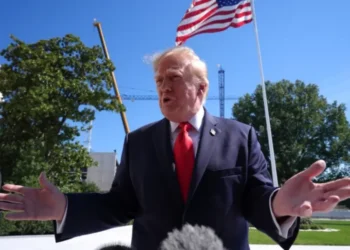
The first idea that held the Greeks back was the belief in “technological unemployment,” the notion that new methods of production would cause unemployment. As a result, any departure from traditional production methods was viewed as undesirable, even as a kind of crime, without regard to the inefficiency of those methods. The second obstacle was the belief that every transaction is a one-sided relationship, in which the seller profits and the buyer loses. This attitude had far-reaching consequences, particularly in trade. This old superstition, that foreign trade allegedly causes unemployment and that its only benefit lies in exports rather than imports, still has supporters among many people and even some politicians, including Donald Trump, President of the United States. According to Mises, had eighteenth-century economists not developed ideas such as the division of labor, free trade, and other principles of the market economy, and had they not paved the way for the practical application of scientific discoveries, the achievements of physics and chemistry would have become “dead letters.” It was the order of the market and free trade that brought scientific achievements into practical use and laid the groundwork for mass production.
The Relationship Between Peace and Free Trade
All human beings despise war because war brings bloodshed, killing, suffering, and displacement. But someone who understands the benefits of the division of labor knows better how much damage war inflicts on human progress and how much it diminishes human welfare. In a society built on the division of labor, individuals specialize in various activities and can no longer live in isolation, since they depend on cooperation. Therefore, war at any level, from a village or city to civil, regional, or global war, harms consumers first and ultimately harms society as a whole. War disrupts the division of labor, breaks apart networks of exchange, and the more widespread it becomes, the more it destroys the international division of labor as well. Thus, war destroys not only the economy but also the flourishing of human civilization.
The people of Afghanistan carry the bitter memory of internal and regional wars, and know well that war, beyond violence, killing, injury, suffering, and displacement, also leads to shortages and even famine of goods. The division of labor can only expand under the protection of peace and stability. Today, countries are so interconnected within the global division of labor that war between two nations sends its effects across the entire world. The war between Russia and Ukraine in 2022 was a clear example of this reality. Based on comparative advantage, these two countries were major producers and exporters of certain essential goods, and the outbreak of war disrupted this supply chain, an event whose consequences affected many countries, including Afghanistan.
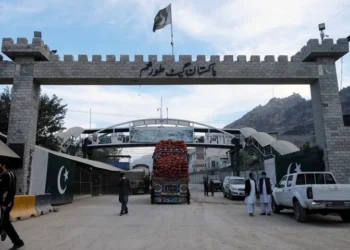
Likewise, for more than ten months, following political and military tensions between Afghanistan and Pakistan, trade along this route has faced disruption, and the prices of goods imported into Afghanistan through this crossing have risen significantly. During this period, instead of commercial goods, soldiers, bullets, and drones have crossed the border between the two countries, and the victims have been innocent civilians. After this route was restricted, Iran’s borders became the most important alternative path, but recent conflicts in the Middle East and disruptions to traffic through the Strait of Hormuz once again created problems for the international division of labor and trade. As a result, the price of energy and many goods, particularly in Afghanistan, increased; some goods became scarce, and people’s purchasing power fell sharply. These experiences demonstrate that only under conditions of peace can the division of labor function properly, production and trade flourish, and the welfare of societies increase.
The Illusion of Self-Sufficiency
Today, no civilized nation can meet all its needs solely through domestic production. Every country must import some of the goods it needs from abroad and cover the cost through exports of its own products and services. No country alone is capable of producing everything it requires. To clarify the concept of self-sufficiency, I refer to the experience of Thomas Thwaites. He decided to build a “toaster” relying solely on his own labor and raw materials he personally obtained. To do this, he sourced iron ore from an abandoned mine in England, copper from a mine in Wales, and mica from a mountain in Scotland. After his attempt to produce steel in a homemade furnace failed, he eventually melted the iron ore and made the toaster’s plastic body from recycled plastics. The project took nine months to complete, and its cost was roughly five thousand times the price of a toaster he could have bought for just four pounds at a local store. Interestingly, the finished toaster began melting only a few seconds after being plugged in.
This experience shows that although self-sufficiency may seem like an appealing and idealistic concept, in practice it can be extremely costly and inefficient. Another example can be seen in the life of a family in Afghanistan. Tea is imported from Vietnam or Sri Lanka, sugar from Pakistan or Iran, rice from Pakistan and India, flour from Kazakhstan, clothing from China, shoes from China and Iran, cars from Japan, Germany, or South Korea, and medicine and medical equipment from various countries. In return, Afghanistan exports products such as fresh fruits, nuts, carpets, medicinal herbs, and saffron to global markets. This is the very global division of labor that makes the welfare of societies possible.
A clearer example is the smartphone that many young people in Afghanistan use today. Its lithium may come from Chile, its design and software may be developed in the United States, its processor may be manufactured in Taiwan, its screen produced in South Korea, and its battery and many of its components made in China and assembled in China or India. Therefore, it might be more accurate to label it “Made in the World” rather than “Made in one country.” By purchasing a single product, we in fact benefit from the labor of thousands, indeed millions, of people around the world.
The English have a proverb that says the road to hell is paved with good intentions. The point is that many great catastrophes have begun with good intentions. Milton Friedman likewise said that policies should be judged not by their intentions, but by their results. From this perspective, slogans such as self-sufficiency, support for domestic production, and higher tariffs, however well-intentioned they may appear, can lead to reduced welfare, spreading poverty, and shortages of goods if their economic consequences are not properly weighed.
Adam Smith said that it is always to the advantage of the people of any country to purchase the goods they need from those who can supply them at the lowest price. From another perspective, free trade is a natural extension of the division of labor and specialization. A tailor does not make his own shoes but buys them from a shoemaker, and the shoemaker, in turn, obtains his clothing from the tailor. Farmers, teachers, and other members of society operate in the same way. Each has recognized that it is better to devote one’s abilities and resources to the activity in which one holds an advantage over others, and to meet other needs through exchange. This foresight is self-evident among individuals and families, yet the question arises as to why many governments and bureaucrats fail to accept the same logic at the level of the national economy. Why, instead of taking advantage of the benefits of free trade, do they insist on comprehensive domestic production, even at the cost of higher expenses, reduced welfare, and the impoverishment of consumers, and continue to oppose free trade?
Some Misunderstandings and Fallacies About Free Trade
1. If a Country Is Superior to Us in Producing All Goods, Trade Does Not Benefit Us
Even if a country holds an absolute advantage over us in producing every good, trade remains beneficial for both parties because trade is based on comparative advantage, not absolute advantage. By focusing on producing the goods for which they bear a lower opportunity cost and exchanging with others, countries benefit from the mutual gains of trade. Comparative advantage is also not fixed; it changes with shifts in technology, capital, labor, and other factors. To clarify the difference between absolute and comparative advantage, imagine a neurosurgeon who is both an outstanding physician and a faster, more accurate typist than a professional typist. He holds an absolute advantage in both tasks, yet it would not be logical for him to spend his time typing, because doing so would keep him from performing work of far greater economic and social value. It is therefore better for him to focus on medicine and leave the typing to someone else. The same logic applies to countries. What matters is not that a country produces every good itself, but that it identifies which goods it can produce with the greatest value. Thus, the notion that trade with wealthy countries, even those holding an absolute advantage in every area, offers no benefit to poorer countries is mistaken. Exchange is based on comparative advantage, not absolute advantage.
2. Economic Success Is Possible Only Through Increased Exports
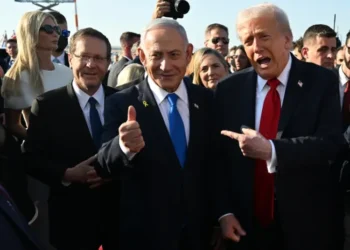
As long as trade is viewed through the mindset of a zero-sum game, protectionism will persist. In this view, a trade surplus means a “win” and a trade deficit means a “loss.” In reality, however, in free trade, individuals exchange with one another willingly and by consent, and both sides benefit from the exchange. Unfortunately, many politicians, much of public opinion, and even some economists compare trade to a football match in which one side must win, and the other must lose. As a result, the term “trade balance” is sometimes interpreted misleadingly. This mindset even led Trump to adopt tariff policies and a trade war, policies rooted in mercantilist thinking. Mercantilists believed that a country should increase exports and restrict imports so that gold and currency would not leave the country. However, Tim Worstall, in his book “20 Economic Fallacies”, argues that the ultimate goal of trade is not exports but imports, since people’s welfare comes from access to goods and services.
For example, imagine a citizen in North Korea who possesses great wealth but, due to his country’s economic isolation, has no access to smartphones, computers, the internet, cars, or many other consumer goods. Does merely having money mean having welfare? Clearly, the answer is no. Welfare increases when people can obtain the goods and services they need regardless of where those goods are produced. Free trade, therefore, is not a competition with one winner and one loser, but an exchange from which both sides benefit.
3. Protecting Domestic Industries
Many believe that poor countries should protect their infant industries, since these industries cannot compete with foreign goods. Henry George, the American economist, criticized this view, saying that protectionism means inflicting upon ourselves in times of peace the same harm an enemy would impose upon us in times of war. Protectionism deprives consumers of access to better and cheaper goods and turns competition into rent-seeking and monopoly. If an industry can produce goods of appropriate quality at a competitive price, it does not need protection, because consumers will choose it on their own. The need for protection arises when a producer cannot compete with foreign rivals and instead offers a more expensive, lower-quality product.
In practice, tariffs are a tool for protecting producers at the expense of consumers. Producers typically ask the government to shield the market from foreign competition by imposing tariffs or import bans, arguing that such a policy will protect employment. For example, if a government restricts the import of foreign chemical fertilizer to protect domestic fertilizer producers, at first glance, domestic producers benefit because their foreign competitor is removed from the market. On the other hand, millions of farmers are forced to buy more expensive, lower-quality fertilizer. This raises production costs, reduces productivity, and ultimately weakens the purchasing power of farmers and consumers. As a result, although protectionism may benefit a limited group of producers, the entire society bears its cost. When a particular group grows wealthier at the cost of impoverishing millions of consumers, this is not economic development but rather a transfer of wealth from the general public to a limited group.
The Relationship Between Development and Free Trade
Without doubt, the expansion of trade means an increase in general welfare. After the end of the Second World War, free trade became one of the central pillars of economic policy for countries around the world. Trade tariffs were reduced, the World Trade Organization (WTO) was established, and barriers to trade between countries were gradually removed. Until 1979, China had a “closed economy” and was a very poor country, but by turning to economic reforms and expanding trade, it set out on the development path. The countries known as the “Asian Tigers” likewise achieved growth and development by relying on trade and an open economy.
One of the most important functions of free trade is that it transforms luxury goods into common goods accessible to everyone. The internet is a clear example of this transformation. In the 1990s, the internet was neither widespread nor understood in its use by many people, but today a large share of trade, education, and communication, even in Afghanistan, depends on it. What was once considered a luxury item has now become a daily necessity.
From this perspective, an attack on free trade is, in effect, an attack on one of the most important engines driving the growth of human welfare. What advocates of protectionism portray as a “monster” is nothing other than the global market and the international division of labor. Likewise, the claim that globalization and free trade erode the culture and identity of nations lacks a solid basis. Free trade does not determine cultural identity; rather, it provides a framework for wealth creation and increased welfare, enabling nations to participate in the global economy by drawing on their own talents, capacities, and advantages.
It should not be forgotten that the development of successful countries was not the result of miracles or magical solutions. These countries were able to create wealth through economic reforms, the establishment of efficient institutions, price liberalization, privatization, the adoption of a market economy, and the expansion of free trade. They focused on producing and exporting the goods in which they held a competitive advantage, and by importing goods they needed, they increased the welfare of their citizens.
In 1820, more than 90 percent of the world’s population lived in poverty. This figure fell to around 60 percent by 1970 and reached approximately 14 percent by 2011. In other words, the 30 percent reduction in poverty between 1820 and 1970 took about 150 years, but from 1970 onward, within only four decades, nearly 50 percent of the world’s population was lifted out of poverty.
One of the most important factors behind this transformation was the expansion of the market economy, free trade, and globalization. During the Mao era in China, entrepreneurs and merchants were regarded as “enemies of the people,” but after economic reforms, this view changed, and they became a driving force of economic growth. Hong Kong, once a small island dependent on fishing, likewise became one of the most important commercial and financial centers in the world. China, which lost millions of people to famine during the Mao era, is today the world’s second-largest economy.
The message of these experiences for Afghanistan is clear: it should not stand in opposition to innovation, free trade, and the market economy. If conditions are created for producers, entrepreneurs, and traders to operate freely, and if the economy is built on competition and freedom of exchange, achieving sustainable development and reducing poverty will not be out of reach.
You can read the Persian version of this analysis article here: