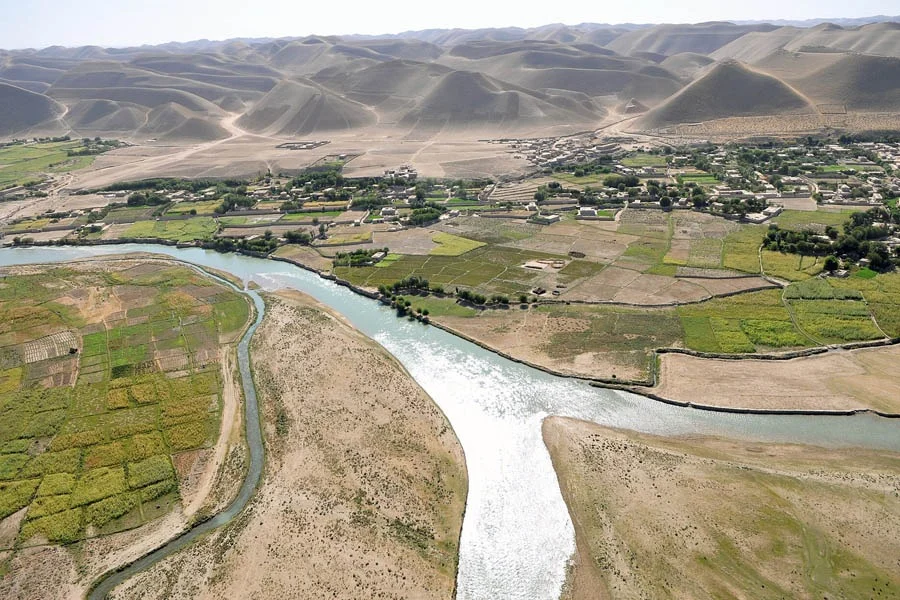
Panjshir is more than a place in Afghanistan’s political memory. It represents a philosophy of resistance. A small valley has repeatedly shown that even a powerful central authority is not necessarily unbeatable. From resistance against the Soviet occupation to opposition to the Taliban, Panjshir has become, for many Afghans, a symbol of refusing to submit.
That legacy deserves recognition. The problem begins when a philosophy of resistance gradually turns into a philosophy of leadership, when one local experience becomes the presumed natural center of all opposition politics. Afghanistan has seen this pattern before, and we already know where it can lead.
The issue is not the people of Panjshir, nor is it about one individual. The issue is a political structure that Afghanistan has reproduced again and again. A center emerges, a political and military circle forms around it, and other regions wait for decisions from that center instead of building their own political initiative.
At different times, that center has been the royal court, Kabul, a political party, or a military commander. The danger today is that the same logic could return under new names and new faces.
If the Taliban disappear but only the center of power changes, Afghanistan will not have truly changed. If power moves from one ethnic group to another, or from Kabul to Panjshir, Herat, or elsewhere, while one leader and a narrow circle still make the main decisions and everyone else comes to them for a share, then only the actors have changed, not the political system.
Afghanistan needs more than a new leader. It needs a new logic of leadership and power.
If the problem is that political and military initiative remains concentrated in a few circles, the answer cannot be to create another center in competition with the existing one. A different approach would allow several regions of Afghanistan to build political capacity from within their own social, historical, and economic realities.
The purpose would not be to divide the country, but to break the monopoly over politics.
Instead of first creating one national center and then asking everyone else to join it, Afghanistan could begin by building trust, organization, and political agreements within several regions, and then connecting those regions through a national compact.
Not every region is equally prepared for such an experiment. A political zone requires several conditions at once: an urban center capable of producing ideas and communication; surrounding areas tied to it socially and economically; traditional and civic networks with real influence; enough diversity to require cooperation among different communities; and a regional identity strong enough to bring people together beyond a single ethnic group.
This is where southwestern Afghanistan becomes important.
Its importance does not come from being superior to other regions. It comes from the fact that several of these conditions already exist there. Herat is not an isolated city. It has deep human, historical, and economic links with Badghis, Ghor, Farah, Nimruz, and Daykundi, while also being connected to the outside world through trade and migration.
Its commercial networks, universities, religious schools, cultural institutions, local elders, business community, youth, migrants, and large diaspora create a social infrastructure that could move beyond protest or armed resistance and toward the production of politics.
The southwest is also not ethnically homogeneous. Tajiks, Pashtuns, Hazaras, Jamshidis, Aimaqs and other communities live across the region. If managed wisely, this diversity could become an advantage: a real test of whether different groups can cooperate not only against the Taliban, but around agreed rules for political life.
For that reason, the southwest could serve as a pilot for a regional political model, not as a ready-made blueprint for the entire country, but as a place to test some fundamental questions.
Can cities and rural communities be politically connected? Can religious scholars, universities, markets and civil society work within a common framework? Can traditional elders participate without once again monopolizing politics? Can a region develop political power without turning itself into a new center of domination?
The philosophy of the southwest should begin here: not by creating a “Western Front” against a “Northern Front,” but by rejecting the idea that Afghanistan must always revolve around one center.
The principle should be simple: political power should not belong to anyone as private property.
If this experiment works in the southwest, it should not remain there. The central highlands and Hazarajat, with their experience of social organization and citizenship-based political demands; the north, including Balkh, Faryab and Jowzjan, with its political and economic capacity; the northeast, especially Badakhshan and Takhar, with their political history and tradition of resistance; and the east, particularly Nangarhar, with its universities, commerce and social networks, could all develop similar models based on their own conditions.
The purpose is not to place these regions under the authority of the southwest. Quite the opposite. The goal should be a national network of politically capable regions, none of which claims ownership of Afghanistan.
In such a system, Panjshir would also remain an important pillar, but not the roof over the entire structure.
The experience of the Northern Alliance offers an important warning. Tajik, Hazara, Uzbek and other forces needed each other while resisting the Taliban. But after 2001, that mutual dependence gradually gave way to competition for ministries, positions, resources and access to Kabul.
A military coalition never became a durable political compact. The old pattern returned: the center owned power, while everyone else went to the center to negotiate a share.
A real alternative must therefore answer questions about the day after the Taliban before that day arrives. How should power be distributed? What should the relationship between the center and the regions look like? What would prevent another monopoly of power? Can one family, one leader, or one province claim to be the natural representative of resistance? Most importantly, what rights would an ordinary citizen have in such a system?
Western policy must also be viewed realistically. Western governments have generally not recognized the Taliban, but neither have they pursued a policy of removing them from power. Diplomatic engagement, humanitarian assistance and crisis management have continued, while large amounts of international assistance have entered an economy whose political structure is controlled by the Taliban.
The conclusion for Afghanistan’s opposition should be clear: the country’s future cannot depend on waiting for Washington, London or Brussels to change course.
The widening gap between Western rhetoric about freedom and human rights and Western policy toward the Taliban could also deepen distrust among Afghans and eventually contribute to anti-Western sentiment. The consequences of such a development would not necessarily remain limited to Afghanistan.
The same criticism applies to the endless production of political “roadmaps” abroad. Conferences in London, Paris, Vienna or Cambridge and discussions about constitutions, inclusive government and political transition may be useful, but Afghanistan has never suffered from a shortage of documents.
The real problem has been the distance between political documents and society.
No roadmap becomes politically real simply because a group of elites abroad agrees on it.
Perhaps the process should be reversed: first society, then organization, and finally a political compact.
Trust must be built from below. Local networks, markets, mosques, universities, women, youth, elders, and diaspora communities must be brought into political dialogue, and regional experiences should then be connected at the national level.
Family, ethnicity, religion, and local elders remain part of Afghanistan’s social reality. Pretending they do not exist is not politics. But recognizing their importance does not mean making them permanent structures of political power.
Tradition can be the point of entry, but equal citizenship must be the destination.
This is the difference between a “front” and a genuine political alternative. A front asks: how do we defeat the Taliban? A political alternative asks: how do we build an Afghanistan in which neither the Taliban, nor a warlord, nor another strongman can once again concentrate the entire country’s power in one center?
Afghanistan does not need a new center. It needs a new relationship among its centers.
If the southwest can test this idea on a smaller scale, while the central highlands, north, northeast, east, and Panjshir build their own political capacity, these regions could eventually connect not through obedience, but through agreement.
At that point, Afghanistan would no longer be talking only about building another resistance front. It would be beginning to build an alternative to the very logic of power that has repeatedly failed the country.