
Sima still remembers the days when the school gate was closed to girls. She was a fourth-grade student during the first period of Taliban rule in Afghanistan, when continuing education for girls was banned. Sima, like thousands of other girls, dropped out of school and spent five years at home, years that were spent confined to the house instead of with books and lessons. At that time, the deprivation of girls from education was not limited only to the closing of school gates; restrictions on women’s and girls’ movement and social presence, the lack of educational and work opportunities, and the prevalence of early marriages put the future of many girls at serious risk. For a girl growing up in those circumstances, the distance between school and marriage was sometimes very short. Although Sima was also exposed to such a fate, she ultimately avoided early marriage, an opportunity that was not available to many girls of her generation.
With the fall of the first Taliban regime and the change in Afghanistan’s political situation, school gates reopened to girls. After five years at home, Sima returned to school and continued her lessons from where they had stopped. Returning to school gave her the chance to pursue her childhood dream again. She wanted to become a doctor and saw education as a path to building an independent life, but returning to school was not the end of all obstacles. The living conditions and difficulties that existed in Afghanistan did not allow Sima to continue her education until she reached the goal she had set for herself. She eventually got married, and her dream of becoming a doctor and achieving economic and social independence remained unfulfilled.
A Repeated Fate: A Daughter in Her Mother’s Place
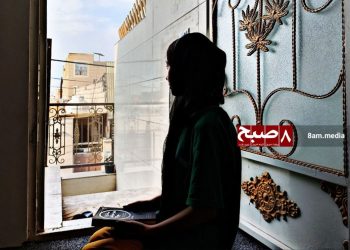
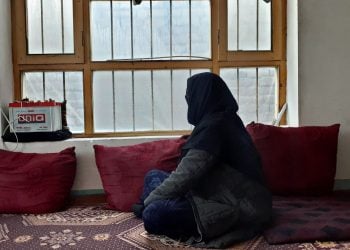
About two decades later, nearly a generation apart, the same story repeated itself, this time for Sima’s daughter. Sitayesh, Sima’s daughter, was kept from attending school after the Taliban’s return to power in 2021, with one difference: this time she had not merely heard the story of her mother’s deprivation, but was herself sitting in the same house where her mother had once spent her days waiting for schools to reopen. Like her mother, Sitayesh became confined to the home. Mornings that once began with going to school, seeing friends, sitting in class, and hearing the school bell now begin with household chores. She says it is very hard for her to wake up in the morning, see her brother leaving for school, and be forced to do housework herself, from sweeping the house to other responsibilities that have taken the place of lessons and learning.
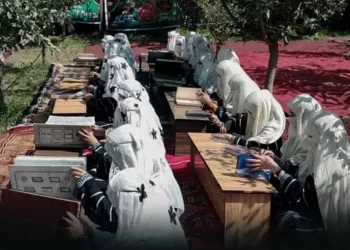
To avoid being completely cut off from education, Sitayesh attends a religious school despite the existing restrictions. But her family knows that this kind of education cannot replace formal schooling for her. According to her family, this path will not, in the future, allow Sitayesh to take the university entrance exam or enter the academic field of her choice. For a girl who dreams of becoming a writer and poet, religious school cannot replace the opportunities taken from her by the closure of regular schools. Despite these restrictions, Sitayesh still writes, producing writings and poems mostly for herself, with no clear path ahead to develop her talent, study literature, or reach the world of writing.
She says she misses her classroom, her friends, her teachers, and even the sound of the school bell. Years of waiting for schools to reopen have also become exhausting for her, a wait that has begun with hope many times but has still not come to fruition. Sitayesh says this situation is not something others can easily understand, and that “you have to be a girl to be able to understand and feel it.” Her main concern is not only about today, but about a future she fears could turn out like her mother’s life, a future in which a girl is denied the chance for education, independence, and the fulfillment of her dreams. She says: “My mother was kept from her studies and could not become independent. If these restrictions continue, my future will be destroyed too.”
For Sima, watching this situation unfold in her daughter’s life is more painful than the experience she herself went through as a child. She was in the fourth grade when school gates closed, and years later, when she got another chance to study, she could not continue it far enough to achieve her dream of becoming a doctor. Now her daughter is on the same path: a girl of school age who dreams of becoming a writer and poet, but who works at home instead of going to school every day. In this way, what was a personal experience for Sima in childhood has become a recurring reality for Sitayesh, a deprivation passed down from one generation to the next.
Five Years of Restrictions Against Women and Girls
Over the past five years, restrictions against Afghan women and girls have not been limited to secondary education. Girls have been barred from continuing their studies in secondary schools, and women have been excluded from universities. Alongside these restrictions, women have faced widespread barriers in employment, participation in public life, freedom of movement, and social engagement. Taken together, these restrictions have limited the opportunities for women and girls to build an independent life. For many girls, the closed school gate does not mean the loss of just one or a few years of lessons; it can change the course of their education, work, economic independence, and even their personal choices for their entire lives.
More Than Two Million Girls Deprived of Education
The United Nations Educational, Scientific and Cultural Organization (UNESCO) said in its latest report that Afghanistan is the only country in the world where access to education above the primary level is banned for girls and women. The organization has also warned that deprivation of education and restrictions on women’s work increase the risk of poverty, loss of human capacity, and irreversible harm, and even raise the risk of early marriage.
According to UNESCO’s latest statistics, access to education for Afghan girls was severely limited in 2001, but after the change in the political situation, conditions gradually improved, and by 2021 nearly one million girls were enrolled in school. Now, in 2026, about 2.4 million girls have been deprived of secondary education.
UNESCO says these restrictions have reversed the gains of the past two decades in expanding girls’ access to education. According to the organization, the continued deprivation of women and girls from education is a serious violation of their fundamental right to learning, and could leave Afghanistan facing decades of lost human capacity, rising poverty, and irreversible consequences.
The story of Sima and Sitayesh is, in fact, the story of two different eras with a similar ending. The mother was deprived of going to school as a child and later could not continue her education far enough to reach the independence she wanted. The daughter, about twenty years later, stands at the same point again, with books that have been replaced by housework, and dreams that currently have no path toward fulfillment.
You can read the Persian version of this report here:
دو نسل پشت درهای بسته مکتب؛ وقتی محرومیت آموزش از مادر به دختر میرسد